

$5.5B Netskope CEO says Gen Z should network 3 days a week, not apply
Sanjay Beri’s blunt playbook for landing tech jobs: dinners, events, and connections that are never publicly listed.

Sanjay Beri, CEO of Netskope, told Fortune that Gen Z job seekers should network two to three times a week, because many roles are never published. For executives and boards, it signals talent markets are still relationship-driven, even as AI application pipelines get louder.
Forget the idea that the “perfect résumé” plus endless cover letters is the whole game. Sanjay Beri, CEO of Netskope, a $5.5 billion software company, argues the real lever for landing the job you want is not tailoring your PDF for the algorithm. It is showing up enough that the right people eventually know you exist.
Beri, a Gen X founder and CEO who says the jobs you want are sometimes “never published,” told Fortune his No. 1 tip for breaking into tech: “Just constant networking.” And he is not talking about one awkward meetup every three months. If you are Gen Z and not tied down by marriage or kids, Beri said you should be networking two to three times a week to get ahead. That could mean local events with a speaker, university events where a company rep shows up, or even conferences and field-specific gatherings where you can meet people in the orbit of hiring.
Here is the part that matters: this is not advice aimed only at individual job seekers. It is a reminder that labor markets, even for “digital” industries like software and security, still have a strong relationship layer. LinkedIn might be full of roles to apply to, but Beri’s point is that many opportunities never become a public listing. They show up through referrals, informal conversations, and access to circles. When that is true, spending all your time chasing applications without building real human connections is like playing poker only by reading the rules, not the tells.
The source also places this argument inside a pretty unforgiving employment reality for Gen Z. Fortune frames the situation with the volume of applications and the frustration of applicants getting screened by AI, ignored by recruiters, or stuck behind extra “proof” steps that feel arbitrary. It also points to how fierce the competition already is: about a fifth of Gen Zers worldwide are classified as “NEETs” and are currently locked out of the job market. In the U.K. alone last year, more than 1.2 million applications were submitted for fewer than 17,000 graduate roles. Fortune then cites the story of a math degree graduate who says he spent more than a year applying to over 1,000 roles in the U.K. without landing a single offer.
That context is why Beri’s “dinners and dinners” approach lands. If AI-driven application screening is pushing people into near-identical piles, standing out becomes harder to do through paperwork alone. Networking, as a mechanism, changes the shape of your search. You stop being a filename and become a face, a voice, a memory. Even the format can be flexible. Beri stressed you do not need to do “awkward speed networking.” The events can be as simple as attending a talk, going to a conference in your preferred field, or getting coffee with a connection.
He also offered a specific rule: do not eat alone. “If you're going for lunch or dinner, don't eat alone-go to an event,” Beri told Fortune. He said the mantra comes from Keith Ferrazzi’s book Never Eat Alone. The core idea is blunt: you already have to eat. So if you can choose the social setting, you can increase your exposure to the people who can actually move you forward, whether that is hiring managers, investors, or founders who remember you later. It is also a practical workaround for the time problem job seekers complain about. Instead of carving out extra hours, turn routine into contact-building.
Beri’s personal credibility in the story comes from how his network helped him before and after Netskope. Before founding Netskope, he says he was regularly invited to investor and VC events. Later, when he became a founder, he leaned on those connections to understand people’s circles and raise capital. He described getting to know them, understanding their networks, and putting “my tentacles in,” then said the payoff came when building the company and raising capital. Netskope itself hit unicorn status six years after launching in 2012. The company went public on the Nasdaq last year, Fortune reports, and now has over 30% of its clients as Fortune 100 companies, with operations in over 220 countries and more than 3,000 employees.
So what should executives and boards take from this besides a reminder to tell candidates to “go network”? The second-order implication is that hiring and opportunity flow still depend on networks, and those networks can be strengthened through deliberate access moments like events, talks, and informal gatherings. If talent pipelines are increasingly crowded with AI-completed applications, relationship-driven routes may become even more important for who gets noticed. That affects not just candidates. It can influence recruiter behavior, referral patterns, and how quickly teams discover adjacent talent who are not actively applying on day one.
For leaders in tech and adjacent sectors, the stake is straightforward. If the best-fit people are not always the most searchable people, then your recruiting strategy has to account for where “never published” roles are actually born: in conversations, introductions, and community. Beri’s message may be aimed at job seekers, but the underlying truth is that the network layer does not disappear just because the job market is digital.
This story's Key Insights and Take-aways are locked.
Create a free account to unlock Executive Actions for one credit.
Register to UnlockAlways free for Executives Club members. Join the Club
More in Business

Uber buys Delivery Hero for nearly $15B, vaulting to top food delivery outside China
The deal doubles Uber's dual-services footprint and pushes a ride-and-eats bundling play into 50 more markets.

Epic and Google drop settlement bid, forcing rival Android app stores by July 22
Google told the court it is ready to carry third-party app stores starting Wednesday, July 22.
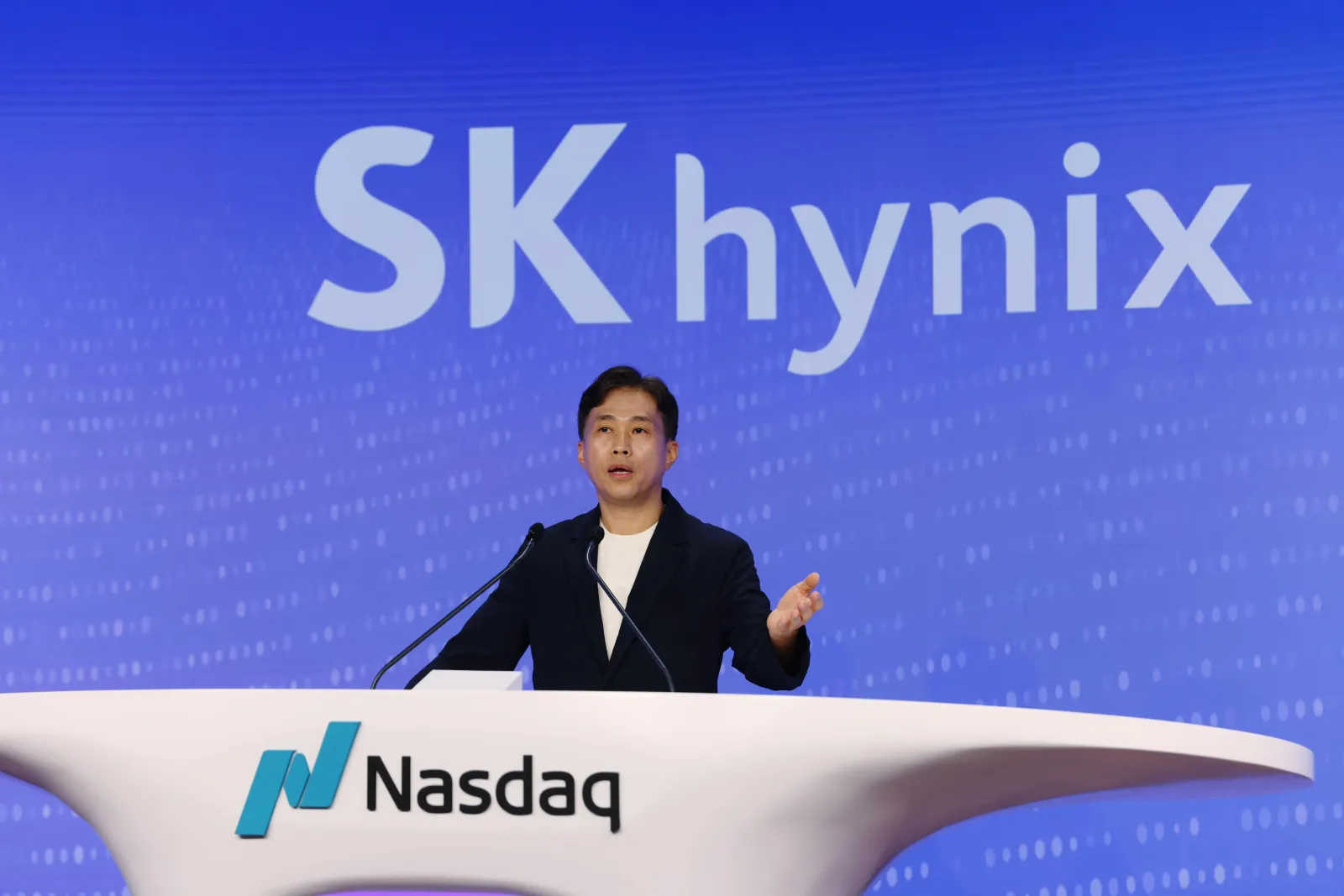
SK Hynix opens at $170, raises $26.5B, and tops foreign IPO records
In Friday's Wall Street debut, SK Hynix turns AI RAM demand into a $26.5B fundraising moment that rewrites comps.