
7000-year-old fish translocation: hunter-gatherers seeded Norway’s Lake Tesse with brown trout
Antiquity research shows the oldest documented human move of fish, dated with radiocarbon and tree rings.
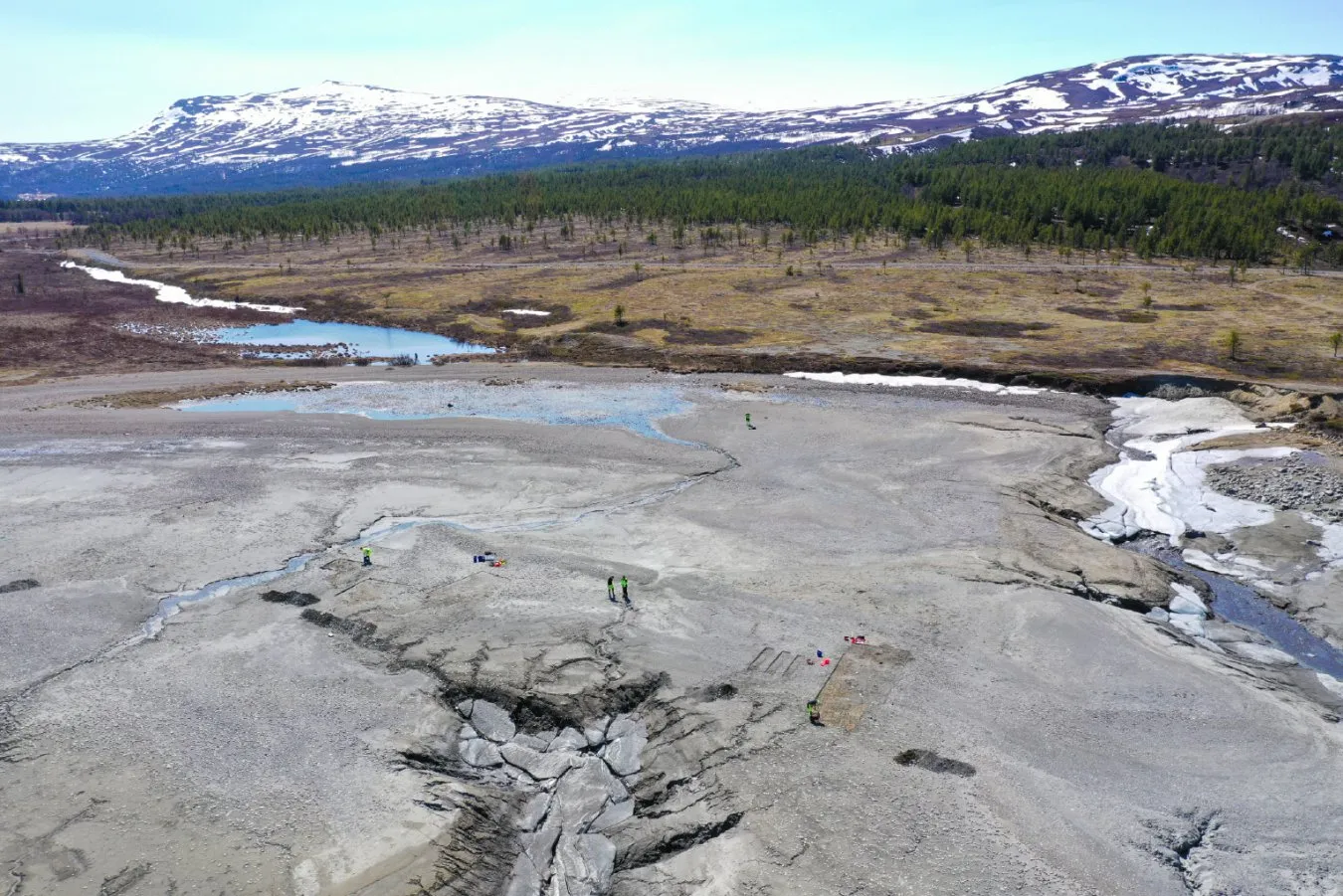
Axel Mjærum of the University of Oslo and colleagues report hunter-gatherers introduced brown trout into Norway’s Lake Tesse at least 7000 years ago. Their findings, published in Antiquity, use ancient fish traps dated by radiocarbon and pine ring chronology to pin down how and when the lake was stocked.
Hunter-gatherers in Norway likely moved brown trout into isolated mountain lakes at least 7000 years ago, and researchers now have unusually solid proof. Axel Mjærum at the University of Oslo says this is the oldest documented example of human-mediated translocation of fish in the world, based on fish traps preserved in Lake Tesse.
Why does that matter? Because Lake Tesse was effectively an ecological reset. Until around 8400 years ago, it was covered by the Fennoscandian ice sheet, leaving what the researchers describe as an ecological blank canvas once the ice retreated. Yet before modern transformation for hydropower storage in the 1940s, the lake was regarded as one of Norway’s richest brown trout waterways, yielding 9 tonnes of fish annually. So the big question becomes: how did fish get there in the first place, after tens of thousands of years of ice?
The researchers argue there is only one plausible explanation: people transported fish into the mountains so they could harvest them during summer foraging trips into the highlands. Natural dispersal is a poor fit for the specifics of Lake Tesse. Most Norwegian mountain lakes, including this one, only had brown trout, and geographic features such as large waterfalls make natural upstream migration of fish and eggs impossible. Alternative ideas had included birds transporting fish or eggs, or natural migration, but the researchers say those don’t adequately explain the isolation.
They found physical evidence that supports active management, not passive luck. The study focused on partially buried remains of elaborate fish traps discovered in 2022 after lake levels were lowered. Radiocarbon dating of the traps indicates the oldest trap dates to around 4950 BC. Then the team sharpened the timeline further by correlating recovered wood with pine tree ring chronology available for the central Scandinavian mountains. That allowed more precise dating of some younger posts.
Two of those posts come with exact constraints that also speak to maintenance, not one-off experimentation. One post was felled between spring 2669 BC and winter 2669-2668 BC. Another was felled 12 years later during the winter of 2657-2656 BC. The conclusion is straightforward: the traps must have been maintained to keep them working. Mjærum therefore says it is possible that trap fishing in Tesse was ongoing for much of the period between 5000 and 2650 BC.
Zooming out, the work reframes what “environmental management” looked like before agriculture in Scandinavia. The paper positions fish translocation into mountain lakes as an early example of people shaping ecosystems for food, centuries before farming arrived. That timing matters because it challenges the assumption that organized food production only begins with agriculture. The researchers also note that fish farming evidence exists even earlier elsewhere, including channels and traps for catching eels built in Australia 8600 years ago.
What’s still unknown is the logistics of transportation. The source says the method of moving fish into the lakes is not known, but waterskins could have been used. There is also an implication about seasonal human behavior. Mjærum suggests people probably stayed in the mountains for part of the summer season, hunting reindeer and fishing, then spent winters in valleys or along the coast where the climate was milder. Importantly, a predictable food supply would make longer stays possible for not just hunters targeting big game, but whole family groups.
For today’s decision-makers, the strategic lesson is surprisingly modern even though the setting is ancient. This is what long-term asset and habitat management looks like: build a system (fish traps), document its operation with dates, and keep it maintained over generations. In the researchers’ timeline, people didn’t just seed a resource; they built repeatable harvesting capacity, potentially for 5000 to 2650 BC. That kind of persistence is what separates accidental outcomes from durable systems.
And there is a broader governance angle hidden inside the archaeology. Lake Tesse was later transformed for hydropower storage in the 1940s, but long before that, it was a managed food system generating 9 tonnes of brown trout annually. For executives and boards watching how natural systems are repurposed through infrastructure, the second-order takeaway is clear: changing a water body’s use can overwrite an ecosystem’s history fast. This study is published in Antiquity (DOI: 10.15184/aqy.2026.10392), but its core signal is timeless. If humans can engineer fish populations long before farming, then today’s water, energy, and conservation decisions are not just technical. They are continuity or disruption machines.
This story's Key Insights and Take-aways are locked.
Create a free account to unlock Executive Actions for one credit.
Register to UnlockAlways free for Executives Club members. Join the Club
More in Science

Alaska's 1,580-foot tsunami had warning signs. Scientists just found them.
Rapid glacier retreat, heavy rainfall, and thousands of tiny tremors preceded Alaska's 1,580-foot tsunami, a warning for every coastal community in a warming world.

The rare mutation that lets high-risk brains dodge Alzheimer's
Scientists found a natural defense against protein buildup, opening a new path to preventive treatments.

3,000 steps a day may halve Alzheimer's decline, study finds
New research links a modest daily walk to less tau buildup and nearly half the cognitive and functional decline, even for those with early signs.