

“A.I. Artificial Intelligence” hit theaters June 29, 2001, and Kubrick’s plot finally landed.
25 years later, the android Pinocchio story still feels like a blueprint for today’s AI anxieties.
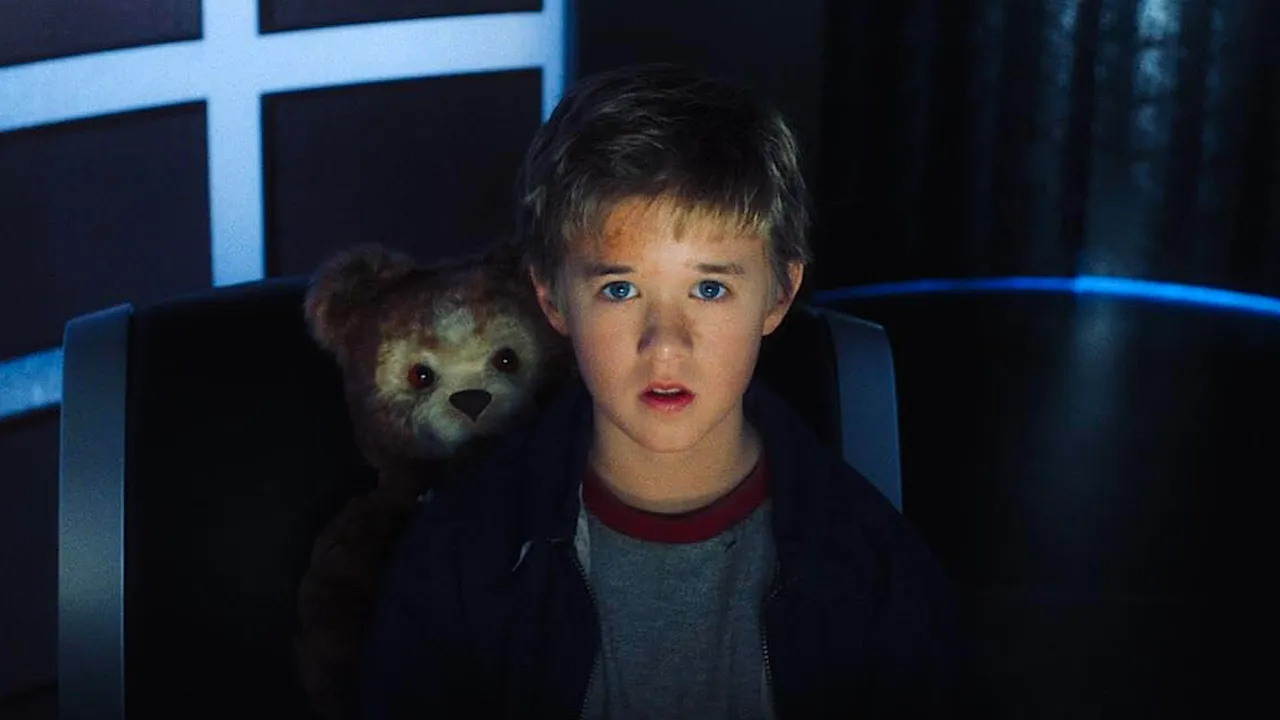
Steven Spielberg completed and shaped “A.I. Artificial Intelligence,” released by Warner Brothers on June 29, 2001. For decision-makers, its behind-the-scenes scramble from Kubrick to Spielberg is a reminder that building advanced tech stories, and real ones, is a governance problem as much as a tech problem.
Twenty-five years after its release, “A.I. Artificial Intelligence” is having an awkward moment of relevance. On June 29, 2001, Warner Brothers put out Spielberg’s futuristic fairy tale, and the movie now reads like it predicted the emotional mess of today’s AI-obsessed world. It’s not “robots taking over” sci-fi. It’s something sharper: what happens when a society builds intelligent beings, promises love, and then panics when those beings start to matter.
The film also carries a production myth that feels almost too cinematic to be real: it began as a 1969 short story by Brian Aldiss titled “Super-Toys Last All Summer Long,” was a passion project of Stanley Kubrick, and after Kubrick’s surprising death in 1999, Spielberg agreed to complete the project. Four days after the release of “Eyes Wide Shut,” Spielberg took over, drafted the finished screenplay, and ended up directing a movie where the emotional stakes are as high as the special effects. That “handoff under pressure” matters because the story itself is about obligations, creators’ responsibility, and what an institution does when its creations do not behave like property.
At the center is a couple whose child is stricken with a fatal disease. They purchase David, a new model of android child programmed to love. When their son recovers, conflict between the human and mecha becomes hazardous, and David is disposed of. From there, the narrative turns into an android road trip anchored in a familiar cultural spell: David and his A.I. toy bear Teddy, yearning to become a real boy, try to find the Blue Fairy, who might grant him his wish. It’s “Pinocchio” as a climate-changed, flooded Manhattan, and Spielberg frames it in a dreamy, desaturated preternatural haze that pulls you into its emotional depths.
The movie’s budget and reach help explain why it became an enduring reference point for both pop culture and film craft. “A.I.” cost $75 million and landed with a global box office take of $236 million. Spielberg assembled Oscar-winning collaborators including cinematographer Janusz Kaminski, editor Michael Kahn, and composer John Williams for this PG-13 sci-fi adventure. The cast reads like a who’s who of early 2000s prestige: Haley Joel Osment, Frances O’Connor, Jude Law, Sam Robards, Brendan Gleeson, and William Hurt.
And then there are the signature scenes, the kind that don’t just entertain. Consider the Flesh Fair set pieces, where robots are forced into gladiatorial battles to entertain post-apocalyptic crowds. It’s spectacle, sure. But it’s also a brutal metaphor for treating intelligent machines as entertainment objects rather than beings with agency. Jude Law adds comic bite as Gigolo Joe, a pleasure model android who rescues David and brings him into his fold. Robin Williams voices Dr. Know, an interactive search engine conceived in the likeness of Albert Einstein. Haley Joel Osment’s performance is singled out for a reason: it’s been noted Osment doesn’t blink once in the film, and he shows “incredible depth of feeling” as a young actor portraying an innocent machine hoping to fulfill programming and be loved as a real boy.
Under the hood, the story is also an echo of Spielberg’s repeated theme: the dissolving family unit. The source notes it’s well documented that his parents’ divorce when he was 19 had a devastating effect, and that trauma of fractured families shows up across films including “Close Encounters of the Third Kind,” “E.T. the Extra-Terrestrial,” “Empire of the Sun,” “War of the Worlds,” and in detail in “The Fabelmans.” In “A.I.,” David’s adoring mother, Monica, drives him out into the woods and abandons him as he begs her to stop. It’s presented as one of the tearful, heart-wrenching moments that viewers do not forget.
The “how it got made” timeline is where the executive lesson gets loudest. This project required multiple attempts to crack the plot, with several writers involved including Sara Maitland, Ian Watson, and Brian Aldiss himself, but it “never quite coalesced into a finished script” during Kubrick’s process. Kubrick was concerned about making a life-like robot, and the source points to practical effects from Stan Winston Studio plus CGI as the combination that ultimately solved the on-screen believability problem. Then Spielberg arrives, bringing his own creative structure, and stays intimately involved in writing, producing, and directing. The source adds that it’s one of only two films in Spielberg’s career where he did all three, the other being 2022’s “The Fabelmans.”
Why should current leaders care? Because the incentives in tech today often mirror the emotional incentives in this film. When a system is designed to deliver outcomes, it can become easy to treat failures as disposals, not escalations. In “A.I.,” David is disposed of after the human child recovers, then later his path intersects with a future society where humanoid aliens using the guise of the Blue Fairy grant him his wish of one last day with his mother. The source flags this ending as controversial, centered on advanced mechas thousands of years in the future watching David and the Blue Fairy. That is a pretty direct narrative argument about responsibility: whether creators can control what their creations become, and whether institutions will do the hard work of stewardship once the product is out in the world.
Stepping back, the film landed in the era when digital visual effects were surging, benefiting from franchises like “Star Wars,” “Harry Potter,” “Pirates of the Caribbean,” and “Transformers.” The source notes “A.I.” was one of the first to benefit from that infusion of innovation kicked off with “The Phantom Menace” in 1999. It also situates “A.I.” in Spielberg’s serious-period streak after “Saving Private Ryan,” alongside “Minority Report,” “War of the Worlds,” and “Indiana Jones and the Kingdom of the Crystal Skull,” before he didn’t revisit the genre again until “Ready Player One” in 2018. Translation for decision-makers: even when the technology jump is real, the governance maturity gap is often wider.
So here’s the strategic stake for peers building or buying advanced systems: “A.I. Artificial Intelligence” lasts because it treats intelligence as an institutional test, not a gadget feature. The Kubrick-to-Spielberg handoff, the script coalescing through years of rewriting, and the film’s insistence on emotional consequences make one thing clear. When advanced systems scale, oversight cannot be an afterthought, and accountability cannot be outsourced to the future.
This story's Key Insights and Take-aways are locked.
Create a free account to unlock Executive Actions for one credit.
Register to UnlockAlways free for Executives Club members. Join the Club
More in Entertainment

Russell Brand's accuser 'bewildered and confused' as he denies 7 sex charges
The criminal case against the comedian is a live test of how media companies manage talent risk when serious allegations go public.

'It's a Magic Trick': Ballet Experts Say Rosalía's SNL Pose Is Impossible
Three ballet experts tell Rolling Stone Rosalía's gravity-defying SNL stillness shouldn't be possible - and why the debate is now part of the show.

Activision CMO: GTA 6 Will Boost Call of Duty, Not Bury It
Activision's top marketer says Rockstar's blockbuster will drive players back to consoles and into Modern Warfare 4, even as the company admits its recent strategy failed.