

Musk barred from the room as Tesla, SpaceX boards weigh $3.5 trillion merger
The CEO of both companies is a 'conflicted party' watching independent directors negotiate a tie-up that would create a $3.5 trillion giant he would own about a third of.
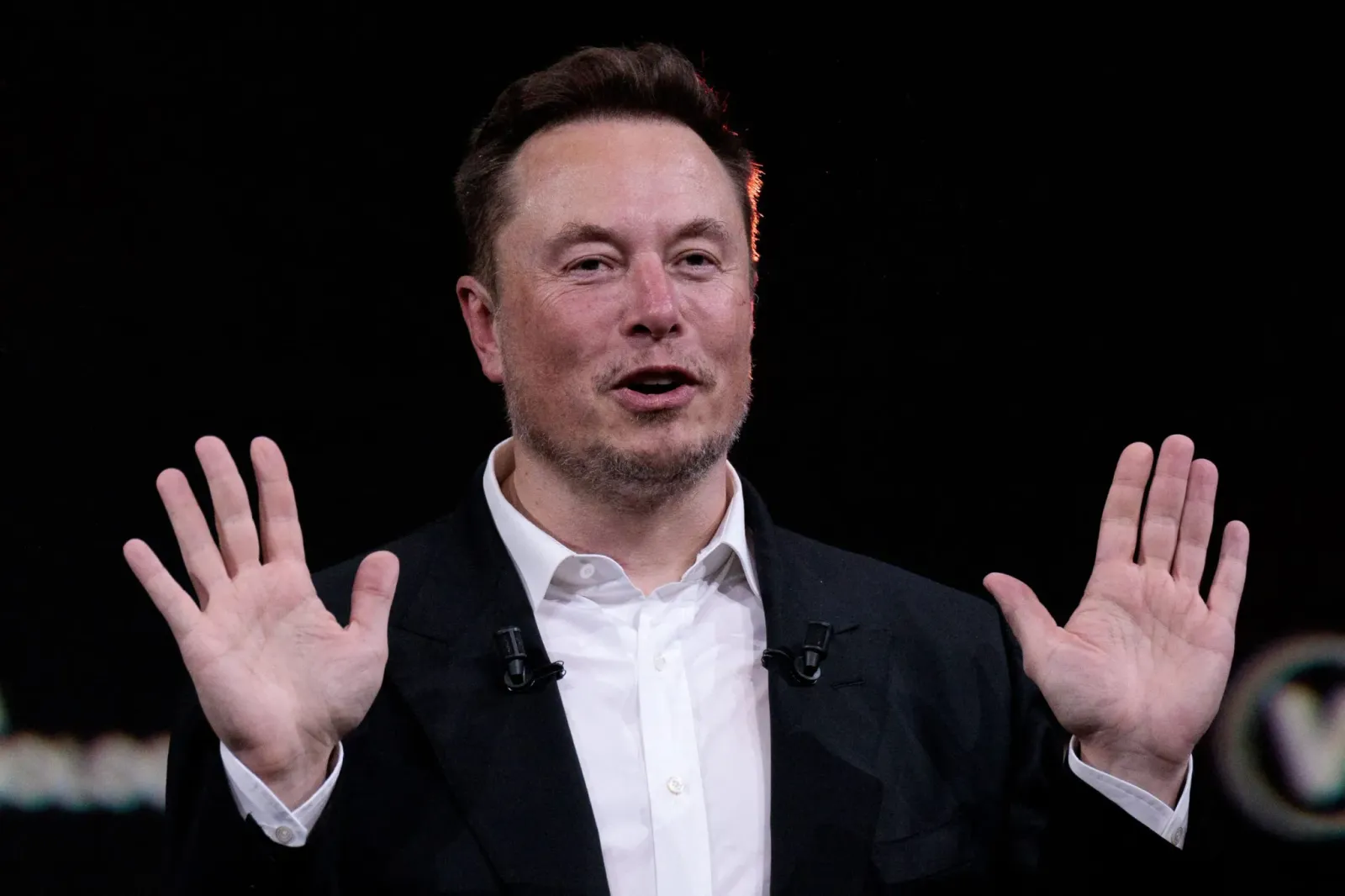
Elon Musk told SpaceX investors that independent board committees at Tesla and SpaceX are weighing a potential merger, with Musk excluded from the talks as a conflicted party. A combined entity would be worth about $3.5 trillion, and the outcome hinges on shareholder votes and independent directors who hold the pen.
Elon Musk, the CEO of both Tesla and SpaceX, is officially out of the room as independent directors at the two companies weigh a merger that would create a roughly $3.5 trillion giant. Musk disclosed Tuesday on SpaceX's third-quarter earnings call that special committees of independent board members have formed to discuss a potential combination, and that he, as a "conflicted party," cannot participate. "It's an odd kabuki dance where two groups of people are talking and I can't be in the conversation," he said.
The numbers explain the tension. At Tuesday's closing prices, a combined Tesla-SpaceX would be worth about $3.5 trillion: SpaceX at roughly $2 trillion, Tesla at nearly $1.5 trillion. Musk owns about 20% of Tesla and 45% of SpaceX, and controls about 82% of SpaceX's voting power. In a merger, he would own about a third of the combined entity. That is precisely why the special committees exist: Musk has a massive personal stake in the outcome, so independent directors are running the process without him. "This is definitely the kind of question where I feel like I'm tap dancing through a minefield," he told analysts.
The committees were formed "at the request of shareholders," Musk said, and they have not reached any agreement on terms. There is no guarantee they will. Musk himself pushed back on the idea that a deal is inevitable: "Some people out there assume that a SpaceX and Tesla merger is a certainty, and I think that would be overstating it." On the Tesla side, any transaction would need support from a majority of all outstanding shares, a bar Musk described as "quite a high hurdle." Tesla's annual shareholder proxy report, filed Monday, contains no merger proposal for shareholders to vote on.
The two companies are already deeply entangled. Tesla's Monday proxy confirmed a $2 billion investment by Tesla in SpaceX. Board overlap is significant: Ira Ehrenpreis, founder of DBL Partners, chairs SpaceX's compensation and nominating committee as well as the two separate committees at Tesla. Tesla board member James Murdoch, a director since 2017, testified in a previous legal challenge over Musk's pay package that he had previously invested in SpaceX. The financial and personal ties make the independence of the committees all the more consequential, and they explain why the process is being run through special committees rather than through the usual CEO-led dealmaking.
Musk has made clear he sees strategic logic in a tie-up, citing collaboration on AI software, chip design, robotics, and connectivity, plus the planned Terafab chip plant, a colossal manufacturing complex being developed jointly by SpaceX and Tesla. Rumors of a combination have swirled for months, even before SpaceX's blockbuster IPO in June, and Tuesday's disclosure marks the first time the companies have confirmed formal talks. The announcement landed alongside SpaceX's first operating profit since its June IPO. Third-quarter revenue rose 161% year over year to $14.58 billion, beating the $12.86 billion analysts expected. Operating revenue came in at $2.79 billion, and net income was $4.4 billion.
The most striking number inside the quarter: SpaceX's AI business, renamed "Super Intelligence," nearly tripled revenue from the second quarter to $7.56 billion, surpassing Starlink's $5.25 billion for the first time since the company went public. CFO Bret Johnsen reaffirmed a target of $100 billion in annualized revenue by the end of this year, which would require about $8.3 billion in December alone, roughly 70% more than SpaceX's average month last quarter. Musk, in his usual fashion, went further, claiming the company's buildout pace implies annual recurring revenue of $500 billion to $1 trillion by the end of 2027. That range would require $42 billion to $83 billion a month by December 2027.
Investors liked what they heard. Tesla stock rose just over 1% in after-hours trading, while SpaceX rose above 5% following the call featuring Musk, president and COO Gwynne Shotwell, and CFO Bret Johnsen. For executives and boards watching from the sidelines, the episode is a masterclass in conflict-of-interest governance: when a founder-CEO controls two companies, the only credible path to a mega-merger runs through independent directors, shareholder votes, and a process the CEO cannot steer. The outcome is far from certain, but the structure is now public, and the stakes are roughly $3.5 trillion. Tesla did not immediately respond to a request for comment.
This story's Key Insights and Take-aways are locked.
Create a free account to unlock Executive Actions for one credit.
Register to UnlockAlways free for Executives Club members. Join the Club
More in Business

Elon Musk just showcased a flying car - and it wasn't at Tesla
The Tesla CEO's latest reveal came at SpaceX, not Tesla, signaling where vertical mobility is headed.

Apple's $2,000 iPhone Duo opens preorders, taking on Samsung and Google
Apple's first foldable hits the market at a premium price, reshaping a category Samsung and Google have led.

Pope Leo XIV, first American pope, diagnosed with lung cancer
The 71-year-old Chicago-born pontiff underwent successful surgery on his right lung, and his diagnosis raises new questions about his AI-focused papacy and the Vatican's future.