
A living Cordyceps textile can regrow after damage and biodegrade in just over 40 days
Researchers built a programmable, self-repairing fungus-based fabric, plus versions that repel water or block UV.

Ke Li and colleagues at the Chinese Academy of Sciences created a “living textile” from the parasitic fungus Cordyceps militaris. The material can be programmed with different microbial components for traits like pigmentation, self-cleaning, UV protection, and regrowth after damage.
The most “Last of Us” part of this story is the word Cordyceps. The most important part for business is what comes after it: a textile made from a living Cordyceps can be repaired by growing over a breach, and it shows near-complete visible degradation in soil after just over 40 days.
Researchers used Cordyceps militaris to build a continuous sheet, then demonstrated how to add different functions by mixing in microbial components. Ke Li, from the Chinese Academy of Sciences, described a material that feels denser and less fibrous than cotton, closer to a soft, non-woven sheet or a flexible leather-like material. In other words, this is not just “cool biology on a lab bench.” It is a fabric concept engineered to behave like a material platform.
Here is how they built it, and why it matters. Cordyceps militaris grows as thin filaments called hyphae. Li’s team first grew the fungus as small, spherical pellets in liquid culture. They then washed those pellets and placed them into molds, where the hyphae formed a sheet. A key engineering move was to soak the resulting fungal structure in glycerol, which Li described as acting as a “plasticiser.” Without that step, the naturally rigid fungal structure would become brittle. The team also emphasized they are not relying on conventional textiles like polymer mesh or an external supporting scaffold. Instead, the mycelial pellets themselves act as structural building blocks, with the intertwined hyphae forming a continuous, self-supporting sheet.
The “living” part does not stop at structure. To change appearance, the researchers introduced engineered yeast cells to generate color biologically, producing orange, blue, and purple pigments. Instead of conventional synthetic dyes, the team applied these cells so pigment is generated through biology. That has obvious implications for fashion and materials companies that already spend heavily on dye supply chains, chemical handling, and waste. But the larger implication is modularity: if color can be authored by cells, other properties can likely be too.
They showed that the textile’s functions can be switched by adding different microbes. For self-cleaning, they added other fungi that repel water droplets, changing how the surface interacts with liquid. For UV protection, they used Aspergillus niger, a mould commonly found growing on fruit and vegetables. In the reported approach, it forms a dark layer on the material’s surface containing melanin pigment that absorbs ultraviolet radiation.
Now zoom in on the headline capability: repair. If the textile is damaged, fresh, wet fungal pellets can be applied to the area that needs repair, and the fungus grows over the breach. Under dry conditions, most biological activity is greatly reduced and cells may remain inactive or dormant. Under humid conditions with nutrients present, some cells can become active again. That dormant-to-active “latent” capacity is what enables regrowth and repair, and it is also what makes the material readily biodegradable. The team reported near-complete visible degradation in soil after just over 40 days.
This is where decision-makers should get a little nervous, but in a useful way. Biodegradability is often framed as a win against fast fashion waste. Justin Beardsley at the University of Sydney said that biodegradability is amazing compared with what exists today for getting rid of waste from fast fashion. Yet he also flagged a real drawback: because it degrades so easily, you generally do not want to be wearing something that will break down while you are wearing it. The article also notes that the researchers made a dress from the fungal material, but no one has worn it yet. Li described it as a rather precious display piece made in a small size, suggesting that future work could involve finding “petite and adventurous volunteers” to see how it looks in motion.
The strategic angle for companies is not just that a fabric can regrow. It is that a fabric can potentially change its properties in real time. Beardsley envisioned one day being able to shift functionality dynamically, for example making the material water-repellent for a while, becoming less breathable during rain, and then reverting to a more breathable, less water-repellent state afterward. That kind of adaptive textile could change product design, returns strategy, durability expectations, and even how brands market performance. It also raises practical questions about how long the material stays functional in real-world conditions and how biodegradation is managed so consumers get wear-time, not premature breakdown.
For boards and investors, the technology lands in the intersection of consumer demand, sustainability pressure, and the reality that “biodegradable” is not automatically “commercially convenient.” This study is published in Science Advances, DOI: 10.1126/sciadv.aed6937. If the science scales from lab sheets to garments that people actually wear, companies betting on next-gen materials will have to think beyond fiber chemistry into living systems engineering, with everything that implies for manufacturing controls, quality assurance, and regulatory comfort. The winners here may be the organizations that treat biology like a programmable manufacturing input, not a gimmick, and that can prove durability targets even while keeping an escape hatch for end-of-life.
This story's Key Insights and Take-aways are locked.
Create a free account to unlock Executive Actions for one credit.
Register to UnlockAlways free for Executives Club members. Join the Club
More in Science

ZWO’s Seestar S30 Pro stacks 10-second shots into 8.3MP deep-sky images from light pollution
A smartphone-controlled 3.6-lb smart telescope ships the hard part to software, plus an EQ mode upgrade path.

Scientists reverse disease-linked compound buildup, offering a credible path to tissue rejuvenation
A new enzyme approach targets the accumulation behind age-related diseases, raising real questions for regulators, investors, and boards.
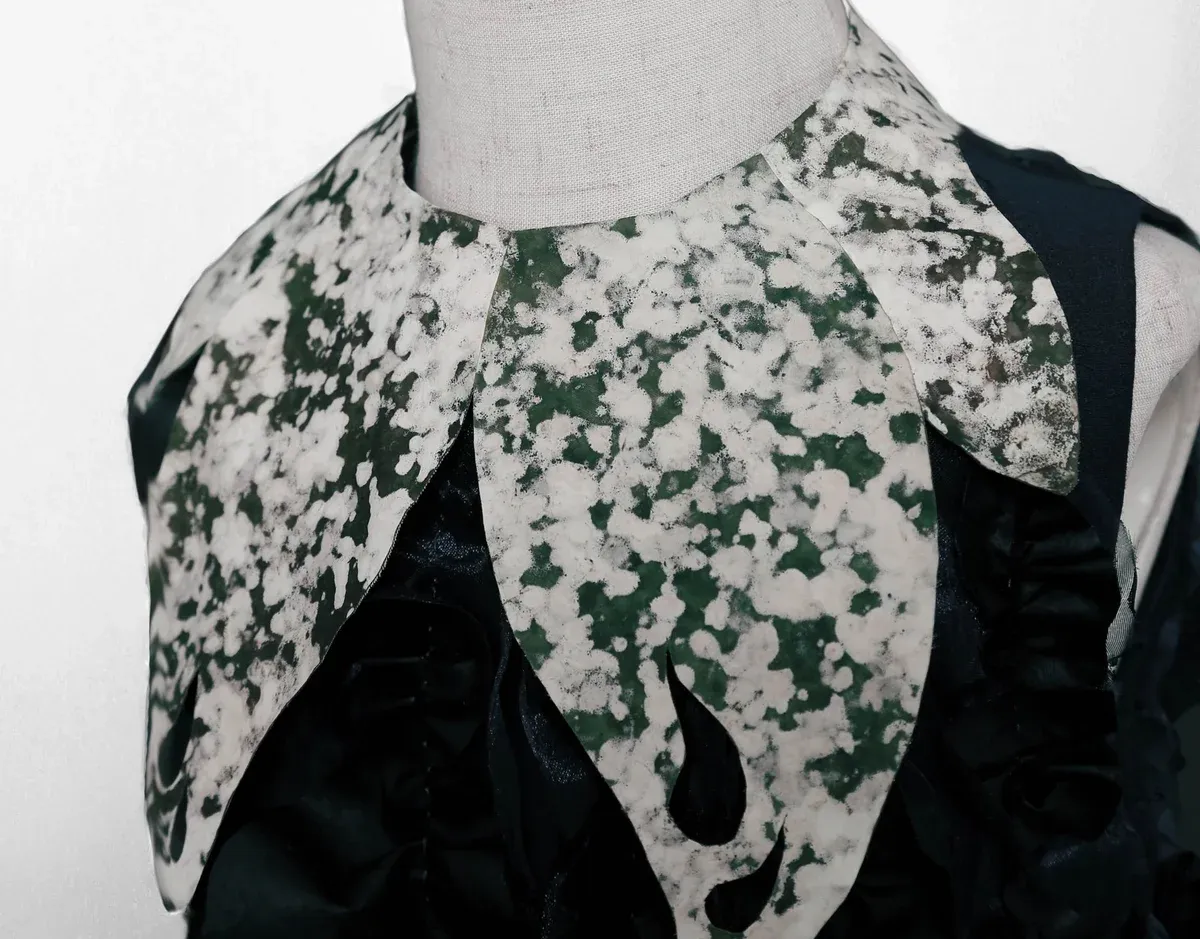
Alive biodegradable textiles can host engineered microbes to change color and add UV protection
A new living-material approach could reshape how brands think about color, protection, and biodegradability in apparel.