

Abdul El-Sayed tackles AIPAC spending and ‘Defund the Police’ in a not-socialist argument
A Politico interview forces a realignment question for donors, candidates, and boards: what he criticizes, and what he insists he is.
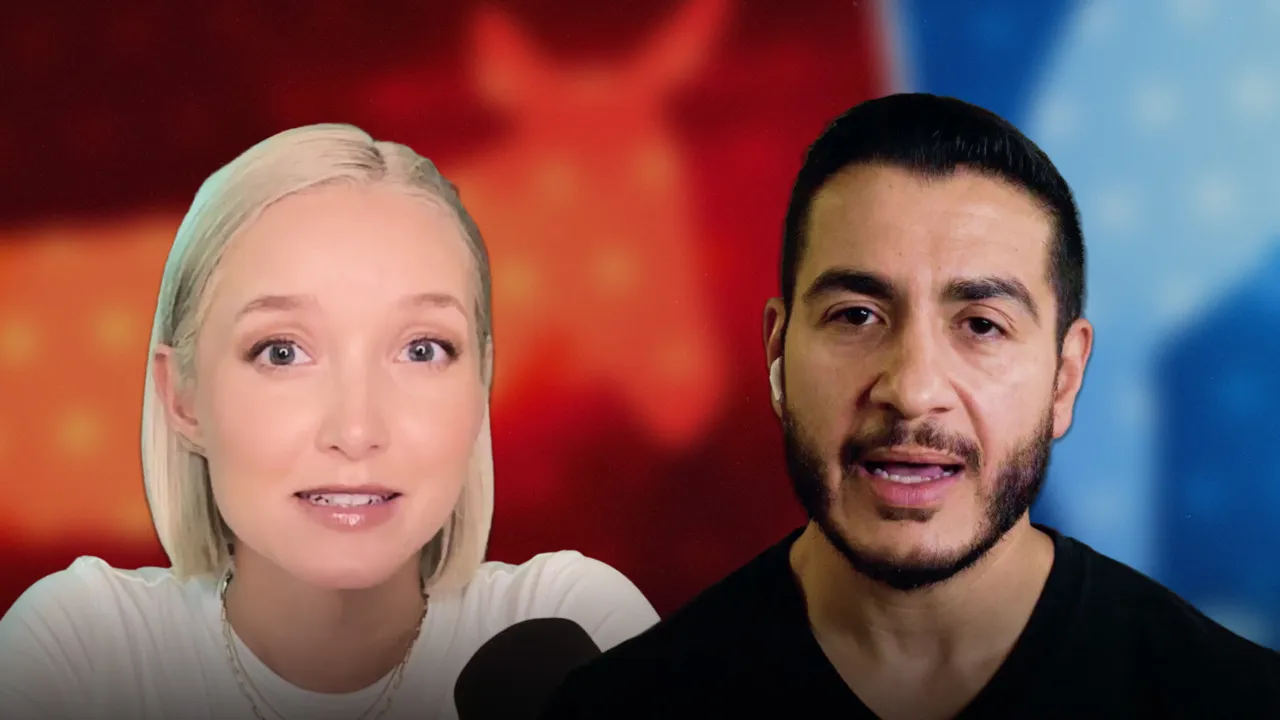
Politico spoke with Abdul El-Sayed about AIPAC spending, his views on ‘Defund the Police,’ and why he says he is not a socialist. For decision-makers, the conversation is a live signal of how political funding and reform branding are colliding in modern campaigns.
Abdul El-Sayed is trying to do something that gets people labeled fast and forgiven slow: keep multiple political tensions on the table at once. In a Politico interview, he addresses AIPAC spending, his position connected to the phrase ‘Defund the Police,’ and he also draws a hard line around ideology, arguing that he is not a socialist.
That combination matters because it puts three very different forces in the same room. Money in politics, policing reform language, and ideological branding normally live in separate lanes. El-Sayed is essentially saying: if you look at any one of those lanes, you can still miss the bigger point about how power works and how coalitions form. For readers watching politics like it is a market, this is the real takeaway. The way candidates talk about spending, public safety, and labels can determine who funds them, who backs them publicly, and which voters decide they have seen enough.
Start with AIPAC spending. In U.S. politics, large-scale spending by influential groups functions like both campaign infrastructure and a signaling mechanism. When you hear about AIPAC spending, it is not only about dollars, it is about the downstream incentives those dollars create for candidates and organizations. Politicians do not just calculate costs and benefits on Election Day. They also manage donor expectations, primary challenges, and long-term relationships with aligned advocacy networks. In that ecosystem, even candidates who want to project independence can find themselves forced to respond to how outside money is framed, what it is used for, and what it implies about who the candidate is willing to challenge.
El-Sayed’s critique, as Politico frames it, sits next to a policing reform question that has become its own political litmus test. ‘Defund the Police’ is not just a policy phrase anymore, it is a shorthand that triggers instant reactions. Supporters see it as a way to redirect resources toward services they believe prevent harm. Opponents treat it as rhetorical chaos or as a rejection of public safety. In the real world of campaigns, that shorthand can compress complex policy debates into a single vote for or against a candidate’s moral and managerial instincts.
Then there is the third rail: El-Sayed’s insistence that he is not a socialist. Ideology labels in the American political system often work like brand controls. They can help some voters quickly sort a candidate into a mental category, and they can push others to stop listening at all. When a candidate argues they are not a socialist, they are not only clarifying their beliefs. They are also trying to change the negotiation terms of the conversation, so donors, media, and voters do not reduce them to an easy narrative. That is a big deal for anyone trying to build a coalition that includes people who want radical change but dislike certain ideological packaging.
The second-order effect for campaign operators and board-level decision-makers is that politics increasingly behaves like a reputation market. In a reputation market, the objective is not only to win arguments, it is to prevent the wrong inference from taking hold. If a candidate is perceived as aligned with one funding bloc, or as associated with one reform brand, or as part of a particular ideological movement, it can rewrite the whole map of who will back them, how quickly, and at what price. For leadership teams at political organizations, that means narrative discipline is not optional. Messaging is operational.
There is also a more structural layer here. Groups with substantial political spending can shape which issues become primary and which become secondary. They can elevate certain concerns, push candidates into public positions, and force rebuttals that distract from the candidate’s own agenda. When El-Sayed talks about AIPAC spending alongside ‘Defund the Police,’ he is effectively describing how multiple issue arenas can be bundled into one voter-facing identity. And if voters accept that identity, it becomes harder for candidates to shift course without triggering accusations of inconsistency.
For peers who are running similar campaigns or building advocacy strategy, the strategic stakes are straightforward. El-Sayed’s interview is a reminder that modern political conflict is not only about policy details. It is about who controls the framing of policy, who gets to set the ideological taxonomy, and whether a candidate can keep their coalition intact while being attacked on multiple fronts. The audience for that coalition is not static either. It is constantly reacting to new information, to spending stories, to culture-war language, and to whether the candidate’s stated identity matches how others define them.
In other words: this Politico conversation is not just a Q&A about politics. It is a live case study in how money, reform language, and ideology labels interact. Abdul El-Sayed’s effort to connect those threads while insisting on his own ideological positioning shows the tightrope candidates walk when they want reform energy without falling into a box that makes governing harder later. For decision-makers, that is the signal worth tracking. The next cycle will reward leaders who can manage all three narratives without letting one swallow the others.
This story's Key Insights and Take-aways are locked.
Create a free account to unlock Executive Actions for one credit.
Register to UnlockAlways free for Executives Club members. Join the Club
More in Politics

LA County: DOJ's 20,000 'noncitizen' voter list is 'unreliable,' includes U.S.-born
Preliminary review by Los Angeles County election officials finds errors in the federal list, raising the stakes for voter roll integrity ahead of November.

Trump's $1.5B Pentagon chip investment lands in North Carolina
A $1.5 billion defense infusion for North Carolina chipmaking signals a new era of Pentagon-backed reshoring - here's what it means for the industry.

Nigeria confirms first Ebola case in Abuja, a woman just off a Uganda flight
Health Minister Muhammad Ali Pate says the patient flew in from Uganda, putting Africa's latest outbreak on Nigeria's doorstep.