

Adam McKay says he’s open to reuniting with Will Ferrell after Gary Sanchez breakup
The creative rift traced to 2019 fallout is thawing, and McKay says he has “no hard feelings” now.
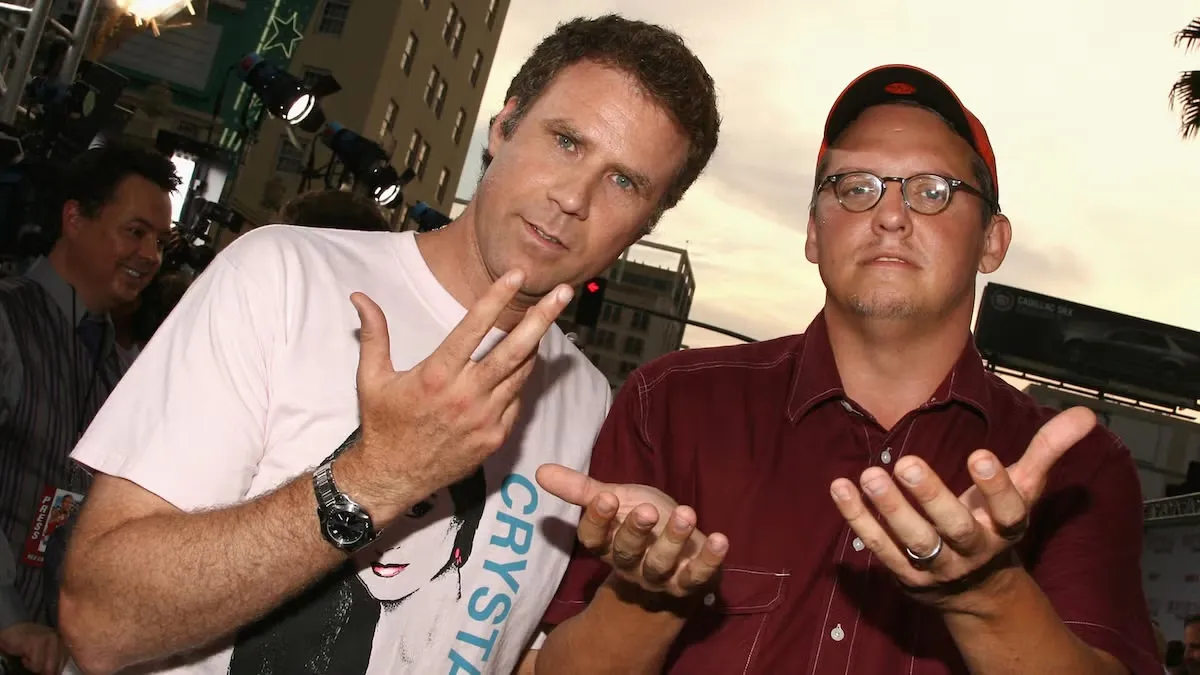
Adam McKay, the writer-director who built comedy hits with Will Ferrell, says he is open to working together again after their public falling out and the dissolution of Gary Sanchez. For decision-makers in creative and media businesses, the reopening matters because it shows how incentive misalignment can poison even top-tier partnerships.
Adam McKay is signaling a thaw with Will Ferrell. In a Business Insider interview published Thursday, McKay said he is “totally have been open to the idea” of working together again, adding that they were “tremendous creative partners.” He also framed the breakup as specific to one business decision, not a personal end-of-the-world feud: “The only thing that caused acrimony between us was when we decided to end our production company, Gary Sanchez. And I know it was reported one way or the other, but that was really it.”
The headline question is simple and high-stakes in creative-industry terms: can two top comedy powerhouses who once made films like “Anchorman,” “Talladega Nights,” and “Step Brothers” repair a partnership that turned into acrimony? McKay’s answer appears to be yes. He said it’s “a shame” they did not make the long run work, and that he has “no hard feelings” for Ferrell, because their split was ultimately about how their creative and production incentives diverged.
To understand why this matters beyond Hollywood gossip, you have to follow the incentives. McKay said the 2019 split had to do with Ferrell’s relationship to producing versus creative work. Ferrell, McKay explained, had publicly stated he was “never someone who wanted to produce,” meaning he was “always half in and half out.” McKay said Ferrell might love and be proud of the company, but “by the end, he wanted to move on.” In McKay’s telling, the workload and passions simply did not match: it “had become too much extra work; it was never his passion.” Meanwhile, McKay said he was “really the one who wanted to produce,” and that the day-to-day realities of being a movie star are “very different than a writer-director’s life.”
That incentive mismatch is the first-order problem. The second-order problem, according to McKay, is how production decisions can become trust decisions. In discussing the dissolution of Gary Sanchez in 2021, McKay said Ferrell’s exit was prompted by McKay’s decision to cast John C. Reilly over Ferrell, who starred in “Elf,” as Los Angeles Lakers owner Jerry Buss in HBO comedy series “Winning Time.” McKay alleged he hired Reilly behind Ferrell’s back when Ferrell was supposed to star. He told Vanity Fair at the time, “I should have called him and I didn’t,” and he later added, “And Reilly did, of course, because Reilly, he’s a stand-up guy … I f-ked up on how I handled that.” Those are not just creative trivia. Casting is a power move, even when it’s “just” a decision. It changes who has leverage, who feels informed, and who feels respected.
McKay also described the communication breakdown that followed. He said Ferrell was “pretty curt” in the phone conversation after that incident as they decided to split up their company, describing it as Ferrell basically saying, “Have a good life,” and McKay responding, “F-k, Ferrell’s never going to talk to me again.” McKay told the story as something that escalated beyond what either party might have expected. He said Ferrell “took it as a way deeper hurt than I ever imagined,” and that McKay tried to reach out and remind Ferrell of “some slights that were thrown my way that were never apologized for.” Again, this is a familiar pattern in media and tech partnerships: a specific operational mistake triggers a broader review of past grievances.
There’s also the additional wrinkle that Ferrell’s own public explanation for leaving Gary Sanchez, as referenced in the source, emphasized bandwidth. The article notes that speaking to the dissolution of Gary Sanchez in 2021, Ferrell cited bandwidth as his primary motivator to leave his production banner that he ran with McKay, saying he was not as interested in the producing responsibilities. McKay’s recollection adds that the Reilly casting issue was the spark behind Ferrell’s exit. Put together, the picture looks like a classic partnership breakdown where time constraints, role expectations, and decision transparency collide.
So what changed now? McKay appears to be doing two things at once: taking ownership of the harm and separating that harm from the possibility of future collaboration. He said he believes there is room for growth and reconciliation, reiterated that he has “no hard feelings,” and returned to the shared track record as proof the creative chemistry remains. “We always got along great, we were tremendous creative partners,” he said, tying the acrimony back to ending Gary Sanchez and insisting the business dissolution was the core issue.
For executives, producers, boards, and investors, this is a reminder that even when creative output is world-class, governance and operating rhythms can still break the relationship. When partners disagree on what “work” looks like, or when key calls happen without the expected loop, the collaboration can sour fast and linger. The potential upside here is obvious: if McKay and Ferrell can collaborate again, it suggests top talent can re-enter a shared lane after the incentives get clarified and the trust gets rebuilt. The strategic stake is simple: partnerships do not just create content. They create repeatable capability. And once that capability is damaged, you either spend years rebuilding it or you find a way to reconcile before the next cycle moves on without you.
This story's Key Insights and Take-aways are locked.
Create a free account to unlock Executive Actions for one credit.
Register to UnlockAlways free for Executives Club members. Join the Club
More in Entertainment

Russell Brand's accuser 'bewildered and confused' as he denies 7 sex charges
The criminal case against the comedian is a live test of how media companies manage talent risk when serious allegations go public.

'It's a Magic Trick': Ballet Experts Say Rosalía's SNL Pose Is Impossible
Three ballet experts tell Rolling Stone Rosalía's gravity-defying SNL stillness shouldn't be possible - and why the debate is now part of the show.

Activision CMO: GTA 6 Will Boost Call of Duty, Not Bury It
Activision's top marketer says Rockstar's blockbuster will drive players back to consoles and into Modern Warfare 4, even as the company admits its recent strategy failed.