
AI can cut farm inputs up to 41%, but only if your data isn't a mess
The MIT Technology Review warning: predictive models improve yields, yet agriculture fails when data is inconsistent or incomplete.
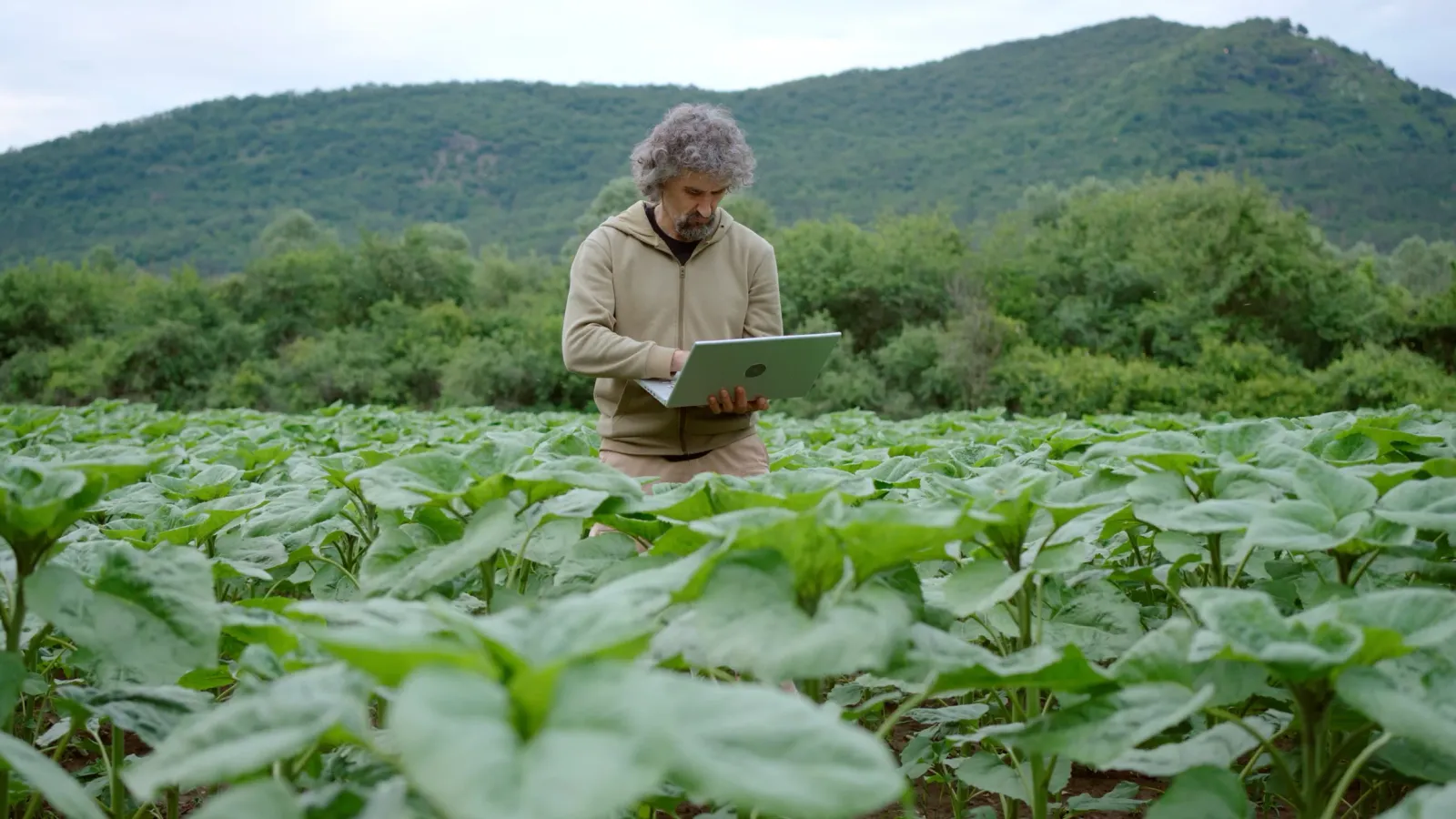
Artificial intelligence is transforming what is possible in agriculture, with research showing gains like 26% higher crop yield, 41% less water use, and 33% less chemical usage. The catch is that these systems only work when companies build a trustworthy data foundation before scaling AI.
Artificial intelligence is already showing serious upside in agriculture. Research cited in MIT Technology Review points to AI-enabled predictive models improving crop yield by 26%, reducing water use by 41%, and cutting chemical usage by 33%. Those numbers are the kind that get executives to lean in, because agriculture is a high-pressure business: fertilizer costs can swing wildly, weather refuses to cooperate, and margins leave little room for expensive mistakes.
But the second the conversation moves from “promising use cases” to “deployment,” the risk shows up. The MIT Technology Review piece warns that AI solutions are only effective with a clean, solid data foundation. Without it, AI can produce misleading outputs that look confident, and then helpfully steer operations in the wrong direction. In other words, in agriculture, an “AI hallucination” is not a curiosity. It is a liability.
So what actually goes wrong? The article describes a familiar vendor pitch pattern in agriculture: monitor crop health in real time, optimize irrigation, and squeeze more yield from every acre. The part that rarely gets airtime is the data underneath those promises. If a yield prediction model is trained on inconsistent historical data, forecasts get less precise. If precision irrigation relies on fragmented sensor data, watering decisions can waste resources instead of saving them. The core failure mode is straightforward: the AI is only as trustworthy as the data it learned from, and agriculture’s data is often messy by default.
Agriculture is a uniquely challenging test case because the data landscape is complex and scattered across many systems. Modern farming and distribution use IoT devices and machinery, irrigation automation, autonomous tractor navigation, and drones capturing field imagery at scale. Add external inputs like weather feeds, U.S. Department of Agriculture data, and third-party market information, and you have a massive “integration problem” before you even get to AI. Even inside a single operation, machine data is disparate by nature.
There is also a geography problem, which matters more than most executives expect. Agricultural AI needs to understand the land, not just the business relationships. That includes GPS coordinates, farm boundaries, field blocks, and soil variation across a property. Recommendations have to be applied at the right location and the right granularity. If AI treats all parts of a field as if they are identical, recommendations become imprecise at best and damaging at worst. Then there is the compliance dimension: chemicals are regulated, and the operational responsibility for recommendations is real. When flawed guidance gets acted on in the field, the consequences can be severe.
This is why “data readiness” becomes the central question, not “AI readiness.” The piece frames data readiness as the difference between AI delivering on its promise and a “garbage in, garbage out” scenario. Fundamentally, it means having a data model that accurately reflects how the business operates, with data that is current, consistent, and accessible. For a distributor example given in the article, Wilbur-Ellis is described as a 104-year-old, family-owned agricultural distributor. In practice, data readiness for an operation like this means understanding customers, which fields they farm, which inputs they need, where those inputs come from, what they paid last season, and how it all connects to margin.
The same idea applies on the farming side: data readiness means a reliable, connected picture across every field. That includes soil health records, input application histories, yield data from previous seasons, equipment performance, and real-time sensor readings from irrigation systems. And crucially, governance matters. Prices change, relationships evolve, suppliers come and go. If an AI system draws on data that was accurate six months ago but has not been maintained, it will effectively make recommendations based on a version of the business that no longer exists.
The article argues the path to solving this is feasible. It starts with a strong data model, described as a single, governed source of truth connecting customers, suppliers, products, pricing, orders, and margins in a way that reflects real operations. Then you need pipelines fast enough to deliver insights when decisions are made, governance frameworks that keep the data trustworthy over time, and security controls so sensitive commercial information is accessible to the right people under the right conditions.
This is where Reltio enters the story. The piece explains that Reltio, described as an SAP company, was built to unify fragmented data so AI agents and systems can operate from a complete picture of the business. It highlights Reltio’s “context intelligence layer,” which is described as bringing together entities, relationships, and rules into a trusted system of context so business data can be accessed and interpreted. The distributor example in the article says that for Wilbur-Ellis, building this trustworthy foundation enables more complex questions and helps teams trust the answers, which is positioned as a precondition for any AI system to be genuinely useful.
For executives deciding what to fund next, the strategic takeaway is blunt: the question is not whether agriculture use cases are promising, because they are. The real question is whether the underlying data foundation is strong enough to make outputs trustworthy. Agriculture already requires high-stakes decisions under uncertainty. AI can speed up and improve those decisions, but only for organizations that do the foundational work first. If you are on a board, running product, or funding analytics and automation, this is the moment where governance and data infrastructure stop being “plumbing” and start being the difference between competitive advantage and expensive disappointment.
This story's Key Insights and Take-aways are locked.
Create a free account to unlock Executive Actions for one credit.
Register to UnlockAlways free for Executives Club members. Join the Club
More in Business

Comcast shares jump 25% as it plans to split NBCUniversal and Sky
The tax-free spin-off could reshape focus, funding, and competition across media and tech for years.

Bungie cuts most Destiny 2 staff as Sony says Marathon still matters
Herman Hulst confirms layoffs affecting most Destiny and some Marathon teams after Bungie admits Destiny fell short.

SK Hynix jumps 11% after seeking up to $29.4B in Nasdaq listing
The chip giant filed for a Nasdaq listing plan that could raise $29.4 billion, instantly reshaping investor expectations.