

AI deciphers two Herculaneum scrolls, including a potential new Stoic work
After nearly 2,000 years, researchers digitally read PHerc. 1667 and PHerc. 172 and may have expanded early Stoicism.
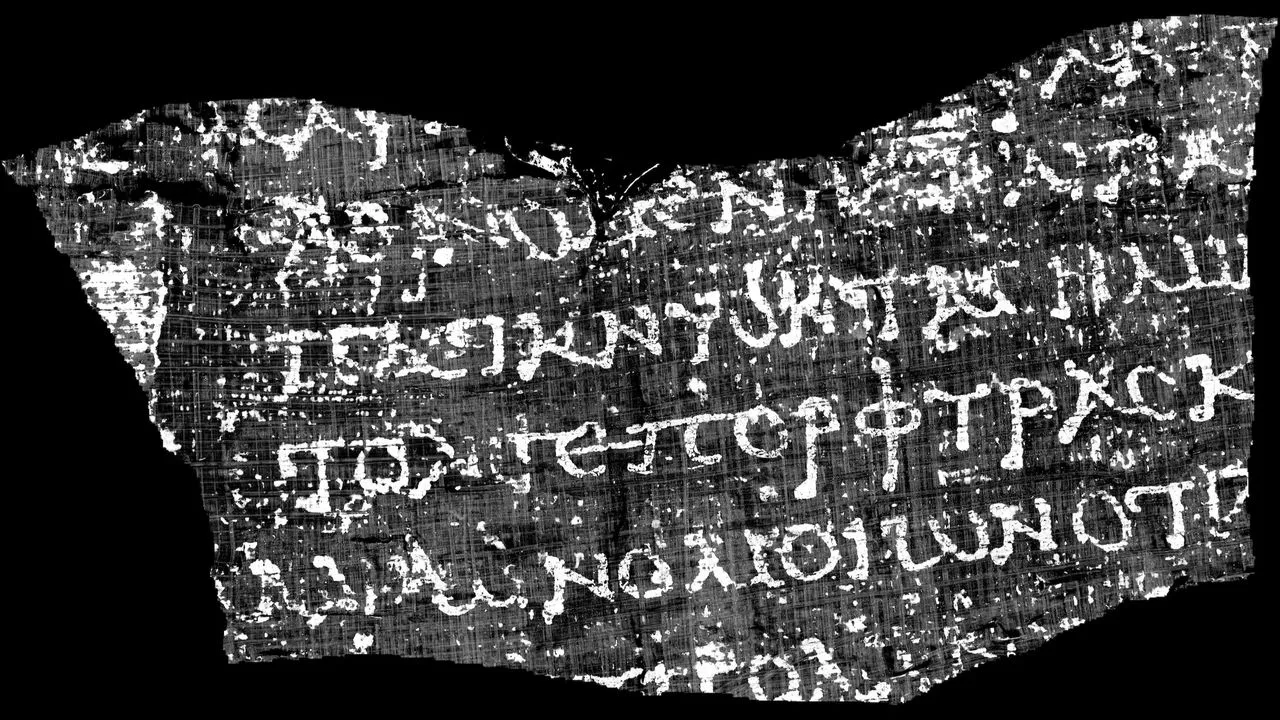
Brent Seales, Vesuvius Challenge co-founder and a computer scientist at the University of Kentucky, helped lead work to digitally read two carbonized scrolls from Herculaneum. The Vesuvius Challenge announced June 25 progress that reveals about 5 feet (1.5 meters) of Greek text in PHerc. 1667 and more than 70 columns from PHerc. 172, potentially adding a previously unknown Stoic philosopher’s work to the record.
Nearly 2,000 years after Mount Vesuvius buried Herculaneum under ash and pumice, researchers have finally managed something that sounds like science fiction and functions like disciplined engineering. On June 25, papyrologists announced that they digitally unwrapped the surviving portion of one carbonized scroll, PHerc. 1667, revealing roughly 5 feet (1.5 meters) of continuous Greek text across 20 columns. This is not “we guessed at the letters.” It is virtual reading of ink that has been physically trapped for almost two millennia.
And the plot twist is that the deciphered content may point to something the academic world cannot afford to shrug off: a previously unknown work by a Stoic philosopher. Part of PHerc. 1667 was physically opened in the 1980s, but overlapping layers made the handwriting effectively unreadable, producing a readability score of zero. Now, thanks to a mix of advanced imaging, artificial intelligence, academic research, and an innovation contest, the same sort of “ink in charcoal” problem that used to require perfect physical access is being attacked digitally, and it is producing actual lines of Greek.
If you are thinking, “Cool history, but why does it matter?” the answer is: this is a template for how capital markets, regulators, and boards should evaluate AI systems that touch real artifacts, real constraints, and real uncertainty. In the Vesuvius Challenge workflow, a synchrotron is used to essentially X-ray inside the scrolls and detect the ink ancient Romans used to write. Then the letters are studied by papyrologists, who translate the text. That separation of tasks is important. Imaging and AI help extract the signal; human experts do interpretation. For decision-makers, that is a governance pattern: automate the hard measurement, keep humans in the interpretation and verification loop.
The other scroll, PHerc. 172, strengthens the case that this is not a one-off miracle. Researchers recovered more than 70 columns of text from PHerc. 172. Together, these two datasets make it harder to dismiss the effort as an artifact of one unique surviving layer or one unusually legible region. When you are building or funding AI-driven discovery systems, repeatability matters. Here, the team is showing that the approach can pull meaningful text from multiple physical objects that were all similarly carbonized and entombed.
Dating also raises the stakes. The handwriting and text of PHerc. 1667 suggest the scroll dates to the second or third century B.C., making it one of the oldest scrolls in the Herculaneum collection. That early date matters for attribution logic. Experts think the scroll cannot have been authored by Philodemus of Gadara, the first-century B.C. Epicurean philosopher whose writings dominated the Herculaneum library. Instead, experts think the text reads more like a Stoic treatise on ethics and human behavior. And it specifically mentions Aristocreon, the nephew and pupil of Chrysippus, an influential Stoic philosopher.
Why would a board or investor care about “it mentions Aristocreon”? Because Chrysippus is one of those foundational intellectual figures where the historical record is thin. Very little of Chrysippus’ own writing has survived. So if the attribution holds up, the discovery would be a significant addition to the historical record of early Stoic thought. That is the academic equivalent of “new primary source material,” and it is exactly the kind of value that persists across cycles. A dataset that can change what scholars believe about origins can also change what gets cited, taught, and researched next.
There is a second discovery in the same arena: researchers identified a new book title within scroll PHerc. 139. The end of that scroll references Philodemus’ eighth book of “On Gods.” While the treatise had previously been known to exist, the new discovery reveals the work extended across at least eight volumes. Experts plan to reexamine other texts in the Herculaneum collection for additional volumes that may belong to the same series. They are also working under a sobering constraint: more than 600 Herculaneum scrolls remain unopened. The “what if we are only seeing the top layer” question is now formalized as a pipeline problem.
For executives, the second-order implication is clear: AI is not replacing expertise here. It is expanding access. The unspoken risk in any AI system is that it produces confident-sounding output from noisy inputs. The Vesuvius Challenge reduces that risk by grounding extraction in imaging and keeping translation in the hands of papyrologists. At the strategy level, the story is a reminder that the best AI wins are often hybrid: machine does the pattern hunting inside constrained physical data; humans do the scholarly validation. For anyone in tech, research, media, or heritage with a stake in authenticity, this is a real-world case study in how to turn “inaccessible” into “readable” without pretending the model is omniscient.
This story's Key Insights and Take-aways are locked.
Create a free account to unlock Executive Actions for one credit.
Register to UnlockAlways free for Executives Club members. Join the Club
More in Science

Alaska's 1,580-foot tsunami had warning signs. Scientists just found them.
Rapid glacier retreat, heavy rainfall, and thousands of tiny tremors preceded Alaska's 1,580-foot tsunami, a warning for every coastal community in a warming world.
The rare mutation that lets high-risk brains dodge Alzheimer's
Scientists found a natural defense against protein buildup, opening a new path to preventive treatments.

3,000 steps a day may halve Alzheimer's decline, study finds
New research links a modest daily walk to less tau buildup and nearly half the cognitive and functional decline, even for those with early signs.