
AI helped mathematicians formalize Fermat’s last theorem faster than expected in London
What happened at a London event suggests AI may accelerate proof-checkable math, with spillovers for research workflows.
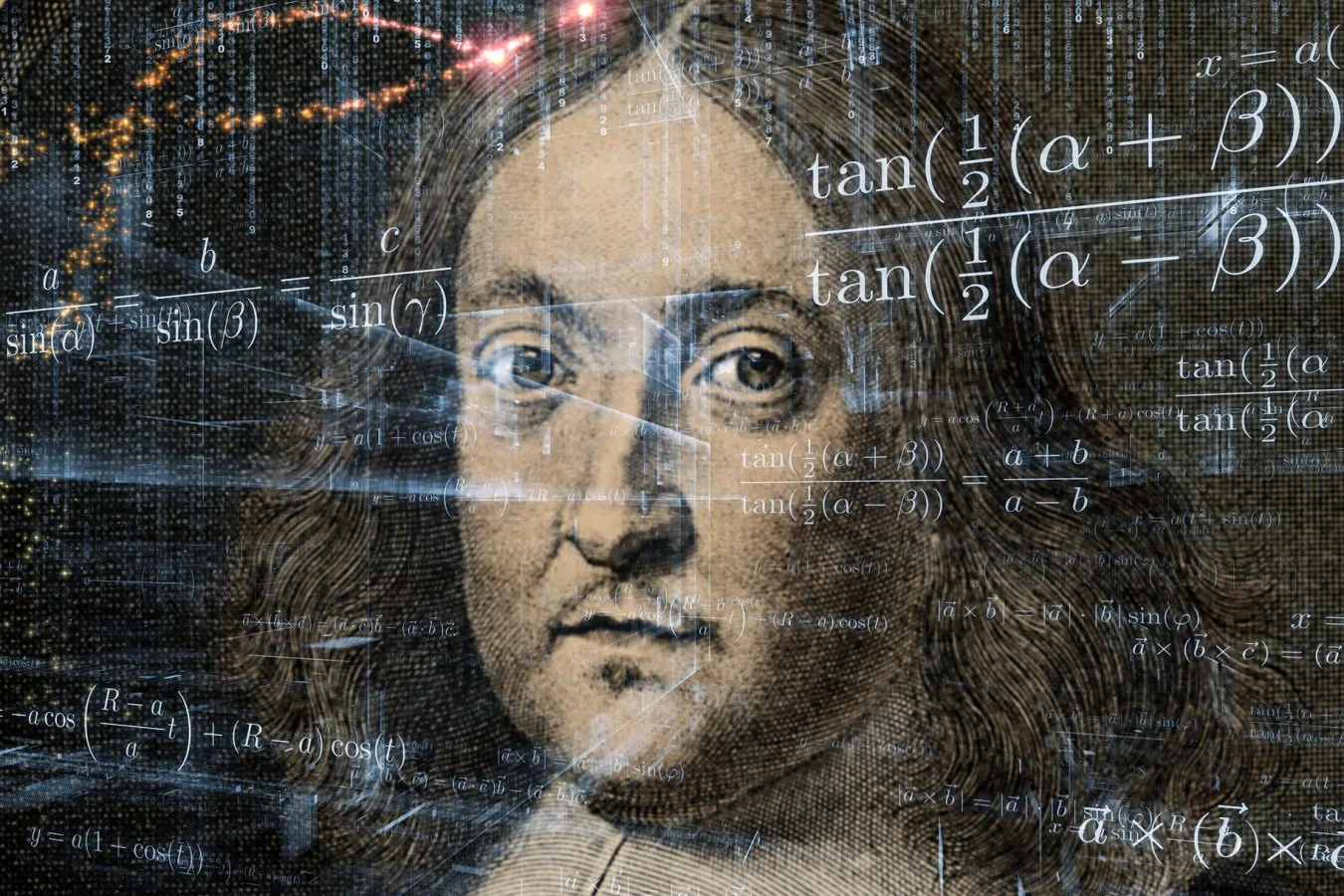
Mathematicians at a London event used AI to formalise Fermat's last theorem and reported unexpectedly fast progress. For decision-makers, the implication is that AI is moving from drafting ideas to producing machine-checkable knowledge more quickly.
In London, mathematicians say they have made unexpectedly fast progress formalising Fermat's last theorem using AI. That detail matters because “formalising” is not the same as writing a convincing explanation. Formalisation means turning the theorem and its proof into a format that can be checked step by step by a system, the kind of work where mistakes get caught ruthlessly, not waved away.
So the headline stake is simple: AI might be speeding up a notoriously slow part of mathematics. At an event in London, the group working on this approach highlighted how quickly they could get traction on the formal proof work. The story is not “AI solved Fermat in one shot.” It is closer to “AI reduced the time and friction of building proof scaffolding that humans still need to verify and complete.”
To understand why this is genuinely interesting to anyone running a business, think about what formal methods mean outside of math. In software, formal verification is the high-assurance cousin of testing: it tries to prove properties of a system, rather than merely check it behaves correctly in selected cases. Formalising Fermat's last theorem is, in spirit, the extreme version of that mindset. It represents a pipeline where every inference must be legitimate. When AI helps with such a pipeline, the promise is not just speed, it is reliability.
Now zoom out to why AI in rigorous domains is a board-level topic, even if you are not a mathematician. AI has been extremely good at producing plausible text, code, and patterns. The hard part has been moving from “plausible” to “provably correct” and from “written by AI” to “checked by systems humans trust.” Formalisation is a stress test. It forces the system to deliver output that can be decomposed into verifiable steps. That is also where governance pressure comes from. The more consequential the domain, the less tolerance there is for hand-waving.
Regulatory and compliance frameworks are also indirectly relevant here. While this specific story is about mathematics, the broader world of AI governance is concerned with auditability, traceability, and risk controls. Proof formalisation is a natural fit for that language. If AI can help generate candidates that are then checked formally, you get a workflow with clearer accountability boundaries: humans and tools can test whether each step follows. That distinction tends to matter to regulators and internal risk teams who are trying to separate “model output that might be wrong” from “output that is verified.”
There is also an incentive story for institutions, research labs, and funders. Mathematics, like many research fields, runs on scarce attention. The time sinks are not just clever ideas, but the long grind of making them precise enough to survive scrutiny. If AI can compress parts of that grind, it can shift what gets funded and what gets pursued. A faster proof formalisation cycle can mean quicker publication of machine-checkable results, and potentially more resources allocated to work that would otherwise stall at the “can we make it rigorous?” stage.
What is “second-order” here is how it might reshape collaborations and toolchains. Proof formalisation is typically a specialized practice with a lot of manual labor. If AI can assist with earlier stages, then the human role changes from authoring every detail to supervising verification, guiding the system, and repairing gaps. That can re-balance team composition. You can imagine more hybrid roles where mathematicians and verification-oriented engineers co-lead pipelines, and where tool developers have a bigger say in what counts as progress.
For executives and investors watching AI progress, the practical takeaway is not that Fermat’s last theorem is now “solved.” The payoff is that AI is being used on a task where correctness is non-negotiable, and researchers report unexpectedly fast progress. In other words, AI is inching closer to becoming part of the infrastructure for creating trustworthy knowledge, not just generating content. If that trend holds, it could influence how organizations evaluate AI systems, structure approvals, and budget for verification workflows in everything from research to regulated engineering.
This story's Key Insights and Take-aways are locked.
Create a free account to unlock Executive Actions for one credit.
Register to UnlockAlways free for Executives Club members. Join the Club
More in Science

Alaska's 1,580-foot tsunami had warning signs. Scientists just found them.
Rapid glacier retreat, heavy rainfall, and thousands of tiny tremors preceded Alaska's 1,580-foot tsunami, a warning for every coastal community in a warming world.

The rare mutation that lets high-risk brains dodge Alzheimer's
Scientists found a natural defense against protein buildup, opening a new path to preventive treatments.

3,000 steps a day may halve Alzheimer's decline, study finds
New research links a modest daily walk to less tau buildup and nearly half the cognitive and functional decline, even for those with early signs.