
Bruno David links ash rituals in Cloggs cave to 25,000 years of GunaiKurnai practice
Phytolith evidence shows grass ash was made in repeating layers, extending ritual continuity far beyond earlier estimates.
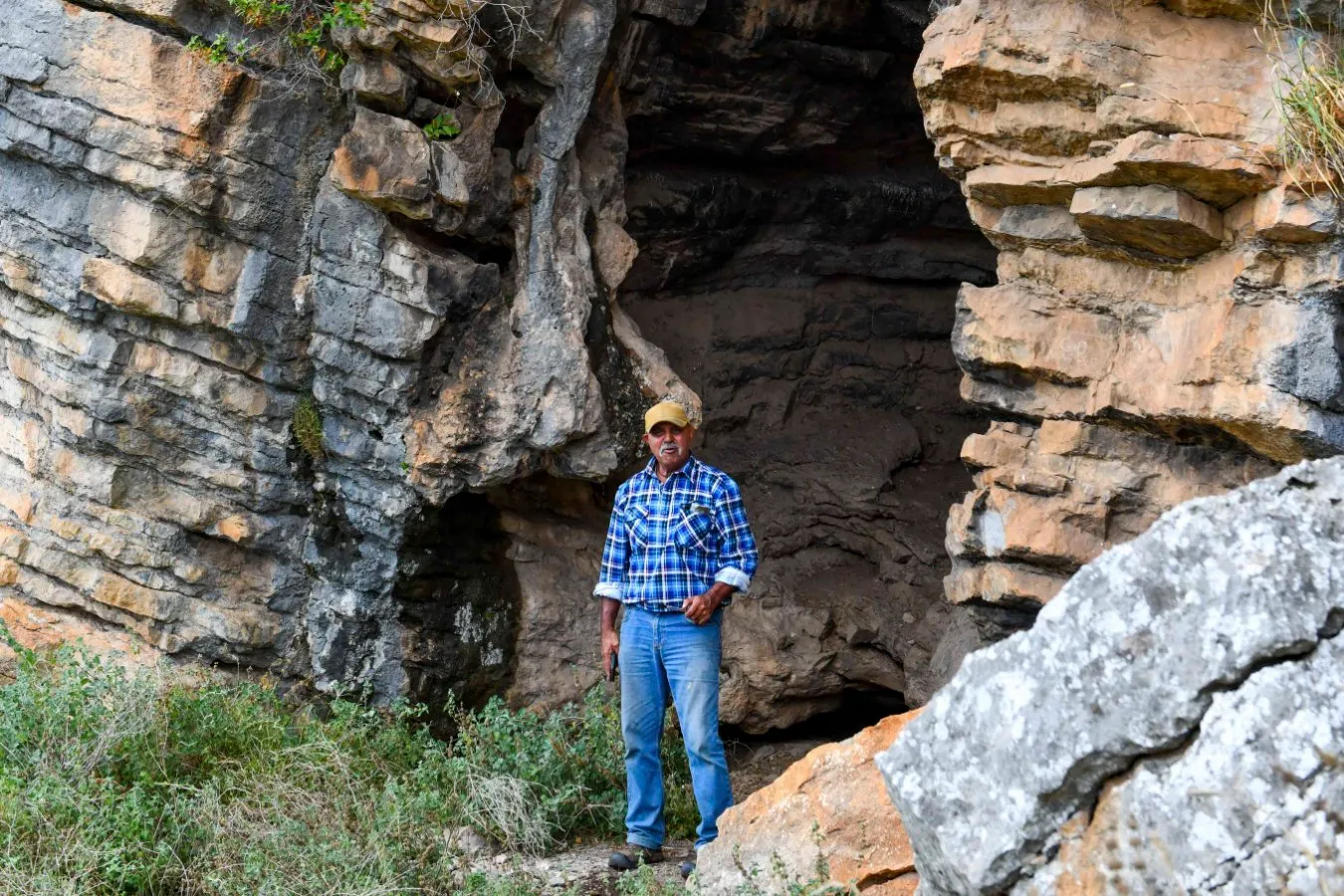
Bruno David of Monash University, GunaiKurnai elder Russell Mullett, and colleagues used microscopic phytoliths to date repeated grass-ash practices at Cloggs cave in south-eastern Australia. The finding pushes evidence for those cultural rituals back 25,000 years and ties ash-making to ceremonies recorded in the 1880s.
Bruno David at Monash University in Melbourne, working with Russell Mullett, a GunaiKurnai elder, and colleagues, has found evidence that magic, healing, and even cursing rituals were carried out inside Cloggs cave for far longer than previously demonstrated. The key evidence is grass ash layered across millennia, traced through thousands of microscopic, silt-sized plant cells called phytoliths.
The surprising part is the timescale: the work points to grass burning going back 25,000 years inside the cave. The story is not just “people used the cave a long time ago,” it is “people repeatedly made thin layers of ash over many millennia,” suggesting continuity through culture rather than a one-off event. Cloggs cave sits in the homeland of the GunaiKurnai people in south-eastern Victoria.
This matters because the cave had already been generating serious attention. In 2024, archaeologists and traditional owners announced the discovery of ancient artefacts inside the cave, which they said provided evidence for a ritual that might have survived for 12,000 years into modern times. Now, David and Mullett’s team has uncovered evidence that more than doubles the amount of time that cultural practices took place in the cave. That shift changes what decision-makers in research, museums, and heritage bodies might treat as “proven” about the depth of Indigenous cultural continuity in Australia. It is also a reminder that archaeology is not only about big artifacts; it can hinge on the chemistry of everyday plants.
So how do you measure rituals that happened tens of thousands of years ago? The team focused on phytoliths, which form when plants absorb soluble silica from the soil and deposit it within their structures. Those phytoliths can fossilize, leaving a microscopic record behind. The researchers found that grasses were dominant in the burnt phytoliths, making up 97 per cent of the burnt material identified in the cave.
David’s interpretation is grounded in plant behavior under heat. He thinks grasses were collected and burned because grasses “immediately turn to ash, rather than charcoal,” when burnt. In other words, if you see repeated ash signatures, the most likely mechanism is repeated burning of grass, not some accidental spill or unrelated burning. The researchers also concluded that people brought whole grasses into the cave, including their roots, and burnt them repeatedly to create thin layers of ash.
Crucially, the team then connected those lab and field signals to cultural accounts. They linked the ash-burning practice with ceremonies described by the anthropologist Alfred Howitt. In the 1880s, Howitt recorded ceremonies of powerful medicine men and women across other parts of GunaiKurnai country, describing them as “wizards.” In those accounts, ash is portrayed as an important part of GunaiKurnai rituals in the 19th century. That is not a detail you want to treat casually: when independent scientific evidence (phytolith layers, burnt signatures, spatial patterns) aligns with recorded cultural knowledge, it strengthens the case that the physical remains are tied to lived practice, not just random landscape change.
The record also shows a change in intensity over time. David says “Such burning of grass goes back to 25,000 years ago inside the cave, but between 4400 and 1600 years ago, the burning of ash layers became more frequent and more widespread across the floor of the cave.” Around 2000 years ago, the cave’s standing stone was erected, and over the next 400 years, grass was burnt all around it. That spatial relationship is especially persuasive because standing stones are not neutral features. They often anchor repeated attention, and here the ash evidence expands around that landmark.
The researchers were also careful about alternative explanations. Unlike pollen, which wind can carry, phytoliths are usually deposited immediately beside the plants that produced them. That reduces the odds that the cave filled with plant remains from elsewhere. The team also ruled out the possibility that the fossils were washed in by a flood. They even used animal traces to sharpen the logic: the cave contained phytoliths deposited in the scats of common brushtail possums (Trichosurus vulpecula), but those were unburnt, distinguishing them from the phytoliths created by human burning.
What they did find was evidence that the ashes were not always associated with identical archaeological remains, implying a range of practices at the site. David describes a shift: prior to 4400 years ago, bringing and burning grass was more sporadic and less frequent, which did not result in the repeated dense ashy layers observed after 4400 years ago, even though other kinds of ritual activities occurred earlier, including activities involving stalactites and miniature fires with single fat-smeared sticks.
An additional angle comes from Anna Florin at the Australian National University in Canberra, who says archaeobotanical research has been underrepresented in Australian archaeology, meaning “a large portion of past life has been understudied.” Her praise is specific: this study weaves careful scientific analysis of phytoliths with GunaiKurnai cultural knowledge to show that grasses were specially collected and burnt at Clogg’s cave to support ritual practices over many millennia. For leaders overseeing heritage strategy, research funding, or curation, the takeaway is not just scientific. It is operational: the work demonstrates that high-quality answers depend on combining methods and respecting Indigenous knowledge systems as part of the evidence.
Strategically, this is the kind of finding that changes how institutions think about timelines, narrative authority, and the resources required for “small” biological traces to become “big” historical claims. If phytolith layers can map repeated ceremonies for 25,000 years in one cave, what else might be hiding in the microbial-scale leftovers across other sites? And for executives in research and cultural organizations, the question quickly becomes: are you funding the right tools and partnerships to find out?
This story's Key Insights and Take-aways are locked.
Create a free account to unlock Executive Actions for one credit.
Register to UnlockAlways free for Executives Club members. Join the Club
More in Science

Alaska's 1,580-foot tsunami had warning signs. Scientists just found them.
Rapid glacier retreat, heavy rainfall, and thousands of tiny tremors preceded Alaska's 1,580-foot tsunami, a warning for every coastal community in a warming world.

The rare mutation that lets high-risk brains dodge Alzheimer's
Scientists found a natural defense against protein buildup, opening a new path to preventive treatments.

3,000 steps a day may halve Alzheimer's decline, study finds
New research links a modest daily walk to less tau buildup and nearly half the cognitive and functional decline, even for those with early signs.