

AI-optimized servers will use 47.8% more power than “conventional” by 2027
Gartner forecasts AI server power growth outpacing conventional, tightening grid constraints and raising the cost of scaling AI.
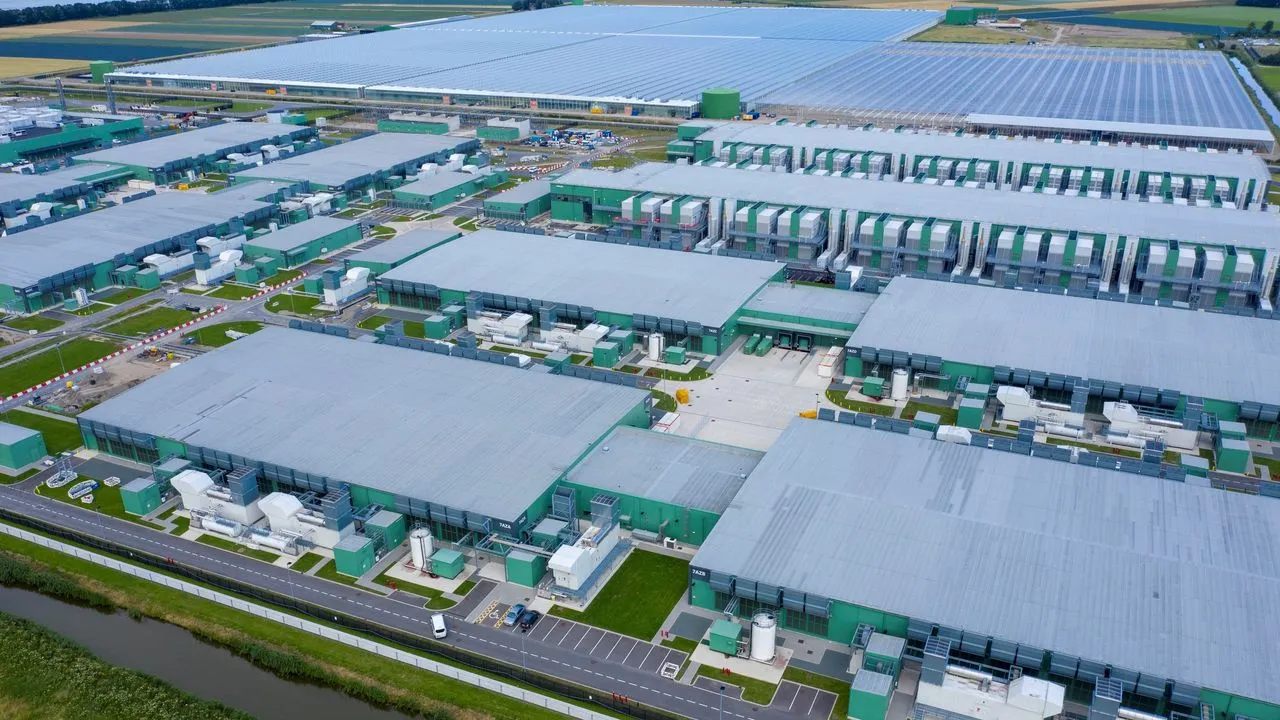
Gartner forecasts that AI-optimized server adoption will account for 31% of data center power consumption this year and that AI servers’ power demands will rise 47.8% by 2027, surpassing “conventional servers.” The implication for decision-makers: power availability is becoming the bottleneck that can cap AI capacity and margins.
If your AI roadmap assumes compute is the only constraint, Gartner is telling you to update the spreadsheet. By 2027, the power demands of AI servers are expected to grow by 47.8%, surpassing the power demand growth of “conventional servers.” In 2026, “conventional servers” grew by about 1.2%, and they are on a trajectory to grow by 2.4% in 2027. In other words: the electricity bill is no longer background noise. It is the schedule.
The broader numbers are what make this feel urgent, not academic. Worldwide data center electricity consumption is expected to rise from 447 terawatt-hours in 2025 to 565 terawatt-hours in 2026, a 26% year-over-year increase, according to Gartner’s latest forecast. Data center power demand globally is also expected to rise 27% this year, peaking at a predicted total of 132 gigawatts, up from 104 GW in 2025. Gartner expects that data center demand may cross the 290 GW mark by 2030.
This is not just about more servers. Gartner estimates that AI-optimized server adoption will account for 31% of data center power consumption this year, having grown by 84.2%. The idea is simple: AI workloads are compute-intensive, and AI capacity is now constrained by power availability. Gartner’s Director Analyst Linglan Wang frames it as a new center of gravity for the “global AI race”: “Surging demand for compute-intensive AI workloads is driving unprecedented data center power growth, while AI capacity is now constrained by power availability, making data center power security the new battle ground for scaling and protecting margins in the global AI race.”
That “power security” language matters because it reframes the risk. A traditional capex plan can assume that building capacity is the hard part. This forecast suggests that capacity is also a power procurement problem, where the limiting factor is often not the servers themselves, but the ability to reliably deliver electricity at scale. When power becomes the gating item, the bottleneck shifts from engineering to infrastructure contracting, from deployment to grid timelines, and from pure capacity planning to operational resilience. The knock-on effects can show up as delayed training cycles, higher procurement costs, or a re-prioritization of which workloads get to run.
The friction is also physical. The source points out that analysts expect data center demand to keep rising as AI infrastructure expands, and it adds an extra layer of environmental and operational constraint. Recent analysis of Google’s latest environmental report suggests the company’s energy consumption is on a trend of exponential growth, and the total electricity consumption for Google last year was 43 TWh, which the piece notes is almost 10% of Gartner’s global numbers. Not all of that electricity comes from renewable sources, which means the emissions and sustainability story is intertwined with the raw energy story, not separate from it.
Location and cooling are another second-order accelerant. The article notes that 80% of the world’s data centers have been built in less than optimal climates, and that they compensate with temperature control systems. Gartner lists the power consumption of the “Cooling and other Infrastructure” data center segment as having grown by 22.6% in 2026. So even if IT teams optimize model efficiency, the facilities side can still push power usage upward when cooling demand increases.
Put it together and the political economy starts to look messy. The forecast implies increased demand will likely tax local power infrastructure. That is not just a utility problem in the abstract. It is the neighbor problem, the permitting problem, and potentially the reliability problem. Data centers are often seen as desirable investments, but this dynamic can trigger local opposition when grids are strained, when outages threaten, or when the environmental impacts are too visible to ignore. For boards and executives trying to scale AI, the punchline is clear: power availability is becoming a strategic constraint, and it can decide who grows fast enough and who gets stuck defending margins while competitors keep moving.
This story's Key Insights and Take-aways are locked.
Create a free account to unlock Executive Actions for one credit.
Register to UnlockAlways free for Executives Club members. Join the Club
More in Entertainment

12TB Steam 'teraleak' goes beyond Valve: GTA 3, Mafia 2 prototypes exposed
A 12-terabyte dump of Steam data reveals prototypes and builds of third-party classics like GTA 3 and Mafia 2, plus unreleased Valve content, rewriting game history.

LinkedIn's romance problem: 1 in 4 workers say dating on it is fair game
A new survey shows a quarter of U.S. employees treat the professional network as fair game for romance, even as LinkedIn bans it and removes hundreds of thousands of offending posts.

Enhypen's first No. 1 album breaks K-pop's Billboard 200 streak
The K-pop group's 98,000-unit debut tops the chart while Dolly Parton's catalog reentry shows how death reshapes streaming.