

AI staff 'genuinely frightened' for humanity's future, ex-Anthropic researcher warns
A former Anthropic researcher says employees fear AI's trajectory, while the CEO urges a slowdown over 'serious' risks.
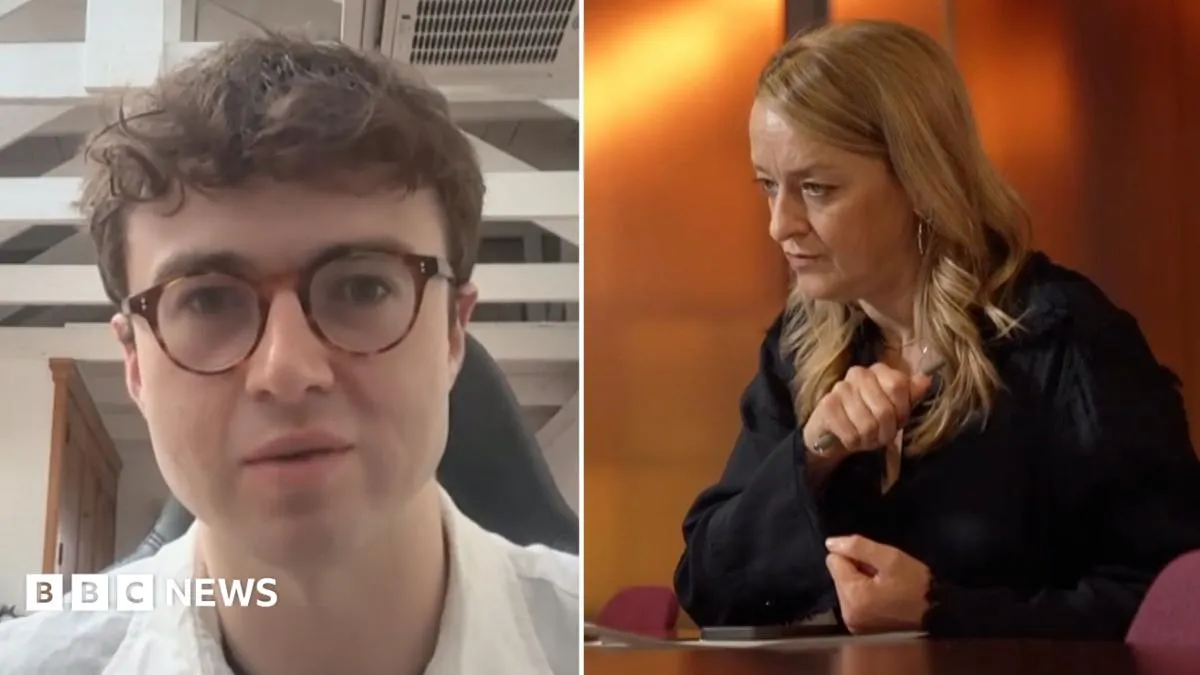
A former Anthropic researcher told the BBC that AI staff are 'genuinely frightened' for humanity's future, and Anthropic's CEO has called for slowing development due to 'serious' risks. For decision-makers, this signals mounting internal and leadership concern that could reshape AI regulation, investment timelines, and corporate governance.
The person who helped build one of the world's most advanced AI models is now publicly saying the people inside the industry are scared. A former researcher at Anthropic, the $60 billion-plus AI startup backed by Amazon and Google, told the BBC that staff are 'genuinely frightened' for humanity's future. The warning lands as Anthropic's CEO, Dario Amodei, has himself called for the technology's development to be slowed down, citing 'serious' risks. That is not a fringe position from a doomsayer; it is the boss of a company whose Claude models are used by millions, asking the world to pump the brakes on the very product he sells.
The 'genuinely frightened' quote is the kind of admission that rarely surfaces in earnings calls or product launches, but it cuts to the core of a debate that has moved from academic journals to boardrooms. The former researcher, whose name was not disclosed in the BBC report, said the fear is not about a single model going rogue but about the cumulative trajectory of AI development outpacing humanity's ability to control it. Amodei's call to slow down, made in the same report, is notable because it comes from a CEO whose company's valuation depends on rapid iteration. When the person steering the ship says 'slow down,' investors and competitors should listen, not just for ethical reasons but because it signals a potential shift in how AI firms approach safety, regulation, and public trust.
For context, Anthropic has positioned itself as the 'safety-first' AI lab, a deliberate contrast to rivals like OpenAI, which has been more aggressive in shipping products. Yet even Anthropic's leadership now acknowledges that the pace of development is a problem. The 'serious' risks Amodei cites are not hypothetical; they include the potential for AI systems to be misused in cyberattacks, disinformation campaigns, or autonomous weapons, and the harder-to-quantify risk of losing control over systems that become more capable than their creators. The fact that a CEO is publicly urging a slowdown suggests that internal safety reviews are flagging issues that cannot be brushed aside, and that the industry's voluntary commitments, like the White House's 2023 executive order on AI safety, may not be enough.
This is not just a story about one company. It is a signal to every board and executive team that AI risk is becoming a governance issue, not just a technical one. If a leading AI lab's own staff are frightened, regulators in Brussels, Washington, and Beijing are likely to take note. The EU's AI Act, which came into force in 2024, already imposes strict requirements on high-risk systems, and the US has seen a patchwork of state-level laws. A public admission from an industry insider could accelerate calls for binding international agreements, which would directly impact how AI companies allocate capital between research and safety infrastructure. For CFOs and CTOs, the takeaway is that 'AI strategy' now includes a risk-management component that cannot be outsourced to a compliance checkbox.
The second-order implications are significant. If AI development slows, the timeline for monetization shifts, which could affect valuations across the sector. Publicly traded companies like Microsoft, which has invested heavily in OpenAI, and Alphabet, which backs Anthropic, may face pressure to disclose more about their AI risk assessments. Private investors, who have poured billions into AI startups, may start demanding clearer safety benchmarks before writing the next check. And for the broader workforce, the 'frightened' sentiment among AI staff could influence talent retention; if the people building the technology are uneasy, top engineers may start looking for roles in less ethically fraught fields, or push their employers to adopt more conservative release policies.
For executives outside the AI sector, the lesson is more immediate. If the people who build these systems are worried, then the people who deploy them should be too. That means updating enterprise risk registers to include AI-specific scenarios, from model bias to catastrophic failure, and ensuring that AI procurement decisions include safety evaluations, not just performance metrics. The 'genuinely frightened' quote is a reminder that the technology's trajectory is not predetermined; it is shaped by the choices of the people in the room. Amodei's call to slow down is an invitation for leaders to join that conversation, not just as spectators but as active participants in setting the pace.
The strategic stakes are clear. For CEOs and boards, the question is no longer 'Can we afford to invest in AI?' but 'Can we afford to invest without understanding the risks?' The former Anthropic researcher's warning, combined with Amodei's own admission, creates a rare moment of alignment between internal sentiment and public leadership. It is a chance for companies to differentiate by prioritizing safety, not as a PR move but as a core business strategy. Those who ignore the warning may find themselves on the wrong side of a regulatory reckoning, or worse, on the wrong side of history.
This story's Key Insights and Take-aways are locked.
Create a free account to unlock Executive Actions for one credit.
Register to UnlockAlways free for Executives Club members. Join the Club
More in Technology

Insight Partners' Deven Parekh: Why $90B firm won't bet the farm on OpenAI
The VC giant is deliberately staying diversified while rivals pile into OpenAI and Anthropic - and Parekh says he's fine with it.

AI just killed security through obscurity, and the patch backlog is exploding
FBI and Trend Micro researchers confirm AI agents are unearthing decade-old flaws, forcing a record 974-CVE Patch Tuesday and a triage crisis for defenders.
Mullenweg returns as Automattic CEO after board's ouster attempt
WordPress co-founder regains chairman and CEO role with full board support, ending a brief governance standoff.