
AI turns CMOs into CEO contenders, with 37% of Fortune 500 CEOs having marketing experience
Why CMOs now own growth, data, and genAI strategy, and how that changes who boards trust with the corner office.
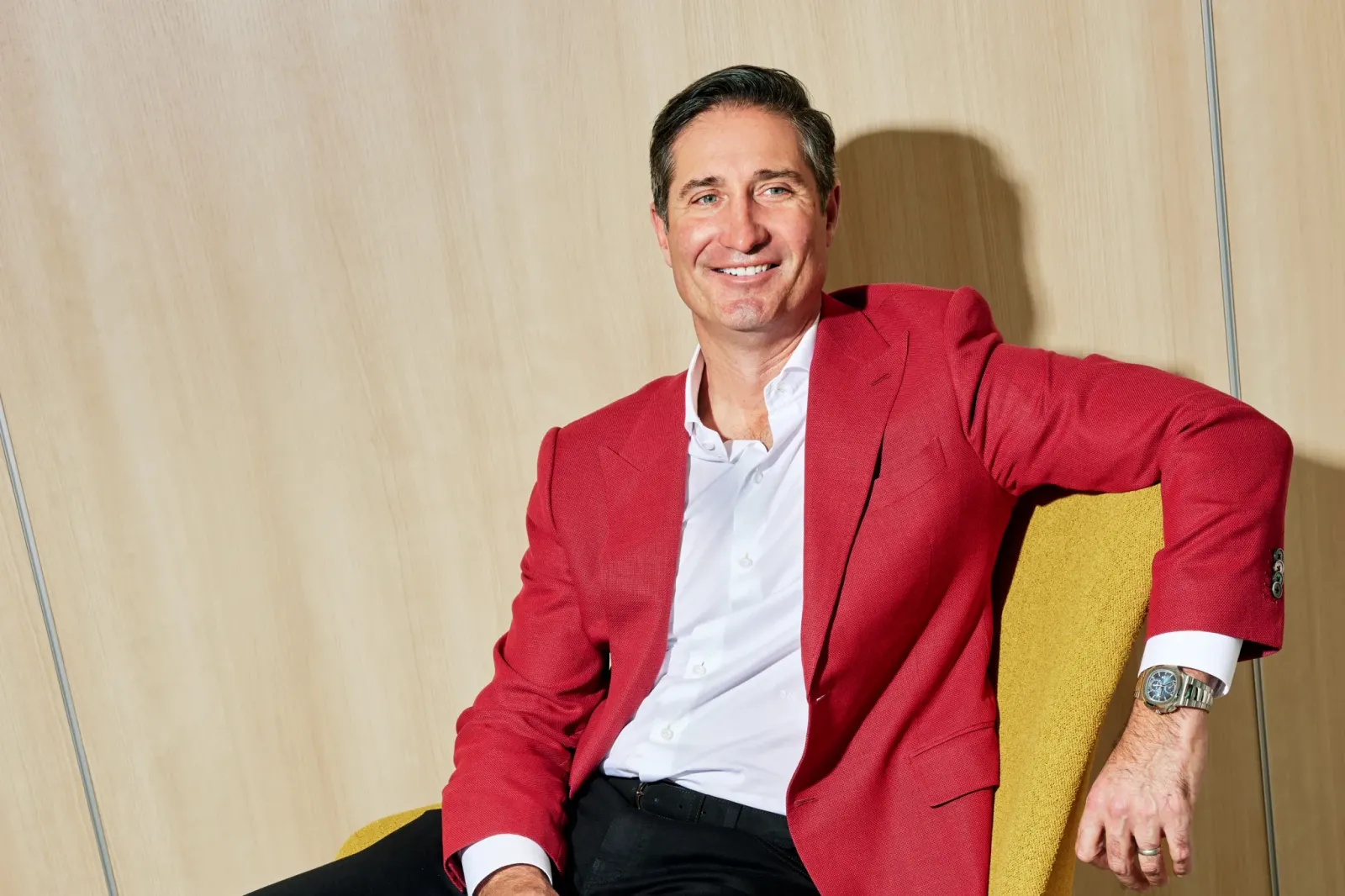
Fortune reports that AI is reshaping how consumers discover and evaluate brands, boosting the influence of CMOs in the C-suite. Executive search firm Spencer Stuart and a Boston Consulting Group survey point to a pipeline shift where marketing experience increasingly overlaps with CEO backgrounds.
If you follow who ends up running the biggest companies, the story is getting rewritten in real time. Spencer Stuart found that only about 10% of departing Fortune 500 CMOs move directly into CEO roles, but roughly 37% of sitting Fortune 500 CEOs have marketing experience somewhere in their careers. That is a big disconnect. The leap from CMO to CEO is still rare, but marketing experience is becoming a common credential for the top job.
Now layer AI on top of that. In a Boston Consulting Group survey published last week, 90% of CMOs said generative AI is already reshaping how consumers discover and evaluate brands, making visibility in AI-powered recommendation and discovery systems a new competitive battleground. Translation: “brand building” is colliding with “algorithmic discovery,” and the person who can operate both worlds gets pulled closer to the C-suite center.
Fortune’s on the ground at the Cannes Lions International Festival of Creativity, and the theme coming through is that AI is shifting what marketing is responsible for. CMOs are not just tasked with brand. They are increasingly accountable for growth, technology, data, and AI strategy. That expanded remit matters because it aligns marketing with the hardest parts of modern company performance: understanding customers, deciding what to build, and scaling demand. When the marketing leader is driving revenue mechanics and not just messaging, boards start to treat that role like an operating job.
This is why the next-gen CMO profile looks different from the traditional stereotype of the brand storyteller. BCG’s findings, as Fortune summarizes them, show marketing is going deeper into insights, analytics, media planning, content production, measurement, and governance. In plain English, the marketing function starts behaving like a system that needs reliability. Not vibes. Not only creative output. Measurement, targeting, optimization, and governance become core to execution.
BCG also reports that roughly 80% of CMOs told the firm they are making significant investments in AI upskilling. That investment is not a side quest. It is a response to a market where consumer journeys are increasingly mediated by AI systems that surface content, rank options, and personalize experiences. The competitive battleground is not only “who can make the best ad.” It is who can ensure the brand is discoverable and credible inside recommendation engines, and who can translate data into performance quickly enough to keep up.
In a conversation summarized by Fortune, BCG’s global CMO Jessica Apotheker argues that today’s most effective CMOs combine three capabilities: art, science, and orchestration. Art is creativity and brand building. Science is analytics, measurement, customer data, and increasingly AI. Orchestration is aligning marketing with business priorities. Apotheker’s point, as Fortune reports it, is that many marketing organizations remain disproportionately focused on the creative side, while the fastest-moving companies tend to have strong analytics, data, and measurement capabilities already in place.
She also challenges a common assumption about marketing leadership: that great strategy and creativity alone are sufficient. In practice, she argues execution determines performance. Success depends on how effectively teams use data, target audiences, optimize campaigns, and translate insights into action. That is the second-order shift: marketing becomes an operating discipline, not just a creative discipline. And once it is an operating discipline, it starts looking a lot like what CEOs do all day, only with different inputs.
So what happens to the CEO pipeline? Fortune points to several chief executives whose careers illustrate marketing as a springboard to the corner office. Brian Cornell, after leading Target for more than a decade, was previously Safeway’s chief marketing officer. Mary Dillon, former CEO of Ulta Beauty and Foot Locker, served as global CMO of McDonald’s. Brian Niccol, now CEO of Starbucks, was chief marketing and innovation officer at Taco Bell before becoming CEO of both Taco Bell and Chipotle, and later Starbucks. Andrea Jung rose through global marketing at Avon before becoming its CEO. Their shared theme is customer understanding as executive capital.
AI makes that theme more valuable because customer understanding increasingly requires technical fluency and rapid feedback loops. It also raises governance and compliance questions for marketing organizations, even if the Fortune piece does not go deep into specific regulators. In a world of personalized recommendations, data use, model outputs, and automated targeting, businesses have to manage how they collect data, how they measure outcomes, and how they govern the risks tied to targeting and content. The practical impact is that boards may look for leaders who can balance performance with responsibility, and marketing is being dragged into that balancing act.
For CMOs, the stakes are personal and immediate: if 90% of CMOs say genAI is reshaping discovery and evaluation, then the role is only growing in strategic importance. For CEOs and boards, the implication is more subtle but just as consequential. When marketing owns data, measurement, and AI visibility, the CMO becomes a closer partner to strategy and capital allocation, not merely a communicator. The question for executive search and succession planning is no longer whether marketing can produce a CEO. It is whether the marketing operators who can run orchestration, science, and execution are becoming the default candidates as AI changes how demand is created and captured.
This story's Key Insights and Take-aways are locked.
Create a free account to unlock Executive Actions for one credit.
Register to UnlockAlways free for Executives Club members. Join the Club
More in Business
Accenture’s $4.18bn play fails as AI fears spark a 20% worst-ever stock plunge
On Thursday, Accenture hit its biggest one-day drop on record after forecasting worries that AI could hollow out consulting.

SpaceX stock jumps 3% after it overtakes Amazon’s market cap
CNBC says SpaceX’s shares surge following its IPO Friday, forcing investors to reprice what “space” and “AI” are worth.

SpaceX’s first options day breaks U.S. records after a $85B IPO win
Big IPO, bigger options debut: what it means for investors, risk teams, and anyone benchmarking market appetite.