

Airbus lands 55-aircraft order from Air China and Shenzhen, including 15 A350s
The split of 15 widebody A350-900s and 40 A320neos signals where China is funding next.
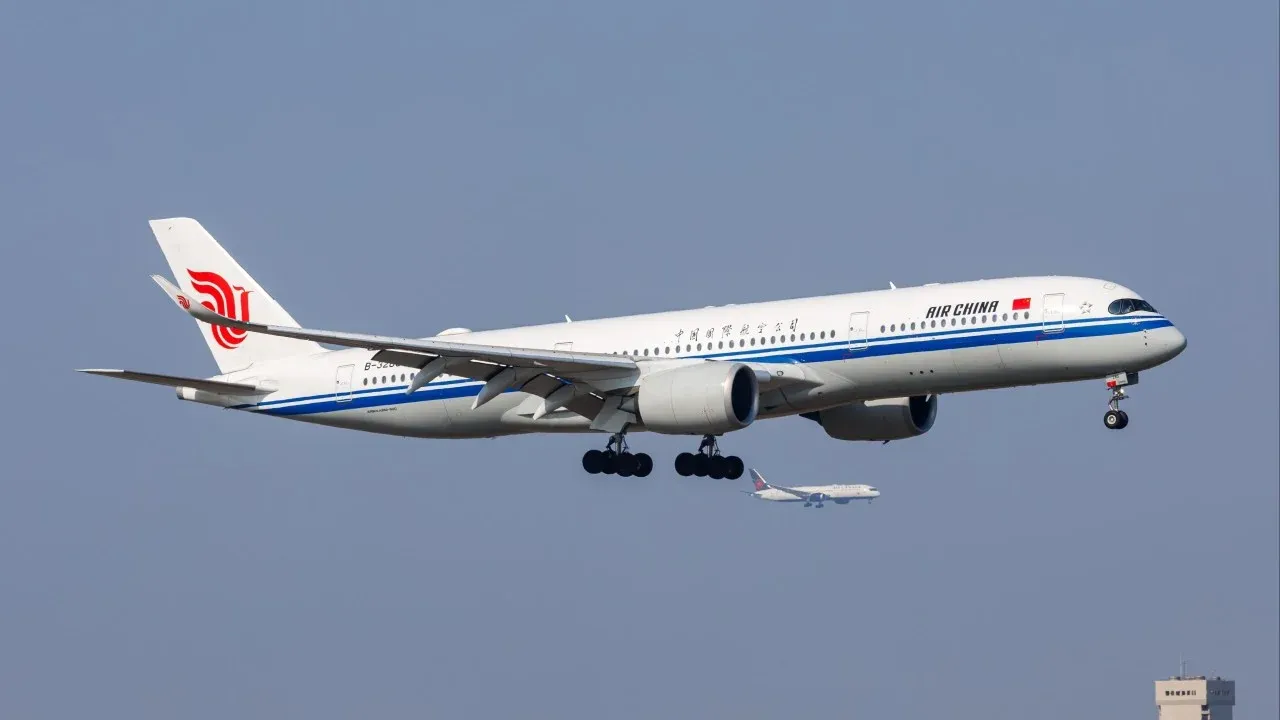
Airbus secured an order for 55 aircraft from Air China and Shenzhen Airlines, announced Friday. Air China will buy 15 A350-900 passenger jets, while its subsidiary Shenzhen Airlines will acquire 40 narrowbody A320neo aircraft.
Airbus just locked in a 55-aircraft order in China, and the headline number is the widebody punchline: 15 of those planes are Airbus A350-900s. Air China, one of the country’s three major state-owned carriers, announced the deal on Friday. In parallel, Shenzhen Airlines, a subsidiary of Air China, will take 40 narrowbody A320neo aircraft.
For decision-makers watching global aviation demand, this is not a “nice to have” order. It is direct confirmation that Airbus is strengthening its widebody sales in the world’s second-largest air transport market, and that Chinese carriers are still spending on capacity upgrades across both long-haul and regional fleets. The mix also matters internally: an Air China widebody buildout means more routes that need the A350’s long-range profile, while the Shenzhen A320neo block signals continued growth and replacement in higher-frequency segments.
Zoom out to the industry logic. Widebody aircraft are expensive commitments. They typically demand confidence in passenger demand and route planning years ahead, plus fleet planning discipline around utilization and cost per seat. In practice, a purchase like 15 A350-900s is a bet that long-haul travel demand is durable enough to justify capex and the operational complexity that comes with widebody fleets. When those widebodies are paired with a large narrowbody order like 40 A320neos, it suggests the airline group is not choosing between “growth” and “efficiency.” It is trying to do both: expand and modernize on short and medium routes, while also upgrading long-haul capacity.
The aircraft lineup is also telling. The A350-900 is positioned as a new-generation widebody passenger jet. The A320neo is a new-generation narrowbody aircraft, and the order magnitude is meaningful because “neo” engines and related efficiency improvements are often exactly what airlines need to keep operating economics competitive as fuel and maintenance costs move. Airbus is essentially being asked to supply a full slice of the fleet strategy, not just one aircraft family.
There is also the structural China angle. Air China is one of the three major state-owned carriers in the country, which matters because these airlines typically balance commercial objectives with national and network priorities. When Air China announces a purchase for itself and then routes a large second tranche through a subsidiary like Shenzhen Airlines, it indicates how fleet decisions can be organized across entities. The group gets scale benefits, but each carrier still aligns the aircraft it buys to its network role. Air China taking the widebody A350-900s aligns with long-haul and international missions; Shenzhen taking 40 A320neo aircraft aligns with the narrowbody-heavy part of the operation.
From a procurement and regulatory standpoint, large aircraft orders in China also sit inside an approvals and compliance ecosystem that can be as important as the commercial deal. Airlines need to coordinate delivery schedules, airworthiness and registration processes, and fleet integration plans. Even though this specific report focuses on the order itself, the practical reality is that once airlines commit publicly, the next questions are how quickly aircraft can be delivered and brought into service in a way that matches route strategy. For Airbus, keeping momentum through that handoff is where “order secured” turns into “revenue recognized,” and any delays can become board-level worries.
Second-order effects show up in how competitors respond. If Air China is placing 15 A350-900s with Airbus, that pressures other widebody suppliers in China to defend both the long-haul seat market and future fleet growth expectations. Meanwhile, the 40 A320neo aircraft order can intensify competitive pricing and commercial concessions in the single-aisle market segments served by Chinese carriers. Even for executives not directly tied to Airbus, the underlying lesson is that fleet refresh cycles in China are active, not stalled.
Finally, this order strengthens Airbus’s position in the world’s second-largest air transport market at exactly the level that matters most: a widebody count large enough to influence network planning, combined with a narrowbody count large enough to affect near-term capacity and unit economics. For airline leadership and investors alike, the strategic stake is straightforward. Fleet decisions made now shape the route map, cost structure, and competitive posture for years. This deal is Airbus winning that future planning conversation in China, and it will echo through how other carriers model their next aircraft tranche.
This story's Key Insights and Take-aways are locked.
Create a free account to unlock Executive Actions for one credit.
Register to UnlockAlways free for Executives Club members. Join the Club
More in Business

Uber buys Delivery Hero for nearly $15B, vaulting to top food delivery outside China
The deal doubles Uber's dual-services footprint and pushes a ride-and-eats bundling play into 50 more markets.

Epic and Google drop settlement bid, forcing rival Android app stores by July 22
Google told the court it is ready to carry third-party app stores starting Wednesday, July 22.
SK Hynix opens at $170, raises $26.5B, and tops foreign IPO records
In Friday's Wall Street debut, SK Hynix turns AI RAM demand into a $26.5B fundraising moment that rewrites comps.