

Alexandr Wang says Meta’s Watermelon AI now matches OpenAI’s GPT-5.5
Meta’s AI chief claims its next Watermelon model equals OpenAI’s flagship, raising questions about who’s winning the compute race.
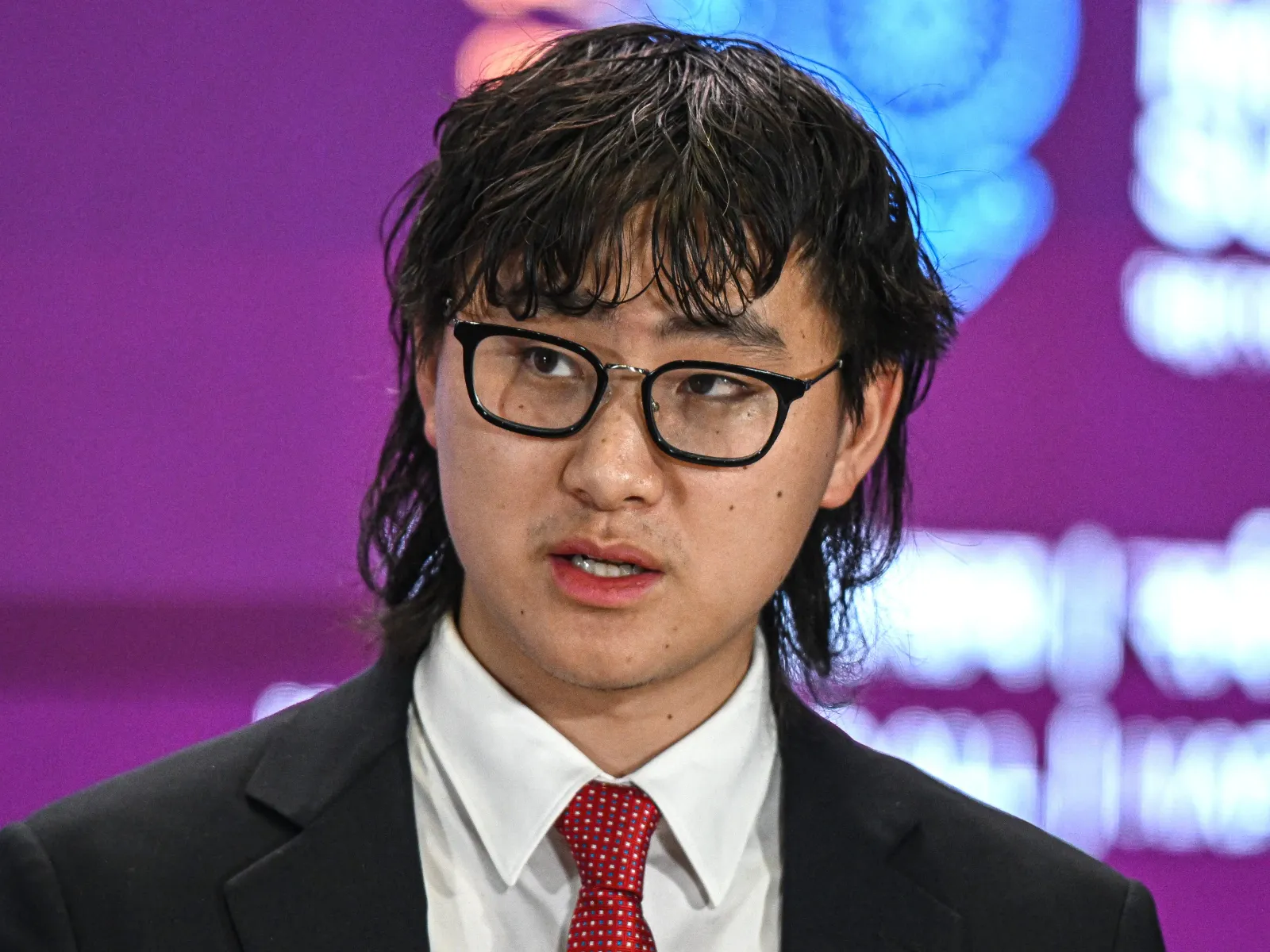
Alexandr Wang, Meta’s AI chief, told employees that Meta’s upcoming codenamed Watermelon model now matches OpenAI’s flagship GPT-5.5. If that claim holds up on benchmarks, it changes how investors and developers should gauge Meta’s fast, expensive push to close the gap with OpenAI and others.
Alexandr Wang, Meta’s AI chief, says Meta’s upcoming codenamed Watermelon AI model has caught up to OpenAI’s flagship chatbot model, GPT-5.5. Wang shared the update during an internal town hall, according to two sources familiar with the matter, with one person also describing Watermelon as currently “in training.”
Wang tied the claim to closely followed AI model benchmarks, though the specific benchmarks were not described. He also said Watermelon uses “an order of magnitude more compute” than Avocado, Meta’s internal codename for Muse Spark, the first family member the company released in April. In other words, this is not presented as a tweak. It is presented as a ramp.
This matters because Meta has been making big bets to beat the most expensive and most popular AI models in the world, and the market has not always been convinced. Meta’s AI ambitions, as Wang’s comments echo, have long hinged on closing the gap with OpenAI, Google, and Anthropic. Despite significant investments in chips, data centers, and talent, Meta has struggled to convince developers and customers that its models are consistently at the industry’s leading edge. Wang’s assessment, if accurate, is being positioned as the clearest sign yet that Meta’s investment effort, and Zuckerberg’s AI push, are starting to pay off. The read-through is simple: when you spend like a contender, you eventually need to show contender-level outputs.
Under the hood, Meta’s AI structure and staffing show why benchmarks are suddenly a board-level topic. Wang was appointed last year to head the effort; Meta renamed its AI division to Meta Superintelligence Labs. At Meta, Wang oversees a team of elite AI researchers known as TBD, along with other AI efforts, including a recent hardware push. Meta has also offered top AI talent hundreds of millions of dollars each to join, Business Insider previously reported. That matters for executive decisions because it turns AI model performance into an accountability problem, not a science project. If Watermelon really matches GPT-5.5 on benchmarks that the market cares about, then the company can argue it is converting spending into competitive capability.
But the comparison point, OpenAI’s GPT-5.5, is itself part of a wider puzzle. The GPT 5.5 model is a powerful chatbot that OpenAI released in April this year. OpenAI then debuted its most powerful model yet, GPT-5.6, late last month, but it has not released it generally yet. The source notes that this is based on US government requests. That regulatory backdrop matters because it highlights that the frontier is not just technical. It is also shaped by how quickly and broadly models get deployed, and by what constraints governments place on rollout.
Meta’s claim, then, lands in a race with multiple speed limits. On one hand, Wang says Watermelon is in training and uses dramatically more compute than Avocado. On the other hand, OpenAI’s timeline is not purely product-driven, it is influenced by government requests. For decision-makers trying to understand what to build, what to integrate, and what to bet on, the practical question becomes: if regulators slow distribution of the newest OpenAI models, does that give Meta and other rivals a larger window to win mindshare with comparable performance? Or does the lead simply shift to whichever lab can translate compute into reliable real-world results faster.
The money is also not subtle. Meta told investors this year that it expects to spend between $125 billion and $145 billion on chips, data centers, and other infrastructure this year, up from an earlier forecast of $115 billion to $135 billion. The company cited rising component costs and additional data center spending. In that light, Wang’s compute statement is the narrative bridge the market has been waiting for. When you raise the capex envelope and hire talent at massive scale, you eventually need to connect it to benchmark evidence. Wang declined to comment for this story; OpenAI did not respond to a request for comment; Meta also declined to comment. That means the claim lives or dies on the next set of benchmark disclosures and product evaluations.
Finally, this is not just a Meta story. It is a signal to every exec and board watching the AI model race: the competitive center of gravity is increasingly about compute scale, benchmark outcomes, and execution speed, not just research headlines. If Watermelon really matches GPT-5.5, Meta may be closer to convincing developers and customers it belongs at the leading edge. If it does not, the compute bill still arrives, and the pressure on leadership only grows. Either way, the next benchmark cycle and the next wave of model releases are going to matter more than most strategy slides.
This story's Key Insights and Take-aways are locked.
Create a free account to unlock Executive Actions for one credit.
Register to UnlockAlways free for Executives Club members. Join the Club
More in Business

Comcast shares jump 25% as it plans to split NBCUniversal and Sky
The tax-free spin-off could reshape focus, funding, and competition across media and tech for years.

Bungie cuts most Destiny 2 staff as Sony says Marathon still matters
Herman Hulst confirms layoffs affecting most Destiny and some Marathon teams after Bungie admits Destiny fell short.

SK Hynix jumps 11% after seeking up to $29.4B in Nasdaq listing
The chip giant filed for a Nasdaq listing plan that could raise $29.4 billion, instantly reshaping investor expectations.