
Alien: Isolation 2’s leads insist they never nerf the alien, but they reshaped exteriors
Creative Assembly’s James Green and Al Hope explain why 12 years later, the outdoor cat-and-mouse feels riskier and smarter.
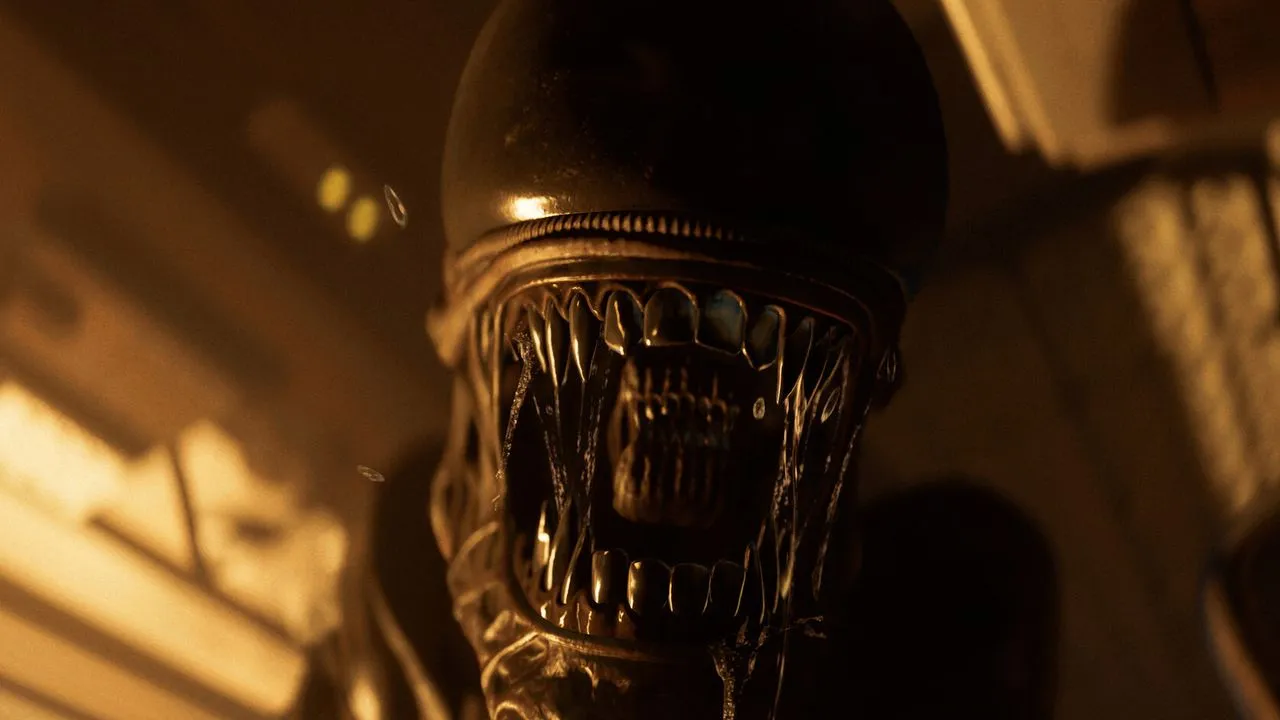
Creative Assembly’s James Green (lead designer) and Al Hope (creative director) talk about Alien: Isolation 2, the long-awaited follow-up to the 2014 hit. They say the core fear system stays the same, even as exteriors change how the alien hunts you and how players manage survival.
Two years ago, Sega and Creative Assembly announced they were finally working on a follow-up to the 2014 game of the year. Now, in a short look at Alien: Isolation 2, the big headline is not just a sequel. It is a shift in where the nightmare happens. James Green, lead designer, frames the core change as exteriors, explaining that “the big new thing in [Alien: Isolation 2] is exteriors,” and that the alien “is not going to leave you alone in exteriors.”
That sounds like a threat, but it comes with a specific design promise that matters for anyone tracking how modern game design balances difficulty and player agency. Green says, directly, “Well, we never nerf the alien.” The reasoning is immediately practical: the team wants “tension and release,” an “ebb and flow,” not an instant kill switch that would flatten the experience. In other words, the alien stays dangerous, but its danger is made legible through how it moves, hunts, and responds outside the corridors.
So what actually changes between interiors and exteriors? Green says the alien’s behavior pattern is “quite different in exteriors.” It “hunts you in a very different way” and “moves in a different way.” Al Hope, creative director, adds the psychological stake: players will feel claustrophobic and trapped back inside, then get outside for an initial rush of relief, only to swing into “exposed and vulnerable” territory. Hope describes a “lovely seesaw of emotion and motivation,” where the player may want to go back inside even after escaping.
This matters because Isolation was never about scripted routines. Green points back to the first game’s defining principle: there are no patrol routes, “even for the humans and other characters.” The alien “doesn’t follow a script at all.” That agentic, non-routine hunting is the engine behind the original dread, and Hope calls the exteriors version “systemic in nature,” anchored by listening and lurking “as the heart of the experience.” Translation: the player learns to break line of sight, manage distance, and choose when to move between cover to cover, but the environment changes the risk calculus. In an organic space, you still lean on the same survival skills, but the geometry and visibility are less forgiving.
If you are wondering why this sequel took so long, Hope offers a studio-level answer that doubles as a lesson in product timing. When they announced the return two years ago, he says it felt like the “time was right to return,” and that the team gained confidence from the original’s long tail. Creative Assembly released the game in 2014, and Hope says it “seems to gain this momentum of appreciation and gained fans daily” as new players discovered it. He also argues the original still “holds up really well” today, which provided data and reassurance: the first game’s core connected with players, and the team could understand what people enjoyed before building the next iteration.
That “mix, best of both old and new” also shows up in the team continuity. Hope says there is a “fantastic mix of old and new,” with veterans who worked on the original and “fresh” talent who bring “new ideas.” James Green, who worked on the original, jokes about knowing Hope from somewhere, then pivots to what new blood does in practice. In development, people do not always solve problems the same way, and if you “keep doing it in the same way you’re never going to grow.” So new team members try problems from “a different angle,” ideally making the overall game better rather than just replicating the first game.
Green even addresses a tempting shortcut. He says it “probably would’ve been really easy” to make Alien: Isolation 2 on another space station with “a new set of corridors, a new set of rooms,” and that would have been a “good game.” But Creative Assembly wanted more than a reskin of layout. That choice shows up in their level design philosophy, too. When asked whether building a play space for Isolation differs from traditional stealth, Green says yes because the alien is “not agentic” in the way it would be in Isolation? The point lands clearly across the next lines: in classic stealth, enemies often patrol “a specific route,” with square patrol patterns. In Isolation, the alien and other characters are intended to feel “natural and believable” and not do the scripted thing.
Hope then describes the design target in almost product language: exteriors and interiors together become “a survival sandbox.” The team wants a system where the player enters at A and heads to B, but “what happens in between is down to the player,” shaped by “the reaction of the system to those choices.” He also says the team tries to “take our hands off and let things play out,” meaning there are choices, but not a choreographed path the player must follow. The sequel’s long-awaited “outdoors” are not just more map. They are a different survival tempo, designed to make the alien’s evolved cat-and-mouse feel fair in structure but ruthless in consequence.
For executives and boards watching the games market, the second-order takeaway is about retention mechanics and brand leverage. A sequel that keeps the same core loop (listening, lurking, no scripted alien) while expanding the spatial problem set (exteriors with different alien behavior) can preserve what made the franchise sticky, instead of resetting player expectations. It also reduces the risk of “sequel fatigue” by changing the challenge where it matters: visibility, movement, and emotional pacing. And for teams building in crowded genres, the message is blunt: you do not need to nerf the alien to make a sequel work. You need to redesign the tension loop so players can still find choices, not just outcomes.
This story's Key Insights and Take-aways are locked.
Create a free account to unlock Executive Actions for one credit.
Register to UnlockAlways free for Executives Club members. Join the Club
More in Entertainment

Russell Brand's accuser 'bewildered and confused' as he denies 7 sex charges
The criminal case against the comedian is a live test of how media companies manage talent risk when serious allegations go public.

'It's a Magic Trick': Ballet Experts Say Rosalía's SNL Pose Is Impossible
Three ballet experts tell Rolling Stone Rosalía's gravity-defying SNL stillness shouldn't be possible - and why the debate is now part of the show.

Activision CMO: GTA 6 Will Boost Call of Duty, Not Bury It
Activision's top marketer says Rockstar's blockbuster will drive players back to consoles and into Modern Warfare 4, even as the company admits its recent strategy failed.