
Allonnes’ five rare iron shackles suggest Celtic slave trading 2,300 years ago
INRAP excavations in France’s Loire Valley point to a hub where metals, weapons, and restraints intersected.
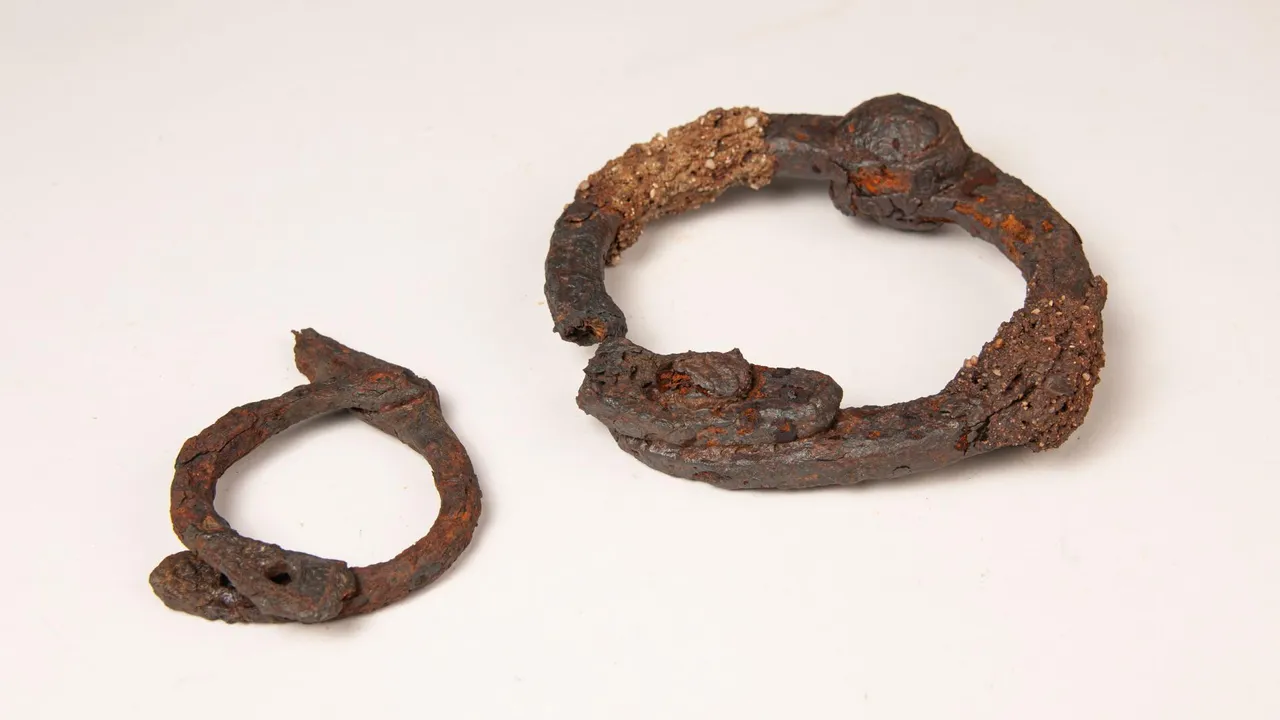
INRAP announced findings from a two-year excavation at a 2,300-year-old Celtic site in Allonnes, France, including five pairs of “extremely rare” iron shackles found in 2019. The discovery changes what archaeologists can infer about power, labor, and social hierarchy in Late Iron Age Gaul.
Archaeologists did not go looking for slave-market evidence. They went digging at a Celtic settlement in Allonnes, France, and unearthed something far more specific than the usual “mysterious artifacts” storyline: five pairs of iron shackles, dated to about 2,300 years ago. INRAP, the French National Institute for Preventive Archaeological Research, announced the results publicly on July 9 in a translated statement after the shackles were discovered during an excavation that began with finds from 2019.
The key detail is right there in the label the report uses: “extremely rare” for the time period. The excavation found a double-wrist restraint, an ankle restraint, and three other portions of metal restraints. That matters because it shifts the site from “craft and religion” into a place where coercion is physically documented. And once you accept that restraints exist in the record, the question becomes not whether slavery occurred, but how visible it was through the objects people left behind.
Allonnes itself was not a random hamlet. The statement says the settlement was established alongside a religious complex in the third century B.C. Archaeologists identified specialist artisans operating from small workshops, including blacksmiths, coppersmiths, bronze workers, and sheet-metal workers. A large number of high-quality metal objects came up in the two-year work, such as swords, spearheads, keys, and horse harness fittings. That toolkit does not just indicate “local industry.” It implies an organized production environment that can serve multiple functions, including arming, securing property, and, potentially, processing captives.
INRAP’s interpretation connects the shackles to the Late Iron Age, defined in the statement as 450 to 50 B.C. It suggests the presence of restraints indicates Allonnes “may have been a hub for slave trading.” This is not a leap off nothing. The report frames the shackles as evidence that the settlement hosted a hierarchical social organization where some people were dominant and others were prisoners or slaves. Thierry Lejars, a specialist in Celtic metalwork, is quoted in a translated interview with INRAP making exactly that linkage between restraints and weapons and the idea of dominant and subordinate groups. For executives, the parallel is obvious: when you see tools built for control alongside tools built for production, you infer systems, not accidents.
The human dimension gets even sharper when you look at size and weight. The statement says the small diameter of the wrist restraint was 2.4 inches (6 centimeters), which suggests it may have been used on a woman or a child. The ankle restraint weighs more than 2.2 pounds (1 kilogram), revealing the burden enslaved people had to carry. Those measurements are the kind of evidence that turns abstract “slavery” into something operational: the restraint is engineered to fit, the weight is measurable, and the logistics are baked into the material record.
For context, the statement notes that the Gauls were a loose association of Celtic tribes known to enslave prisoners of war, convicts, and debtors. Historically, these people were often forced to work in the fields, lost their rights, and could be bought and sold by their owners. It also highlights a frustrating constraint: because the Celts left limited historical records of their own, much about slavery in pre-Roman Gaul remains unknown. That is exactly why this archaeological angle matters. When written sources are thin, artifacts become the audit trail.
And Allonnes is not just about shackles. The excavation also uncovered a religious sanctuary and offerings including clothing, jewelry like rings and amulets, and many objects deliberately deformed or mutilated. INRAP reports that the likely intent was to transform a mundane possession into a gift for the gods. Coins add another layer to how power and value worked. Isabelle Bollard-Raineau, an ancient-coin expert with the French ministry of culture, said in a translated INRAP interview that the mint dates of recovered coins spanned more than five centuries. About a third had been filed, sheared, or etched with a chisel. Bollard-Raineau ties those mutilations to ritual intention, describing removal of the coin’s commercial function so the object could be dedicated to the sacred, ensuring the offering’s permanence.
The second-order implication for today’s decision-makers is not “ancient injustice,” full stop. It is what this kind of discovery changes about how you read systems. A hub at the intersection of roads, artisanal metal production, religious sanctioning, and coercive control suggests institutions can normalize multiple roles in one place: making tools, enforcing authority, and ritualizing outcomes. When companies, boards, or regulators evaluate records, they often rely on what survives. INRAP’s finds show that in ancient societies, what survives can include the hardware of domination, not just the aesthetics of belief. For leaders in any sector, that is a reminder with modern resonance: if you want to understand risk and incentive structures, you look for the restraints as carefully as you look for the weapons.
This story's Key Insights and Take-aways are locked.
Create a free account to unlock Executive Actions for one credit.
Register to UnlockAlways free for Executives Club members. Join the Club
More in Science

Alaska's 1,580-foot tsunami had warning signs. Scientists just found them.
Rapid glacier retreat, heavy rainfall, and thousands of tiny tremors preceded Alaska's 1,580-foot tsunami, a warning for every coastal community in a warming world.

The rare mutation that lets high-risk brains dodge Alzheimer's
Scientists found a natural defense against protein buildup, opening a new path to preventive treatments.

3,000 steps a day may halve Alzheimer's decline, study finds
New research links a modest daily walk to less tau buildup and nearly half the cognitive and functional decline, even for those with early signs.