
Alo Yoga, Texas Chicken and Clive Christian push into China as rivals retreat
Premium and niche foreign brands are doubling down on China even as others pull back amid brutal competition.
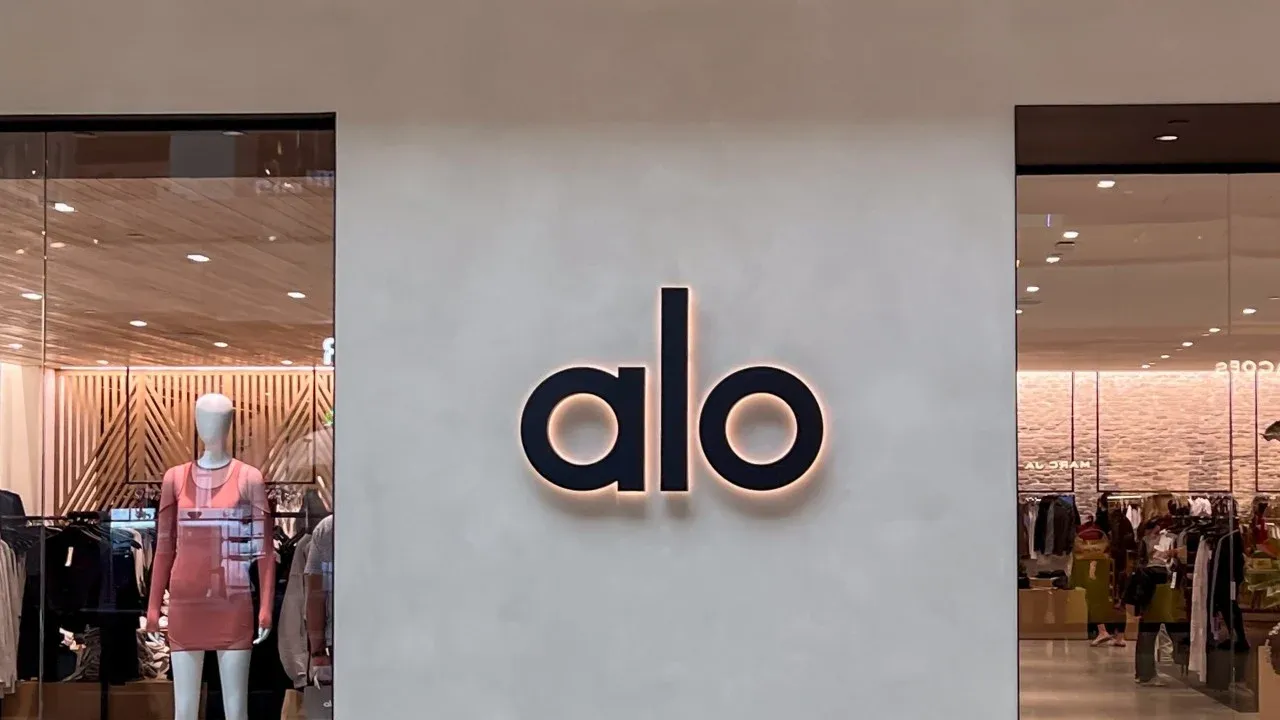
American brands Alo Yoga and Church's Texas Chicken, along with German supermarket chain Müller and British perfume brand Clive Christian, are among foreign companies entering or returning to China. For decision-makers, the move signals a high-stakes bet: China demand remains worth chasing, even when execution risk is rising fast.
Foreign premium and niche brands are leaning into China at the same time many international companies are exiting or closing shops. The pattern is not subtle. American firms Alo Yoga and Church's Texas Chicken, operating internationally as Texas Chicken, have entered or returned to the market. German supermarket chain Müller and British perfume brand Clive Christian are also part of this wave.
That matters because it flips the usual story executives tell themselves when competition gets tougher: if the market is getting harder, the rational move is to consolidate, not expand. Yet these brands are still showing up in China, apparently betting that the country's large consumer base can justify the cost and complexity of being there when rivalry is fierce and the environment is moving quickly.
To understand why this is a real board-level issue, you have to zoom out to what China is for foreign brands. It is not just “a market.” It is a consumer engine with enough scale that the ceiling for revenue can be enormous, especially for brands that can differentiate on product, positioning, or experience. The catch is that differentiation is harder in China than in many places because competitors are aggressive, local players move fast, and customer expectations change with speed. The SCMP Business report frames the environment as “stiff rivalry” in a “fast-changing environment,” and that combination is exactly what makes new entries and returns noteworthy.
Look at the mix of brands being mentioned. Alo Yoga is premium and niche in category, tied to lifestyle and apparel. Texas Chicken is a global fast-food concept, built on repeatable formats. Müller is a supermarket chain, which typically needs operational excellence and scale to stay competitive. Clive Christian is a British perfume brand, which lives or dies on brand equity and customer willingness to pay. When brands across such different verticals are all moving in the same direction, it suggests a broader incentive: executives believe there are still growth pockets inside China, and they are not all captured by the same players.
There is also an implied timing element. The report describes brands “entering or returning” to China, which points to a cycle that goes beyond first-time launches. Returns can mean a previous attempt did not reach expectations, or that conditions improved enough to make a second try worth it. Either way, it is a signal that these companies view China as a long game, not a one-quarter experiment.
Now add the uncomfortable counterpoint from the same report: “just as many international companies are either pulling out or closing shop.” That detail is crucial for decision-makers because it suggests the market is not universally rewarding. Some foreign firms are exiting. Others are entering. That split implies execution risk is real, and it is not evenly distributed across brand categories. For boards and leadership teams, it raises a key question: what are the differentiators that allow certain foreign brands to survive and others to exit? In practice, it often comes down to distribution strength, supply chain control, pricing power, and how quickly a brand can localize without losing identity. But even without naming those specifics, the report’s contrast tells you there is no single “foreign brand” playbook.
There is a second-order implication for peers evaluating strategy. If Alo Yoga, Texas Chicken, Müller, and Clive Christian can justify going deeper into China while rivals retreat, then the competitive baseline for everyone else is shifting. Staying put could become a decision with unintended consequences. When competitors expand, they do not just gain revenue. They also lock in shelf space, foot traffic, partnerships, and customer habit formation. That is how “returning” turns into “owning” a category. Boards that treat China as optional may find they are competing for attention after the strongest entrants have already built momentum.
Ultimately, the takeaway is straightforward: the SCMP Business report is describing a market where foreign brands are still finding room to grow. Alo Yoga and Texas Chicken, along with Müller and Clive Christian, are among the companies betting that China’s consumer market is big enough to reward risk, even when stiff rivalry and fast change are pressuring margins and speed of execution. For executives, this is a reminder that China is not only a growth opportunity, it is a competitive battlefield where timing, differentiation, and operational discipline decide who retreats and who advances.
This story's Key Insights and Take-aways are locked.
Create a free account to unlock Executive Actions for one credit.
Register to UnlockAlways free for Executives Club members. Join the Club
More in Business

A flaw in PHP just forced governments to pull their own sites offline
European agencies from Belgium to Germany took websites dark to patch a critical weakness in the language behind almost 70% of the web, and the blast radius extends far beyond government portals.

BioWare shuts down, Mass Effect 5 dead after $55B EA buyout
The legendary RPG studio's closure lands months after a $55 billion investment group buyout of EA, raising tough questions for gaming's biggest acquirers.

Musk weighs Tesla-SpaceX mega-merger as boards form review panels
Special committees at both companies will examine a tie-up that could fuse electric vehicles and space launch, forcing a fresh look at governance and valuation.