
Alphabet turns homegrown chips into an AI compute edge against rivals
Google’s parent leans on custom silicon to strengthen its position in the AI compute race, with clear strategic spillovers.

Alphabet, Google’s parent company, is using its homegrown silicon as a key advantage in the battle for AI compute. For decision-makers, that means compute strategy is becoming a competitive moat, not just an infrastructure line item.
Alphabet’s homegrown silicon is not just a tech flex. It is a practical advantage in the AI compute race, the kind that can change how quickly an AI roadmap moves from training to deployment.
That is the core point: Google’s parent has built internal chip capabilities that can support AI workloads more directly than relying entirely on third-party supply chains. In an arms race where models grow hungry for compute, owning the underlying silicon can reduce friction and help tighten the feedback loop between what teams design and what systems can run.
To understand why this matters, you have to zoom out to how AI compute competition typically works. Training large models is expensive, time-sensitive, and constrained by hardware availability. Even when competitors have strong software stacks, the bottleneck often lands on the same things: access to accelerated compute, the ability to scale efficiently, and the operational know-how to keep those systems performing. Homegrown silicon can help with all three, because it is built around the specific way an AI company wants its workloads to run.
There is also a strategic governance angle. When a board or senior leadership team evaluates AI spending, the conversation usually sounds like “how much compute do we need?” But the more important follow-up is “how controllable is our compute?” If a company depends heavily on external providers, it inherits their priorities, their timelines, and their capacity constraints. If it can influence its own hardware path, it shifts the power dynamic. That can be especially relevant in periods where the compute market feels tight or where competitors are racing to lock in supply.
Alphabet’s approach fits into a broader theme that has been showing up across the industry: AI advantage is increasingly tied to full-stack capability. That does not mean silicon alone wins. But it does mean compute is becoming differentiable. When teams can co-design hardware and systems, they can optimize for the actual performance profile needed for training and inference. Over time, that can produce compounding benefits, because engineering learns what works in production and can refine the next iteration of chips and the software that drives them.
Another second-order implication is risk management. Chips are capital intensive, but reliance on external hardware can add execution risk in the form of supply uncertainty or pricing pressure. While the exact mechanics are not detailed here, the direction is clear: internal silicon can function as a hedge. In committee terms, it gives leadership another lever when the AI budget is under pressure to deliver model improvements and product outcomes on a deadline.
Finally, this is a competitive signal. A company that emphasizes homegrown silicon is telling the market it wants more than parity in AI. It is trying to build durable speed and reliability into the compute layer, so scaling does not become an obstacle to strategy. That kind of advantage tends to matter not only for model training, but also for translating AI into usable features where latency, throughput, and cost per request can define whether deployment is sustainable.
If you are a peer executive deciding how to allocate budget, the practical takeaway is uncomfortable in the best way. AI compute is not a background expense anymore. It is part of your competitive posture. Alphabet’s homegrown silicon is one of its best weapons in that battle, and for decision-makers at other AI-focused companies, the question becomes whether your compute plan is something you can control, scale, and improve fast enough to keep up.
This story's Key Insights and Take-aways are locked.
Create a free account to unlock Executive Actions for one credit.
Register to UnlockAlways free for Executives Club members. Join the Club
More in Technology

Connor Christou used Claude to fight cancer by feeding his whole health regime
The fittest founder in the room turned blood work, scans, wearables, and journaling into AI input.

Sony keeps discounting the Bravia 8 II: $600 off last year's OLED flagship
A $600 price cut changes the math for buyers comparing OLED value, even if the model is a generation behind.
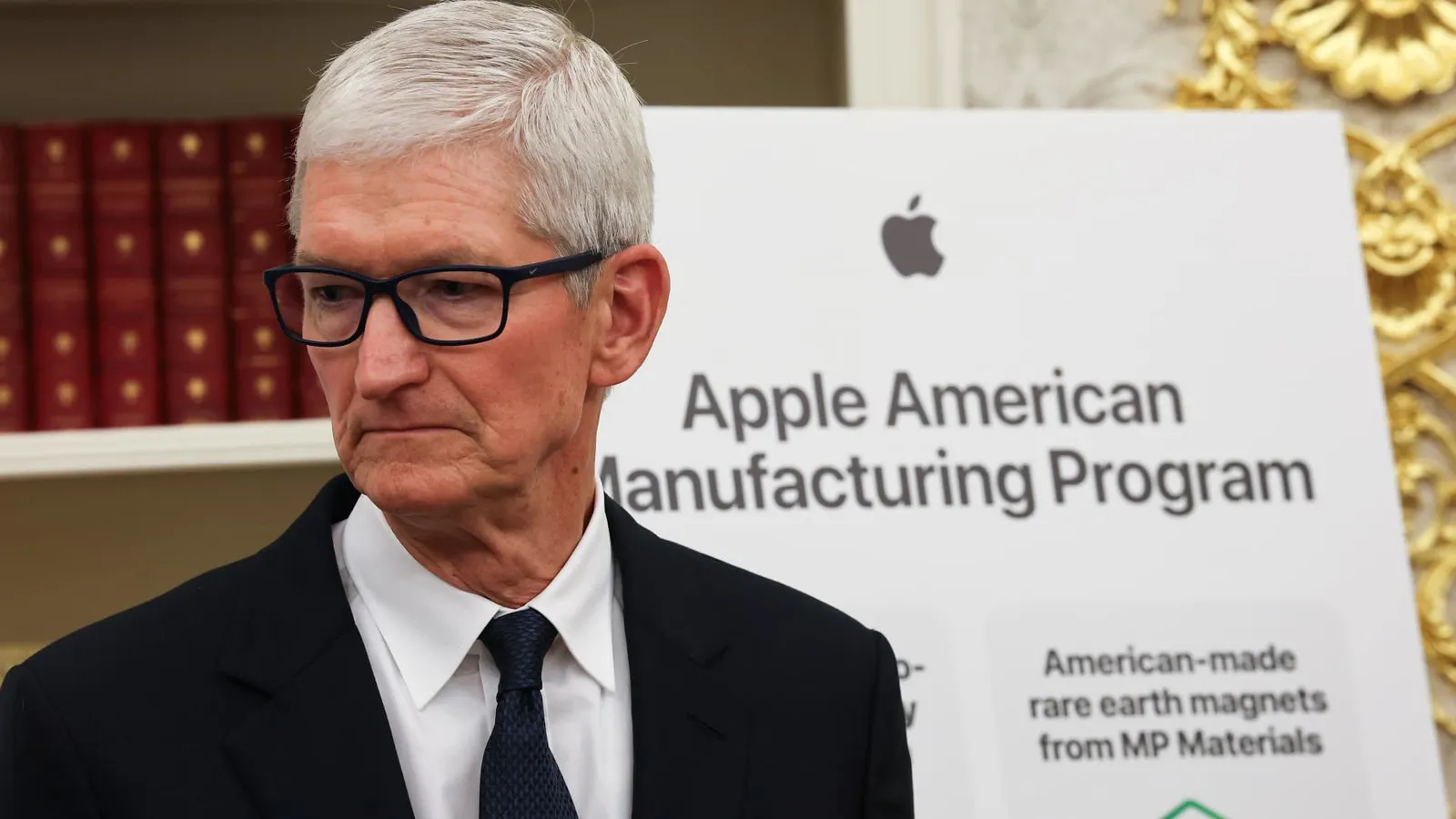
Apple and Microsoft hike device prices as memory costs spike, squeezing smaller rivals
Higher prices may patch Apple and Microsoft’s margins, but many smaller consumer electronics firms are facing an existential squeeze.