

Amazon CTO Werner Vogels says “vibe-coding” raises the bar for code review
AI can draft software from plain-English prompts, but Vogels argues humans must catch every regulated or safety-critical mistake.
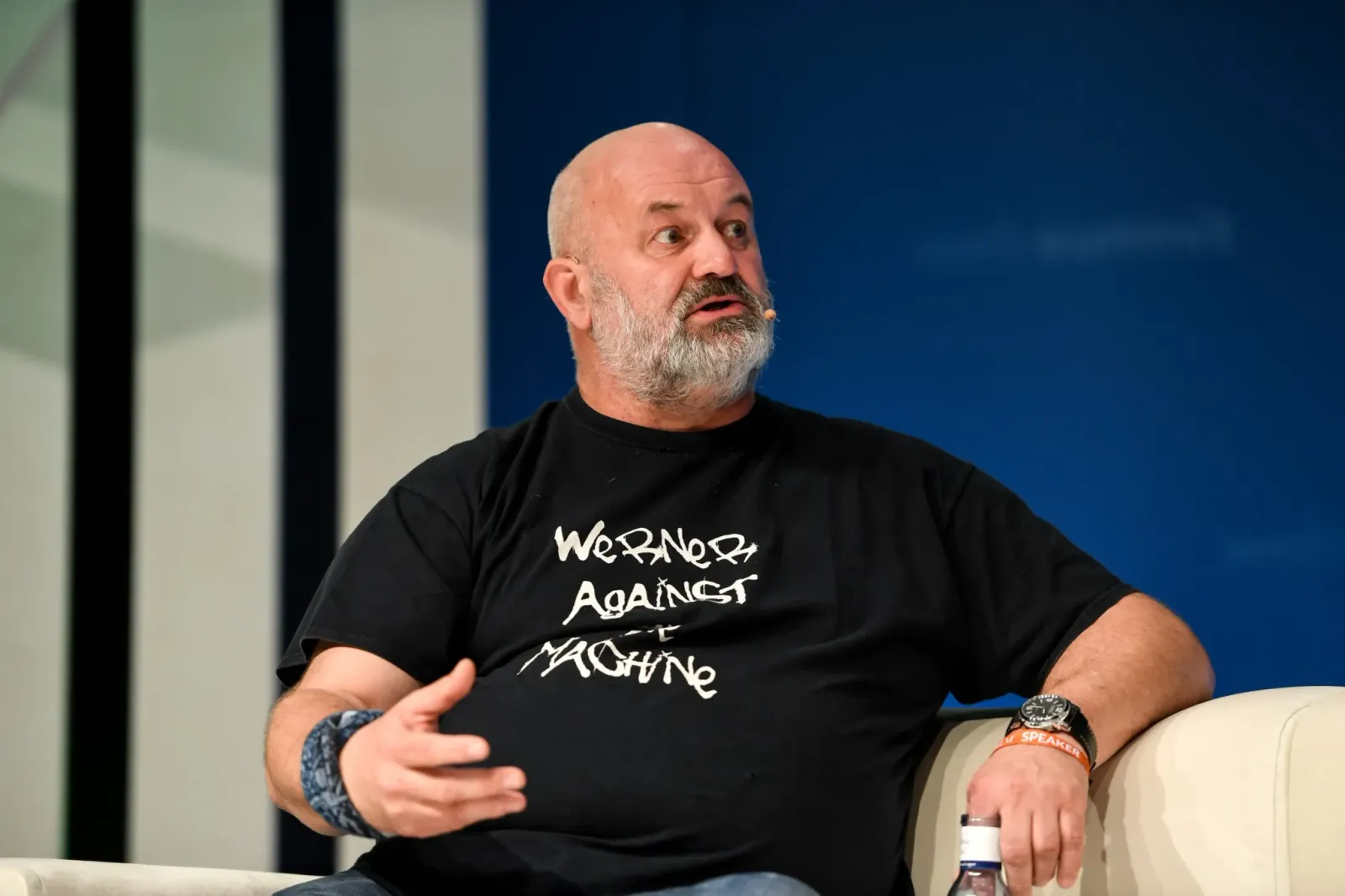
Amazon CTO Werner Vogels told Fortune that AI coding tools are reshaping software engineering, moving development toward natural-language “vibe-coding” instead of line-by-line writing. The consequence for decision-makers: code review, verification, and teamwork skills matter more, especially when regulators or safety risks are in play.
Welcome to Eye on AI. I’m Beatrice Nolan, and today’s core theme is simple: AI is rewriting how software gets built, but it is not removing responsibility for what gets shipped. In a conversation with Fortune, Amazon CTO Werner Vogels laid out a roadmap for software engineers riding the “AI-powered coding wave” while still meeting the messy reality of safety, compliance, and accountability.
Here’s Vogels’ central warning. Tools that generate code from natural-language prompts can accelerate development, but someone still has to review and fact-check what the model gets wrong. “You can't say to the regulator, oh, AI made a mistake,” Vogels told Fortune. That does not work like that, especially in regulated industries or safety-critical systems. In other words: speed is coming from AI. Trust is earned through human verification.
That sets the context for why Vogels thinks engineering is going through its most dramatic transformation in years. At the center of the shift are AI coding tools like Claude Code that can generate software using natural language prompts, reducing the need to write every line by hand. The practice is also called “vibe-coding,” because it lets people describe what they want rather than spell out how to do it. Vogels also pointed out that this approach allows non-engineers and novices to spin up prototypes in minutes, though it has seen varying degrees of success. The immediate implication for leaders is that velocity is becoming easier to obtain, while reliability is becoming harder to outsource.
So what does “successful” look like in this new era? Vogels says engineers need to become what he calls a “Renaissance developer,” borrowing the spirit of Leonardo da Vinci’s work across anatomy and flight. The idea is a T-shaped profile: deep technical expertise in one domain, plus broad cross-disciplinary curiosity to understand the systems and people that domain serves. That framing matters because AI coding tools change the daily workflow. When code can be generated quickly, the advantage shifts toward teams that can interpret outputs, integrate them safely, and understand downstream impacts. Vogels even advised his own engineers to take one afternoon a week away from their normal workload to read a paper or test a new tool. This is less “keep up with AI” and more “stay fluent in how your work actually connects to the world around it.”
If you are wondering whether AI coding tools are wiping out entry-level roles, Vogels pushed back on the panic. According to him, the anxiety about displacing junior engineers is primarily noise. His reasoning is that every day brings a new model and a new system. He also noted that the pace of announcements and geopolitical battles over which country's models lead can leave him confused at times. That observation is not just color. It implies that the industry is not settling into one stable workflow where juniors can be permanently replaced. Instead, the environment keeps changing, which raises the bar for continuous learning and cross-functional judgment.
Vogels’ hiring advice reflects that. When it comes time to hire, he said he weighs collaboration and teamwork over raw technical fluency. He cited examples like whether a candidate has worked on an open-source project or has demonstrated the ability to work well inside a team. Programming languages, he said, can be picked up in a month or two once someone knows how to learn. That’s a big cultural shift for engineering orgs, because traditional hiring often overweights syntax and underweights teamwork and evaluation skills. In an AI-augmented world, code review becomes a product of people and process, not just programming prowess.
The broader governance and policy backdrop explains why Vogels is being so blunt about accountability. In Geneva at the UN’s AI for Good Summit, the discussions ranged from tackling a growing AI divide between the global north and the global south to technical solutions for mitigating AI risks like models engaging in deception and sycophancy. Before the Summit, global leaders convened at the UN’s Global Dialogue on AI, the first intergovernmental AI governance summit bringing all 193 UN member states together to discuss potential international rules for controlling the technology. The UN chief António Guterres used the event to appeal for worldwide AI regulation, particularly around lethal autonomous weapons, as AI shifts from civilian use to the battlefield.
The regulatory thread continues with export controls and the fear of losing control over foundational technology. The source notes that Salesforce’s Marc Benioff and Microsoft’s Brad Smith pushed back on the idea that recent export controls imposed on Anthropic’s Fable 5 model were explicitly aimed at blocking foreign nationals from American AI. Both said the U.S. government was addressing real-world national security concerns rather than depriving foreign nationals of the model. Still, U.S. government actions have caused panic across Europe, where politicians worry they’re losing control over a fundamental technology. Put that alongside Vogels’ “you can't say to the regulator” message, and the throughline becomes clear: as AI accelerates software production, the regulatory and accountability expectations do not slow down. They intensify.
For executives and boards, the strategic stake is straightforward. When engineers can generate code quickly, the differentiator moves to verification, collaboration, and the ability to operate safely in regulated environments. Vogels’ renaissance developer framework and his view of junior-engineer anxiety both point to one operational priority: invest in the systems that catch mistakes early, because there is no acceptable handoff of responsibility to “the model.”
This story's Key Insights and Take-aways are locked.
Create a free account to unlock Executive Actions for one credit.
Register to UnlockAlways free for Executives Club members. Join the Club
More in Technology

Google quietly links your phone number to every Android account on your SIM
Adding a SIM now ties your phone number to all Google accounts - and future accounts inherit it. Here's the security and privacy stakes.

Hijacker AI 'Skynet mode' runs 100,000 attack steps against exposed models
Symantec caught a criminal AI agent that borrows other models, steals data, and mines crypto; the only relief is no confirmed victims yet.

Nvidia's AI-financier shift faces its first big test as neoclouds stumble
A rout in neocloud stocks is forcing investors to weigh Nvidia's hidden exposure as both supplier and lender to the AI buildout.