

Amazon dropped Luca Guadagnino’s Andrew Garfield film after $50B OpenAI deal, Neon swoops
The nearly finished “Artificial” lands at Neon for next-year release, after Amazon exited following its OpenAI spend.
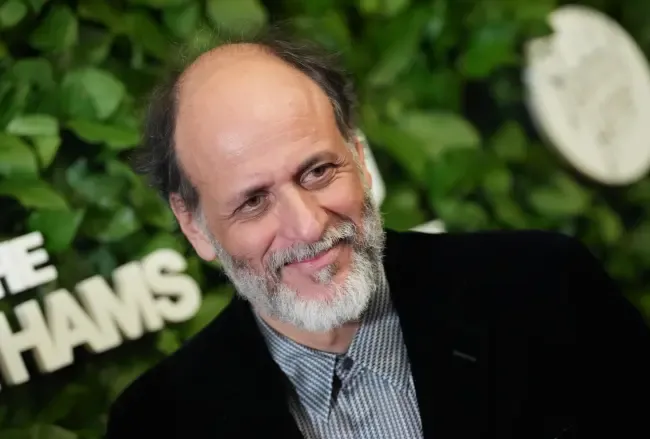
Luca Guadagnino’s nearly complete film “Artificial,” starring Andrew Garfield, was dropped by Amazon MGM after Amazon struck a $50 billion deal with Altman’s OpenAI. Neon has picked it up for a release next year, reshaping who benefits from AI-linked Hollywood capital flows.
Luca Guadagnino’s nearly complete “Artificial,” starring Andrew Garfield, was supposed to hit next year. Instead, Amazon MGM nixed the project after Amazon struck a $50 billion deal with Altman's OpenAI, and Neon stepped in to pick it up.
That sequence matters for decision-makers because it reframes how big platforms decide what to fund, and when they change their minds. The headline detail is simple, but the implication is not: Amazon MGM dropped a nearly finished film, not because the script suddenly failed or because production collapsed in public view. It was a corporate pivot that followed a major capital commitment, the $50 billion OpenAI deal.
So what does a deal like that actually do to Hollywood? At the broadest level, it pulls attention and cash toward the product of the moment. Amazon can spend and still finance entertainment. But when a company commits to something as large as a $50 billion relationship with a top AI player, the internal story tends to shift. Even if movie budgets are separate line items, leadership bandwidth, risk tolerance, and future greenlight math all get rewired.
In practice, the “nearly complete” part is the key operational fact. This was not a concept that had to win a pitch again in a fresh cycle; it was a film already deep into production and scheduled for next year. Dropping it midstream is a signal that corporate strategy, not studio timelines, can override creative momentum. And once that happens, distribution becomes the urgent salvage operation. That is exactly where Neon enters the picture.
Neon picking up “Artificial” is also a reminder that Hollywood does not run on a single pipeline. Studios originate projects, but distributors can become the new lifeboat when a larger studio steps back. For Neon, acquiring a nearly complete title can reduce some of the traditional uncertainties that come with picking brand-new slates. It still inherits execution risk like marketing timing and audience fit, but it can bypass a chunk of the “will this ever ship” problem.
For executives sitting on boards or running media portfolios, the bigger question is how to think about opportunity cost. A $50 billion OpenAI deal is not a rounding error. It is the kind of commitment that can trigger internal reprioritization. If Amazon MGM decided that the marginal dollars in entertainment did not compete well against the strategic returns of AI, “Artificial” becomes collateral. The film may still reach theaters or streaming platforms, but the sponsorship changes hands.
Regulatory and public-policy context is part of why these pivots have become faster and harder to predict in recent years. Advanced AI deals attract scrutiny about data use, market concentration, competitive leverage, and governance. Even when the entertainment component is separate, regulators and policymakers tend to focus on the ecosystem around powerful platforms. That creates pressure on leadership to show alignment with the main strategic engine. When that engine is AI, entertainment investments can get evaluated through a different lens, especially at large companies under constant institutional and political observation.
Now layer on second-order implications. First, talent and filmmakers face a new risk pattern: even a nearly complete project can be reclassified as non-core if corporate strategy shifts. Second, other studios and investors learn the market can reorder quickly when AI-linked partnerships dominate executive attention. Third, distributors like Neon gain leverage in acquisitions, because the market for “almost finished” films can suddenly open when majors back away.
Strategically, “Artificial” landing at Neon after Amazon MGM dropped it is not just a movie industry anecdote. It is a case study in capital reallocation. If you are running a studio, a media company, or an investment committee, you are watching how corporate priorities migrate from entertainment output to AI infrastructure and partnerships. And if you are a founder or operator in adjacent creative tech or media, it is a warning: the shelf life of a funding decision is shrinking when the biggest spenders are busy underwriting the next platform shift.
In short, Amazon MGM’s decision to nix a nearly complete Andrew Garfield film, after a $50 billion deal with Altman’s OpenAI, shows how quickly Hollywood can be reshaped by corporate strategy. Neon’s pickup suggests the title will still find its release path next year, but the power dynamic has changed, and the lesson is for anyone allocating capital in media right now.
This story's Key Insights and Take-aways are locked.
Create a free account to unlock Executive Actions for one credit.
Register to UnlockAlways free for Executives Club members. Join the Club
More in Business
Comcast shares jump 25% as it plans to split NBCUniversal and Sky
The tax-free spin-off could reshape focus, funding, and competition across media and tech for years.

Bungie cuts most Destiny 2 staff as Sony says Marathon still matters
Herman Hulst confirms layoffs affecting most Destiny and some Marathon teams after Bungie admits Destiny fell short.

SK Hynix jumps 11% after seeking up to $29.4B in Nasdaq listing
The chip giant filed for a Nasdaq listing plan that could raise $29.4 billion, instantly reshaping investor expectations.