

American Airlines launches a grab-and-go lounge at JFK to speed up business travel
The airline is adding a new fast lane at New York-JFK, and operations leaders will feel the ripple.
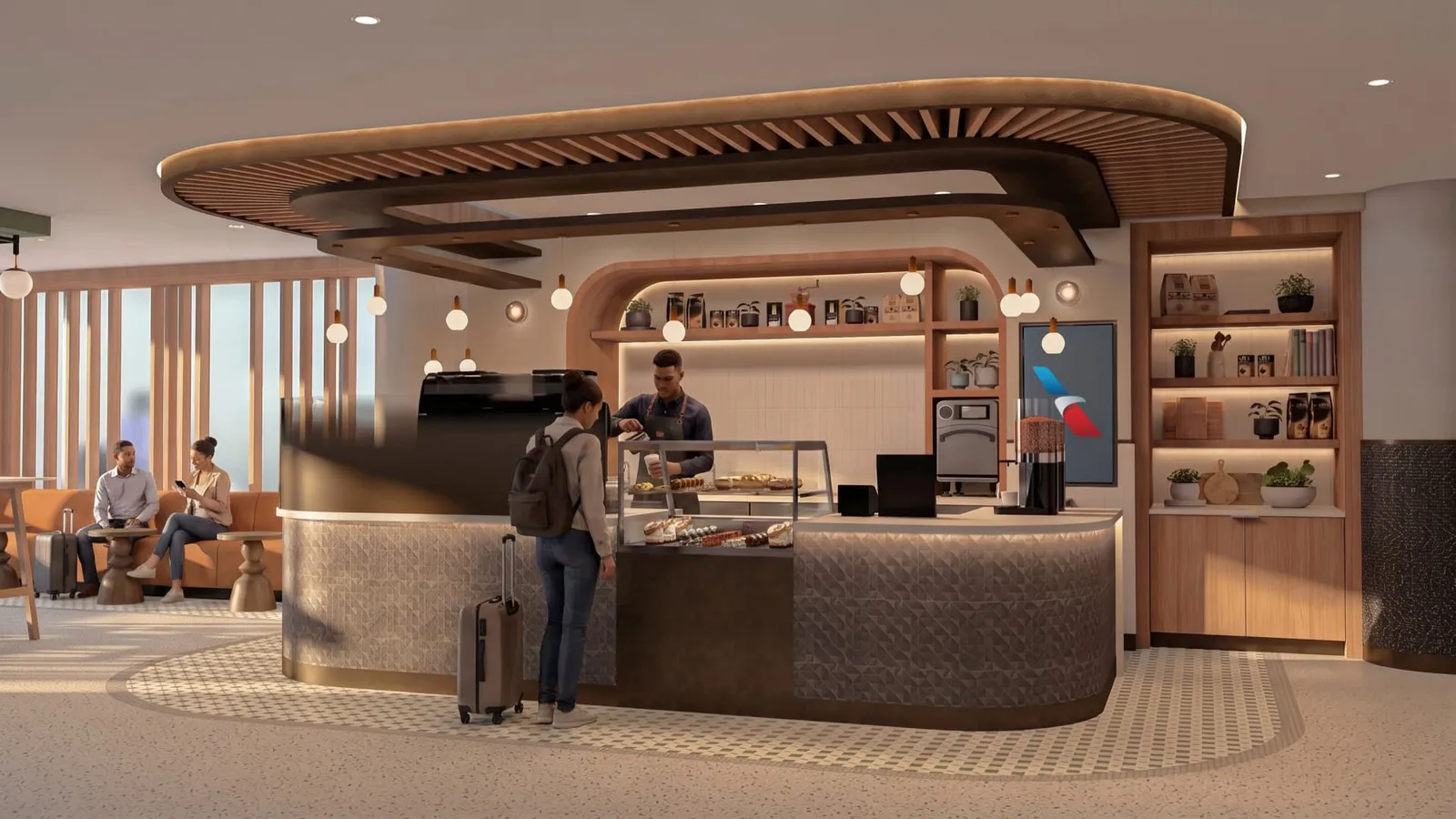
American Airlines is opening a grab-and-go lounge at New York's JFK. For decision-makers, it is a micro-move that signals how airlines are redesigning airport dwell time for cost, convenience, and capacity.
American Airlines is opening a grab-and-go lounge at New York's JFK, and it is exactly the kind of seemingly small upgrade that can matter a lot once you zoom out. Airports are not just about flights anymore. They are about flow. How quickly passengers can move through a terminal, how efficiently airlines can serve them, and how much staff time gets burned per traveler. A grab-and-go format is built to reduce friction, compress decision time, and deliver service without turning every passenger into a sit-down customer.
For travelers, “grab-and-go” is straightforward. You show up, grab, go. But for airline operators, the real story is what this tells everyone watching airport operations: American wants to capture spend and satisfaction during the time passengers otherwise waste. That wasted time is not random. It is the combination of delays, gate changes, queues, and the simple reality that airports are long-distance machines. When you can tighten the middle steps, you can improve the experience even if the flight schedule stays the same.
Zooming out, this move lands in a period where airports and airlines are constantly negotiating the same constraints. Gate capacity is finite. Staffing is expensive. Retail and food concessions are high-stakes because they influence passenger sentiment and can affect how people perceive value. At the same time, airlines are under pressure to make the airport feel less like a waiting room and more like an efficient transit hub. A grab-and-go lounge is a specific way to do that without betting on the full cost and space requirements of a traditional lounge experience.
There is also a practical operational logic here. Lounges are historically associated with longer dwell times, more labor, and more complex service workflows. A grab-and-go lounge flips that assumption. It leans toward self-service, pre-packaged options, and quick throughput. That changes labor planning. It changes inventory cycles. It changes how the airline manages peak hours when multiple banks of flights stack passenger demand. If American can serve more travelers with fewer minutes per person, it effectively increases “service capacity” without needing additional gates or more aircraft.
Regulatory and policy constraints are part of the backdrop too, even when the story sounds purely consumer-friendly. Airport environments are heavily governed by security rules, concession agreements, and operational standards. While the source does not detail specific regulatory approvals, the underlying reality is that airlines cannot just slap any concept anywhere inside a secure airport footprint. That means American’s ability to roll out a grab-and-go lounge at JFK implies that the necessary airport and concession framework is in place, and that the airline can fit this concept into the existing operational maze.
The second-order implications for decision-makers are what you would expect in a competitive airline market: peers will watch how American balances speed, perceived quality, and cost. If passengers find the space useful and premium enough to seek it out, it can shift behavior. Travelers may show up earlier, spend more, or choose itineraries that align with their airport experience. If it is priced or positioned well, it can also influence revenue mix, pushing some value away from traditional channeling and toward on-site convenience.
Board-level stakeholders should also think about the signaling value. Launching a new passenger-facing concept is not just a hospitality project. It is a statement about priorities: operational efficiency, modern customer experience, and the willingness to experiment with the “last mile” of travel. Even if a grab-and-go lounge is small compared to route networks, it can be the visible proof of concept for a broader strategy to refine how the airline monetizes time spent at airports.
In short, American’s grab-and-go lounge at JFK is a quick-service twist on an airport staple. It is about making time feel shorter for passengers and making service feel more controllable for airlines. For executives overseeing customer experience, operations, and revenue planning, the question is not whether lounges matter. It is whether fast, friction-reducing service becomes the new baseline for premium travel, one terminal decision at a time.
This story's Key Insights and Take-aways are locked.
Create a free account to unlock Executive Actions for one credit.
Register to UnlockAlways free for Executives Club members. Join the Club
More in Business

A flaw in PHP just forced governments to pull their own sites offline
European agencies from Belgium to Germany took websites dark to patch a critical weakness in the language behind almost 70% of the web, and the blast radius extends far beyond government portals.

BioWare shuts down, Mass Effect 5 dead after $55B EA buyout
The legendary RPG studio's closure lands months after a $55 billion investment group buyout of EA, raising tough questions for gaming's biggest acquirers.

Musk barred from the room as Tesla, SpaceX boards weigh $3.5 trillion merger
The CEO of both companies is a 'conflicted party' watching independent directors negotiate a tie-up that would create a $3.5 trillion giant he would own about a third of.