
American Express and Chase take lounge benefits to festivals and games, not just airports
Credit card premium perks are leaving the terminal. Here is what Amex and Chase are doing and why rivals should care.
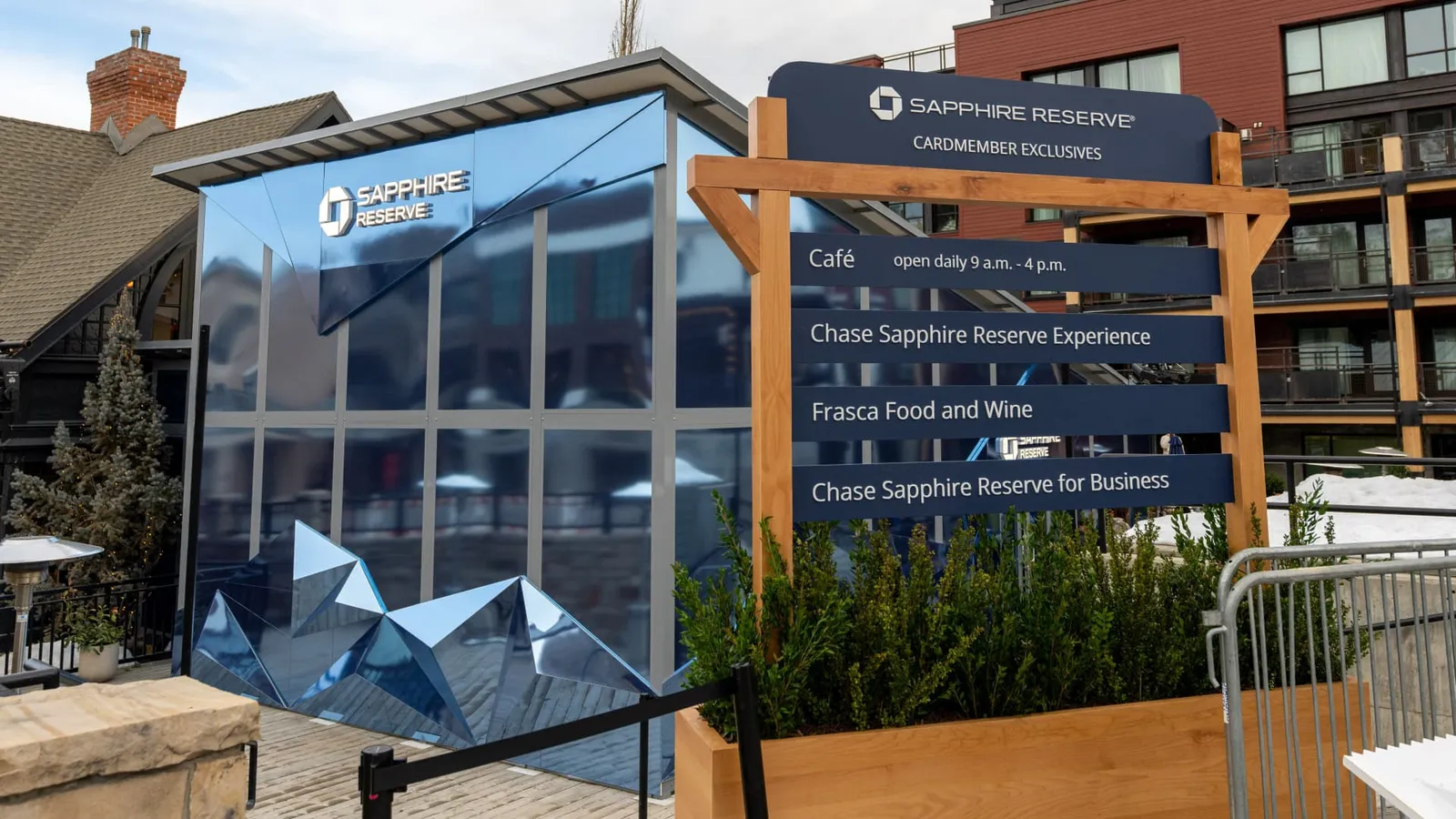
American Express and Chase are expanding lounge and luxury-access benefits beyond airports, rolling them into festivals and sporting events with premium cardholder access. For decision-makers, this shifts loyalty economics and competition away from travel behavior and toward live-event demand.
Credit card companies are moving their “pay for perks” playbook out of the terminal and into the open air. American Express and Chase are expanding luxury lounge and related access beyond airports, increasingly tying these benefits to premium cardholders at festivals and sporting events. The headline sounds like a small upgrade. It is not. It is a change in where and how these companies compete for attention, spend, and long-term loyalty.
The key point is the direction of travel, literally and figuratively. Instead of concentrating lounge wars around airports, Amex and Chase are pushing perks into live events where the customer experience is not about boarding times. It is about showing up, staying comfortable, and being “in” with the right crowd. And in this emerging setup, access is often restricted to premium cardholders. That restriction matters because it turns benefits into a gate, not a convenience.
To understand why this is happening, start with the incentives behind credit card loyalty. Lounge access, event entry, and premium hospitality are expensive to provide, but they are also sticky. Once a cardholder experiences benefits tied to identity and status, switching cards becomes more than a math problem. It becomes a lifestyle tradeoff. In practice, premium cardholders tend to be highly profitable segments. They spend more, they churn less, and they are more likely to justify annual fees if the benefits feel meaningfully “worth it.”
Now connect the dots to the market reality. The space is crowded, and plain vanilla rewards are harder to differentiate. If every issuer offers points and cash back, then the battlefield shifts to experiential perks that competitors cannot easily copy. Lounges are a classic example: they are tangible, visible, and associated with premium travel. Move the same concept to festivals and sporting events and you get something even more emotionally charged. Live moments are the kind of experiences people brag about. That makes perks less like reimbursement and more like membership.
There is also a regulatory and compliance backdrop, even if today’s news is about customer experience. Credit card issuers operate in a heavily supervised environment, and premium benefits touch on advertising rules, eligibility definitions, and access terms. When perks extend across more venues and partners, the legal and operational plumbing gets more complex. Issuers have to define who qualifies, what “access” means at each partner location, and how changes are communicated. They also have to manage consumer expectations so that the benefit does not feel like a bait-and-switch. The more the benefits move into events with third-party operators, the more execution risk exists.
Second-order implications show up at the board level and in finance teams, not just marketing. When perks are tied to live events, issuers need stronger partner networks and more predictable operational delivery. They also need to forecast cost with less certainty than a lounge inside a fixed airport ecosystem. If demand spikes for certain festivals or games, the cost of providing benefits can rise quickly. If demand falls, the value proposition to cardholders can weaken. The strategic challenge is to preserve “premium” signaling while controlling exposure.
Competition becomes more intense because these benefits can shift customer behavior. A card that wins at airports may lose if the issuer cannot compete on live-event access. And because premium cardholders are rational, they do not just choose a brand. They choose a bundle. If Amex and Chase can credibly offer luxury experiences at festivals and sporting events, rivals have to respond either by matching access or by differentiating elsewhere in the premium stack.
For executives watching this, the bigger takeaway is not lounge branding. It is the migration of loyalty into experiences outside traditional travel. That affects underwriting strategies, retention planning, and marketing measurement. Partnerships are no longer “nice to have” inserts on a website. They become core to the value proposition. If you are an issuer, your calendar becomes a product. If you are a board member, you should ask how resilient those partnerships are, how costs scale, and how quickly the company can adapt when customer demand swings across seasons and event calendars.
For leaders at card issuers and other financial brands with premium ecosystems, the question is simple: will your perks show up when customers are emotionally engaged, or only when they are moving through transit? Amex and Chase are betting on the former, and the lounge wars are now broader than terminals. That is the real shift that competitors cannot ignore.
This story's Key Insights and Take-aways are locked.
Create a free account to unlock Executive Actions for one credit.
Register to UnlockAlways free for Executives Club members. Join the Club
More in Business
Comcast shares jump 25% as it plans to split NBCUniversal and Sky
The tax-free spin-off could reshape focus, funding, and competition across media and tech for years.

Bungie cuts most Destiny 2 staff as Sony says Marathon still matters
Herman Hulst confirms layoffs affecting most Destiny and some Marathon teams after Bungie admits Destiny fell short.

SK Hynix jumps 11% after seeking up to $29.4B in Nasdaq listing
The chip giant filed for a Nasdaq listing plan that could raise $29.4 billion, instantly reshaping investor expectations.