

Andy Burnham faces backlash as Jodrell Bank funding cuts hit Lovell telescope network
More than 100 artists and scientists urge the UK government to reverse slashed radio telescope funding at Jodrell Bank.
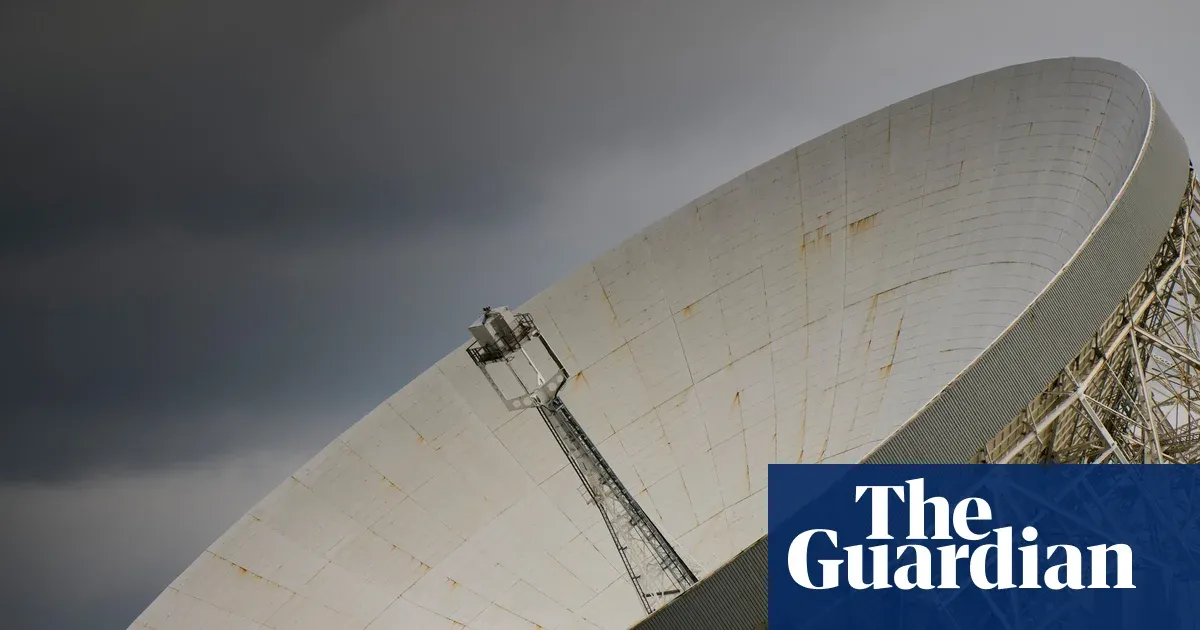
More than 100 artists, writers, and scientists have urged UK Prime Minister Andy Burnham to save Jodrell Bank Observatory after funding for its network of radio telescopes was slashed. The push highlights the Grade I-listed Lovell telescope and the observatory's role in research on galaxies, star formation, and planets beyond the solar system.
It is not every day you see pop culture, poetry, and deep-space astronomy show up in the same political fight. More than 100 artists, writers, and scientists have called on UK Prime Minister Andy Burnham to save Jodrell Bank Observatory after funding for the observatory's network of radio telescopes was slashed. The message is blunt: the cuts are “foolish and shortsighted.”
The names attached to that pressure matter because they broaden what this is. New Order, the Canadian astronaut Chris Hadfield, and the poet laureate Simon Armitage are among the signatories urging Burnham to preserve the deep space observatory, which includes the Grade I-listed Lovell telescope. That telescope is prized by astronomers studying galaxies, star formation, and planets beyond the solar system. In other words, this is not just about heritage or vibes. It is about whether the UK keeps one of the “world’s clearest eyes on the sky” running.
Why this matters to executives and decision-makers is that big, long-lead research infrastructure does not behave like ordinary line items. Radio telescopes are complex, mission-shaped assets. When funding gets slashed, the harm usually shows up later, not immediately. Staff retention can get shakier, planned upgrades can slip, maintenance cycles can get compressed, and research programs can become harder to sustain. Even if the site survives, it can lose momentum, and science is a momentum business. You can restore some capability, but you often cannot fully recreate the years of accumulated observation and operational know-how.
This campaign also lands in a familiar governance zone: when governments cut budgets, they often do it under pressure to show near-term results. In that context, science infrastructure can look like a luxury because the payoff is distributed across years and across scientific communities rather than concentrated in quarterly performance. Jodrell Bank is, by contrast, a national landmark with internationally relevant scientific use. The signatories are effectively arguing that slashing its funding fails a basic cost-benefit test: protect the asset now to avoid paying more later in capability loss and opportunity cost.
There is another layer here, and it is political communication. The involvement of New Order and Simon Armitage is not incidental. Cross-domain public support can broaden the coalition and raise the visibility of the decision inside government. When a change affects a site that people recognize as both scientifically important and culturally meaningful, the debate stops being purely technical. It becomes easier for ministers and civil servants to face scrutiny from multiple directions: scientific bodies worried about continuity, cultural institutions worried about loss of a public asset, and the broader public worried about whether the UK is backing its own strengths.
The reference to Andy Burnham, specifically as the new prime minister in the call to action, signals where the leverage is supposed to be applied. The letter is not written as a distant academic protest. It is framed as an urgent policy request to the person with immediate agenda-setting power. The point is that this is still a window for reversal. Once political attention shifts away, budget decisions tend to harden into administrative reality.
For peers in similar board or executive roles, the second-order implication is the same as in any infrastructure-heavy sector: cutting “the network” can cascade into cutting the whole ecosystem. Jodrell Bank includes the Lovell telescope, and it sits within a network of radio telescopes. Observatory science depends on coordination, data collection, and the ability to plan. When funding for the network is slashed, the effects do not only touch the site. They ripple into collaborations, research timelines, and the training pipeline for astronomers and engineers who learn by doing.
And for anyone who cares about what the UK chooses to fund, the stakes are clear. The telescope is prized for studying galaxies, star formation, and planets beyond the solar system. That is fundamental research with long-run scientific value, and it helps maintain the country's ability to participate in global astronomical efforts. If the government lets the funding cuts stand, the result is not only fewer observations. It is a quieter reduction in the UK's scientific reach, just as that reach becomes ever more important in an era where countries compete to lead in discovery, technology, and research talent.
This story's Key Insights and Take-aways are locked.
Create a free account to unlock Executive Actions for one credit.
Register to UnlockAlways free for Executives Club members. Join the Club
More in Science

Alaska's 1,580-foot tsunami had warning signs. Scientists just found them.
Rapid glacier retreat, heavy rainfall, and thousands of tiny tremors preceded Alaska's 1,580-foot tsunami, a warning for every coastal community in a warming world.

The rare mutation that lets high-risk brains dodge Alzheimer's
Scientists found a natural defense against protein buildup, opening a new path to preventive treatments.

3,000 steps a day may halve Alzheimer's decline, study finds
New research links a modest daily walk to less tau buildup and nearly half the cognitive and functional decline, even for those with early signs.