
Andy Burnham takes over Monday. Here is how he might reshape the UK's foreign posture
The former Manchester mayor steps into 10 Downing Street. What changes for international policy, and why it matters now.
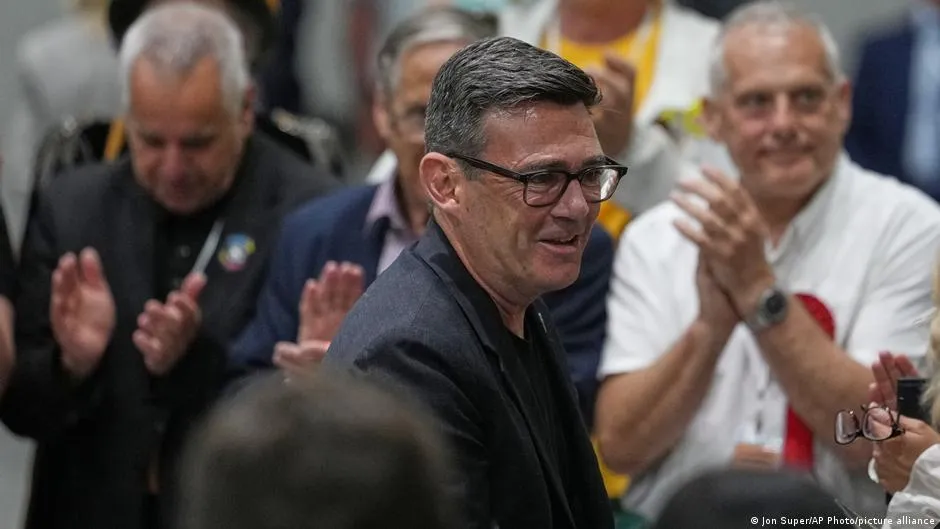
Andy Burnham, the former mayor of Manchester, becomes the UK prime minister on Monday, moving from northwest England to the global stage. His approach to international affairs will shape how the UK positions itself on diplomacy, alliances, and global engagement.
Andy Burnham becomes Britain’s new prime minister on Monday, stepping from northwest England to the global stage. The former mayor of Manchester now faces the kind of assignment that cannot be solved with local hustle: setting the UK’s international role, under intense scrutiny and immediate expectations.
So the real question for decision-makers is not whether Burnham has a “world view,” but how his priorities translate into policy when the UK is balancing domestic needs with global obligations. That translation matters for everyone who touches international markets and cross-border rules: companies that trade, investors who allocate capital, and institutions that rely on stable diplomatic and regulatory signals.
For context, international policy rarely changes because one leader suddenly discovers a new strategy. It usually shifts through a mix of staffing choices, agenda setting, and how quickly a government re-anchors with allies and multilateral partners. In practice, a new prime minister enters office with momentum and constraints at the same time. Momentum comes from mandate and attention. Constraints come from existing treaties, established commitments, cabinet and civil-service continuity, and the reality that foreign policy is built over years, not press cycles.
Burnham’s background as former mayor of Manchester is the part people will latch onto. A mayoral role typically emphasizes coordination across agencies, managing public services, and negotiating with stakeholders who do not always share the same incentives. That experience can be useful internationally if it shows up as sharper implementation, clearer communication, and a focus on what gets delivered. But international affairs also bring a different tempo. Diplomatic decisions can be slow, and reversals can be costly, especially when allies and counterparties need predictability more than perfect ambition.
This is where the incentives start to matter. A prime minister wants to signal direction quickly, but foreign policy is constrained by what parliament, departments, and career officials can execute. The UK’s international role is also influenced by broader national priorities like security, economic resilience, and how the country navigates global competition. When leadership changes, the debate often becomes: do you recalibrate outward engagement to reflect domestic politics, or do you keep external commitments steady to preserve trust abroad?
Second-order implications follow fast once you think about implementation. International policy is not just speeches. It affects trade negotiations, visa and mobility frameworks, standards coordination, and how governments structure cooperation on security and technology. Even when there are no dramatic headline shifts, the priorities can change who gets resources, what gets delayed, and which partnerships become “must-win” versus “nice to maintain.” For executives, that can show up as changes in procurement emphasis, regulatory alignment efforts, and the tone of cross-border discussions.
There is also a boardroom reality here: policy direction influences risk perception. Businesses do not need every diplomatic stance to be identical to predictability. What they need is a credible path for continuity. A new prime minister will be judged on how quickly they stabilize the narrative for international counterparties. If the UK’s messaging becomes clearer and more consistent, it tends to reduce uncertainty for long-horizon decisions. If the messaging becomes erratic, counterparties may hedge, which can translate into tougher negotiations, slower deals, or more conservative planning.
Burnham’s Monday start date turns this from an abstract political question into a near-term governance test. The first moves, even before major initiatives, will reveal how he intends to handle international affairs. Are existing commitments reaffirmed? Are new priorities named? Are specific departments given different roles? These choices determine whether the UK’s international stance feels like a continuation or a reset.
For peers in similar roles, the strategic stakes are obvious. When leadership transitions, organizations inside government and outside it scramble to interpret the new incentives. The winning move is rarely the loudest one. It is the one that creates clarity. Burnham is about to begin a job where international role is not a talking point, it is a system. And the system will start broadcasting signals from day one.
This story's Key Insights and Take-aways are locked.
Create a free account to unlock Executive Actions for one credit.
Register to UnlockAlways free for Executives Club members. Join the Club
More in Politics

LA County: DOJ's 20,000 'noncitizen' voter list is 'unreliable,' includes U.S.-born
Preliminary review by Los Angeles County election officials finds errors in the federal list, raising the stakes for voter roll integrity ahead of November.

Trump's $1.5B Pentagon chip investment lands in North Carolina
A $1.5 billion defense infusion for North Carolina chipmaking signals a new era of Pentagon-backed reshoring - here's what it means for the industry.

Nigeria confirms first Ebola case in Abuja, a woman just off a Uganda flight
Health Minister Muhammad Ali Pate says the patient flew in from Uganda, putting Africa's latest outbreak on Nigeria's doorstep.