
ANOHNI soundtracked Balenciaga's Paris couture runway, pairing Selena and Lou Reed
The musician helped debut Balenciaga’s new couture collection in Paris, using covers that merge pop, legacy, and high-fashion spectacle.
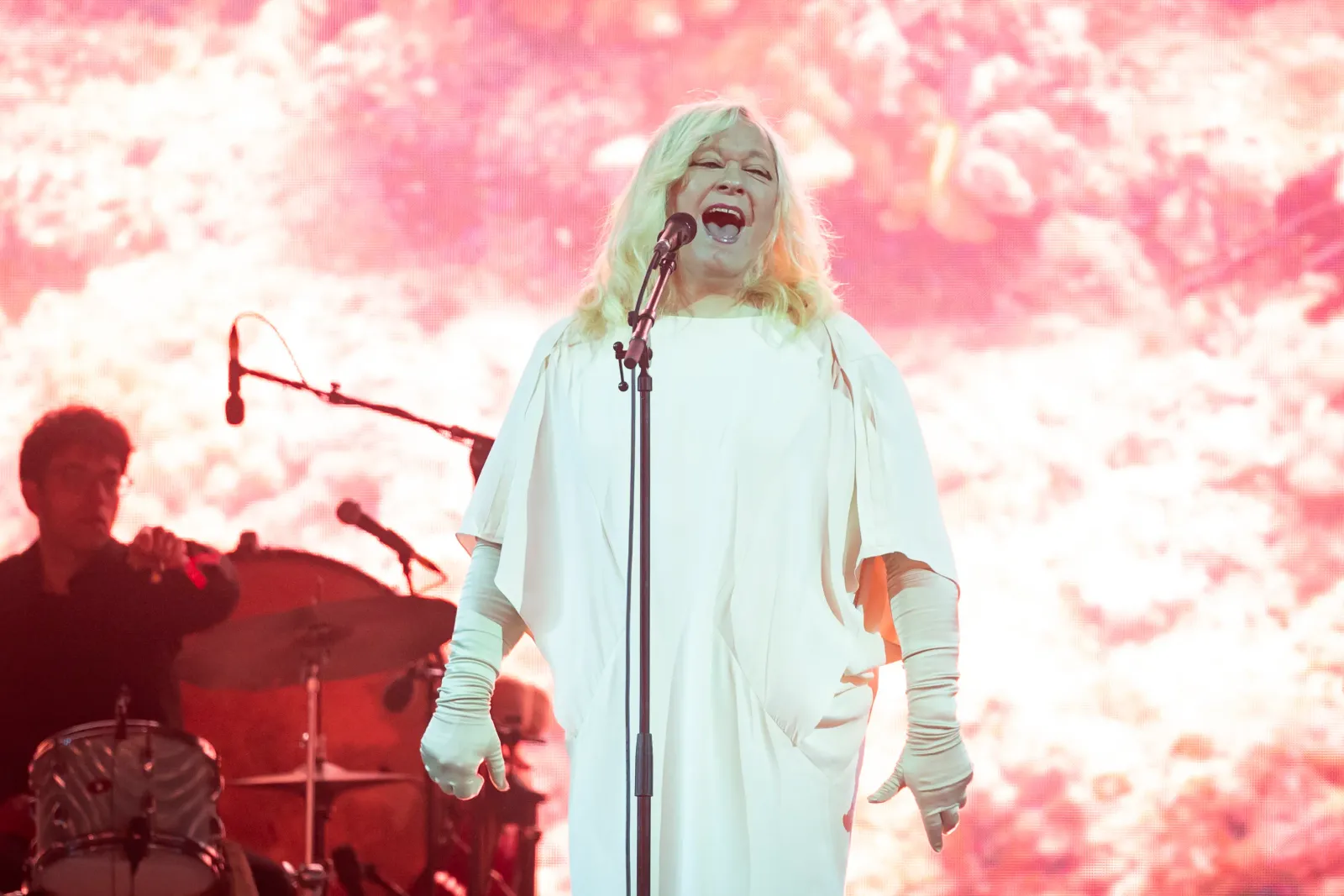
ANO HNI (credited here as ANOHNI) soundtracked a Paris runway show debuting Balenciaga’s new couture collection. For decision-makers, it is a reminder that fashion houses are treating music placements like brand strategy, not background noise.
ANO HNI stepped behind the soundboard for a Paris runway show that debuted Balenciaga’s new couture collection, and the soundtrack did more than fill the room. According to Pitchfork, the musician covered Selena and Lou Reed as part of the performance, using those songs to set the tone for a high-fashion moment built to be remembered. In other words, this was not just “soundtracking.” It was curation with stakes.
Runway soundtracks are usually background texture. Here, the choice of artists turns the music into messaging. Balenciaga’s couture show arrives with a specific kind of audience attention, and ANOHNI’s selection of Selena and Lou Reed brings two different cultural routes into the same luxury space: pop’s immediacy and rock’s legacy. That kind of cross-pollination is the modern runway playbook, where the goal is to shape what people feel when they leave the venue, not just what they saw on the fabric.
Why does this matter beyond fandom? Because in a luxury business, “brand equity” is the product that never stops shipping. Couture shows do not sell volume the way ready-to-wear does. They sell attention, aspiration, and credibility. Music is one of the fastest levers for compressing meaning. A recognizable voice can make a room react before anyone has time to read the details of the collection. When a musician with a distinct public presence is involved, the show’s cultural footprint expands from fashion insiders to a wider music-and-media audience.
If you run an editorial calendar, manage partnerships, or sit on a board that asks how brand heat gets translated into long-term value, this is the mechanism to understand. Fashion houses typically have to fight for relevance in a media environment where every major brand moment competes with everything else happening online. A runway show is already an attention event. Adding a musician who can pull in listeners from outside the fashion lane changes the distribution logic. It increases the chance that the show gets talked about as entertainment and culture, not only as design.
There is also the practical reality of modern campaigns: couture is expensive, and not just in money. It is expensive in time, labor, and risk. If the show is meant to signal creative direction, then every element needs to carry intent, including the soundtrack. Pitchfork’s phrasing that ANOHNI “soundtracked” the show frames the relationship as collaborative rather than incidental. That matters for anyone overseeing partnerships, because it implies that the music was part of the concept, not slapped on at the last minute.
Second-order implications follow quickly. When a fashion house uses major musical references in a live setting, it can influence who becomes a plausible collaborator for future shows. Musicians notice where their work gets amplified. Creative directors notice what kind of coverage hits. Media outlets notice which moments create a story people actually retell. That can create a feedback loop where the “sound” becomes a recognizable part of the brand’s identity, the way signature silhouettes or recurring visual motifs do.
Meanwhile, the regulatory and legal backdrop for music usage is always lurking in the background of these moments, even when the headlines focus on artistry. Covers typically implicate licensing, permissions, and rights management, because the underlying compositions and recordings have different legal treatment. This doesn’t require extra assumptions to grasp the point: when you put Selena and Lou Reed into a Balenciaga runway experience via an ANOHNI cover performance, there is a paperwork and rights process behind the scenes, even if the Pitchfork piece is simply reporting the creative outcome. For executives, that is a reminder that brand spectacle still lives inside legal frameworks.
At the strategic level, the biggest stake is how quickly luxury brands can turn cultural attention into momentum. A couture debut is a signal to the industry, to press, and to potential customers. When the soundtrack is a set of high-recognition covers, it gives that signal more channels: music listeners might watch. Pop culture accounts might share clips. Media that does not normally cover couture might still pick up the story because the musician’s repertoire is the hook. For peers trying to keep relevance without diluting their identity, this offers a clear lesson: the runway is not only about clothes anymore. It is also about orchestrating a cross-industry moment that travels.
This story's Key Insights and Take-aways are locked.
Create a free account to unlock Executive Actions for one credit.
Register to UnlockAlways free for Executives Club members. Join the Club
More in Entertainment

12TB Steam 'teraleak' goes beyond Valve: GTA 3, Mafia 2 prototypes exposed
A 12-terabyte dump of Steam data reveals prototypes and builds of third-party classics like GTA 3 and Mafia 2, plus unreleased Valve content, rewriting game history.

LinkedIn's romance problem: 1 in 4 workers say dating on it is fair game
A new survey shows a quarter of U.S. employees treat the professional network as fair game for romance, even as LinkedIn bans it and removes hundreds of thousands of offending posts.

Enhypen's first No. 1 album breaks K-pop's Billboard 200 streak
The K-pop group's 98,000-unit debut tops the chart while Dolly Parton's catalog reentry shows how death reshapes streaming.