

Anthropic gets a reprieve from Trump, but Silicon Valley still fears tougher AI regulation
A temporary regulatory opening lets Anthropic restore access to its strongest models, yet the uncertainty around enforcement persists.

Anthropic won a reprieve from the Trump administration that allows it to restore access to its most powerful A.I. models. For decision-makers, the bigger story is not just recovery, but how much regulatory control could still tighten around frontier AI.
Anthropic has won a reprieve from the Trump administration, and the practical result is straightforward: it can restore access to its most powerful A.I. models. For a company whose entire strategy depends on scaling advanced capabilities, that is not a small win. Access to the strongest models is the product, the competitive edge, and the basis for enterprise and developer demand.
But the headline payoff comes with the subtext every investor, operator, and board member in Silicon Valley is circling right now. Even with the reprieve, Silicon Valley remains worried about the Trump administration’s heavier hand on regulation. In other words, Anthropic can breathe for now, but the regulatory weather system still looks rough.
To understand why that matters, zoom out to how frontier A.I. companies typically operate. The most powerful models are also the ones that attract the most scrutiny, because they can generate more capable text, interpret more complex prompts, and potentially be used in ways that create safety and policy concerns. That is why access restrictions can become a lever. If the government or regulators can effectively delay, limit, or condition release and distribution, the impact is immediate. It can stall partnerships, slow customer adoption, disrupt roadmaps, and delay revenue tied to premium access.
A reprieve, in this context, reads like a partial rollback or at least a pause that lets a company resume activity. But it does not necessarily change the underlying regulatory posture. That is the key second-order point for executives: the question is not just whether the door is open today, it is how stable the opening is tomorrow. A reprieve can restore access in the short term while still leaving long term uncertainty about compliance requirements, enforcement intensity, licensing, reporting, or other conditions that a board would need to budget for and manage.
This is also a board-level issue, not just an engineering issue. Frontier AI governance tends to be a mix of internal policy and external constraints. If the external constraints can shift quickly depending on administration priorities, boards have to treat regulatory risk as operational risk. That changes how companies structure product launches and partner contracts. It can also change how they think about incentives. Management teams may be able to ship capabilities again, but they still might have to slow down how boldly they commercialize, because the next regulatory headline can move faster than their product cycle.
For Silicon Valley, the worry described in the source is a familiar one: when one administration signals a heavier hand, the entire sector plans around the possibility of stricter rules or more aggressive enforcement. That can lead to cautious behavior across the ecosystem, even for companies that do not face the same immediate restrictions. Enterprises may wait. Developers may hold off integration. Investors may re-price risk by demanding stronger compliance roadmaps, clearer safety frameworks, and more predictable regulatory pathways.
The stakes become personal quickly for decision-makers. If Anthropic can restore access now, competitors will instantly feel pressure to match its momentum. At the same time, competitors will also watch Anthropic’s next moves like hawks, because how it responds to the reprieve can hint at how resilient the regulatory relief is. If the market believes the reprieve is truly durable, funding and partnerships could accelerate. If the market believes it is temporary, the sector will keep treating regulation like a rolling constraint rather than a settled framework.
So the strategic bottom line is this: Anthropic has a path back to its most powerful models, thanks to the reprieve from the Trump administration. But Silicon Valley’s worry is the real tell. A reprieve is a relief, not a resolution. For executives and boards trying to plan product velocity, compute spending, and capital deployment, the question they need to answer is whether the regulatory regime is about to tighten in a way that fundamentally changes the economics of frontier model development and distribution.
This story's Key Insights and Take-aways are locked.
Create a free account to unlock Executive Actions for one credit.
Register to UnlockAlways free for Executives Club members. Join the Club
More in Technology

Ford Q2 US sales slid 10.3% as EV sales sank 40.7% and aluminum fires hit F-Series
A 549,200-vehicle quarter exposed two pressure points: demand for EVs and a supply crunch for aluminum trucks.

Tesla Q2 2026 deliveries hit 480,126, smashing 406,000 Wall Street expectations
Production reached 451,758 units as Model 3 and Y delivered 467,762, signaling momentum boards will track closely.
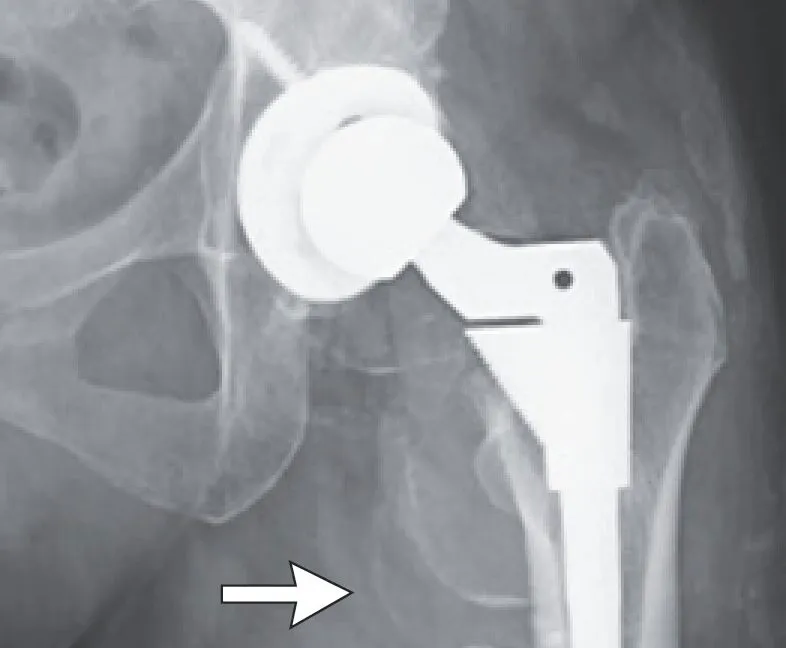
Hip replacement cobalt poisoning scrambled a woman’s nerves after a 19-year failure window
A New England Journal of Medicine case traced worsening paralysis, memory, and palpitations to grey fluid inside the failing hip.