
Anthropic hits a $1.2T secondary-market valuation because nobody wants to sell
A gold-rush private market plus new restrictions is leaving investors competing for shares before any IPO.

Anthropic has soared to a $1.2 trillion valuation on secondary markets, with investors hunting shares despite the company warning that indirect investment routes can be invalid. For decision-makers, this turns pre-IPO investing into a high-stakes liquidity and compliance problem, not just a hot trade.
Owning Anthropic stock has turned into Silicon Valley's own Golden Ticket, and the numbers show why. According to the secondary market frenzy described by Business Insider, Anthropic has soared to a $1.2 trillion valuation on private trading lines. The twist is not just how high the price has gone, but how hard it is to get out: nobody wants to sell. In a market like this, the usual incentives flip. Instead of sellers meeting demand at the margin, buyers chase whatever scraps are available.
That chase is getting so intense that even eye-watering “temptation” prices are not stopping people from trying. Business Insider reports that some would-be buyers are not deterred even by a $5.99 million Brooklyn home that allegedly can’t compete with the desire for Anthropic exposure. The article includes a broker perspective to underscore the mismatch between supply and appetite: the broker said that if he could satisfy everyone trying to buy, “I’d be on a beach right now.” That line is doing real work here. It captures the core dynamic of a secondary market bottleneck: demand is not just strong, it is jammed into whatever channels exist.
To understand why this matters, you have to remember what the pre-IPO setup typically looks like. With Anthropic yet to go public, most investors do not have the clean, regulated, exchange-based path to shares that public markets provide. Instead, they hunt for shares on the secondary market, buying from employees and early backers. That structure changes everything about price discovery, because the “market” is not a centralized venue. It is a patchwork of private transfers, intermediaries, and counterparties who may not be willing or able to sell. When the seller base is tiny relative to the number of people who want in, prices can rise fast, and transactions can become fragile.
And fragility is exactly where things get uncomfortable for boards, investors, and anyone managing capital with an eye on risk controls. Business Insider notes that Anthropic has been explicit about the indirect paths some investors try to use. The company’s stated guidance is blunt: if someone offers a way to invest indirectly, “assume that it is invalid.” That matters because in hot private markets, the supply squeeze often spawns creative deal structures. The offer is attractive because it appears to solve a simple problem: how do you get exposure when the company is not public yet? But the company’s warning signals that some of these routes may not actually be legitimate, may not be valid under Anthropic’s rules, or may fail on transferability and compliance.
So the market is effectively running two stories at once. One story is the irrational exuberance story people love to tell. The other story is compliance reality, where legitimacy, transfer permissions, and documentation can be the difference between owning exposure and assuming you do. Business Insider reports that “dubious deals inevitably follow” in a setting where demand runs this hot, and that “plenty of investors are willing to chance it rather than miss what they see as the opportunity of a lifetime.” That line matters because it describes behavior, not theory: when fear of missing out dominates, people accept more uncertainty, and intermediaries get more pressure to “make the deal work.”
Business Insider also frames the frenzy as moving into a gold rush phase, driven by the work Ben Bergman did by digging into the market. The article says he spoke to brokers trying to push secondary transactions through the line. That behind-the-scenes reporting angle matters. It implies this is not just a vibe; there are operational friction points that brokers are wrestling with, and that the number of would-be buyers is not a rounding error. When the plumbing can’t keep up, prices and deal quality tend to suffer. Even if you believe in the underlying company long term, the path to getting shares can be messy in the short term.
Finally, there is an extra layer: even as Anthropic is the hottest ticket in town, OpenAI is described as “quietly making a comeback” ahead of the public rollout of its most advanced AI model. The point is not that OpenAI’s trajectory changes Anthropic’s fundamentals overnight. The point is that in AI markets, attention and capital are migratory. When one company’s private shares become hard to buy, investors look for the next available exposure, especially as public milestones approach. That can amplify secondary-market pressure because buyers try to pre-position themselves before the market rerates.
For executives and board members, the second-order lesson is straightforward: pre-IPO liquidity can behave like a real-time stress test for governance and risk management. If you are allocating to private AI bets, you need to be as disciplined about deal validity as you are about upside narratives. When a market reaches a $1.2 trillion valuation on secondary trading and still struggles to match sellers with buyers, the main risk is not just volatility. It is uncertainty about what you are actually buying, how transferable it is, and whether the route to ownership holds up under the company’s own rules. In this environment, “running for it” means moving fast, but it also means moving correctly.
This story's Key Insights and Take-aways are locked.
Create a free account to unlock Executive Actions for one credit.
Register to UnlockAlways free for Executives Club members. Join the Club
More in Business

AstraZeneca $27B wipeout as Wainua late trial misses cardiovascular target
A failed late-stage heart study triggered a swift market punishment, forcing investors and boards to reset timelines and risk.
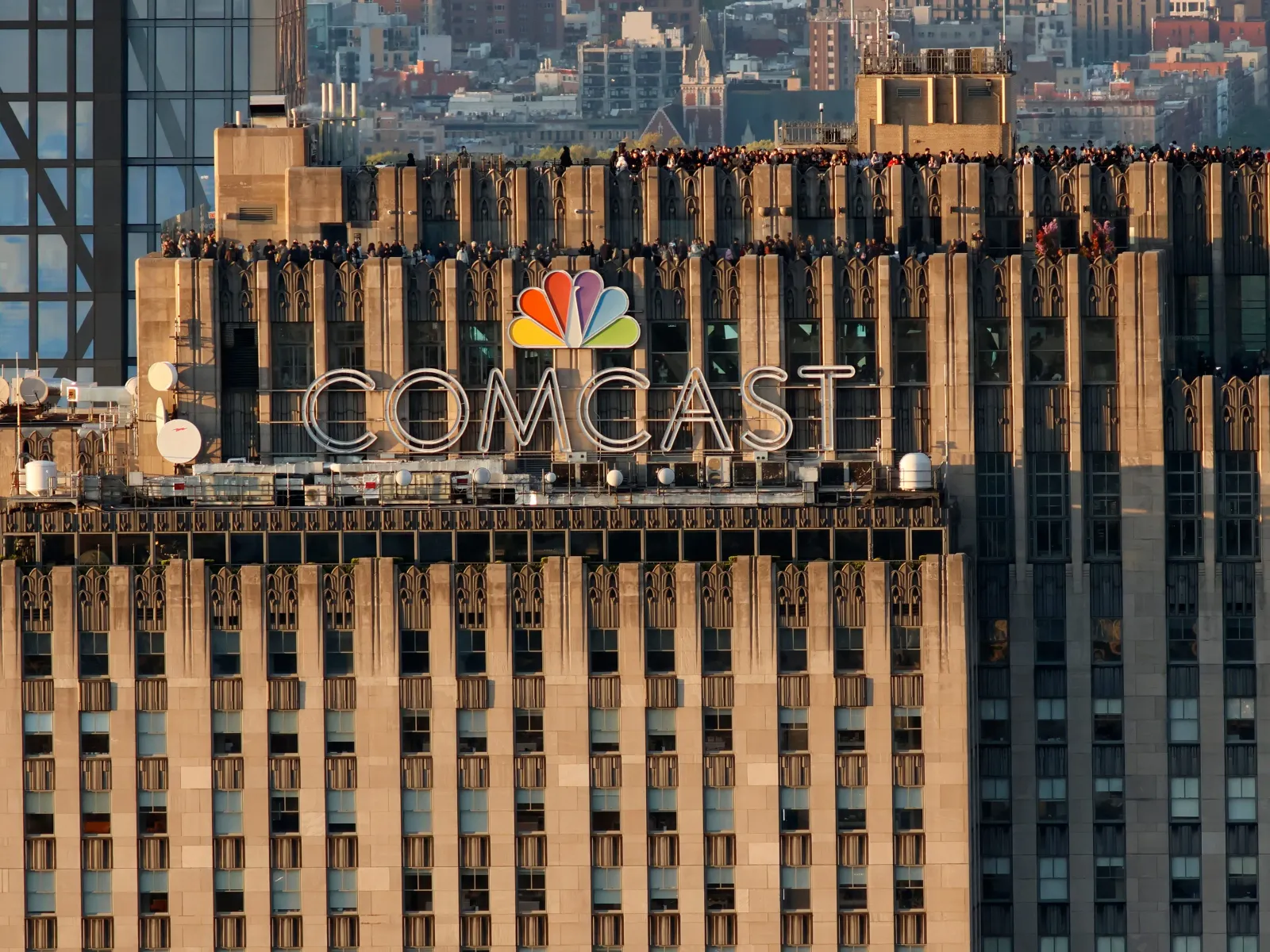
Comcast shares jump 25% as it plans to split NBCUniversal and Sky
The tax-free spin-off could reshape focus, funding, and competition across media and tech for years.

Bungie cuts most Destiny 2 staff as Sony says Marathon still matters
Herman Hulst confirms layoffs affecting most Destiny and some Marathon teams after Bungie admits Destiny fell short.