

Anthropic's AI economy map: 15% GDP growth or mass job losses
New interactive tool from the Claude maker lays out three paths for the U.S. economy, from modest gains to a 15% annual GDP boom that leaves workers behind.

Anthropic released research and an interactive tool mapping three scenarios for AI's economic impact, ranging from internet-like gains to 15% annual GDP growth with mass job losses. The tool lets policymakers and executives stress-test assumptions, but economists warn the explosive growth scenario is unlikely.
Anthropic's new research sketches a future where AI doubles the U.S. economy every four and a half years - but leaves a trail of unemployed knowledge workers. In its most extreme scenario, GDP grows at 15% a year, unemployment climbs well past anything seen in a typical recession, and AI performs nearly all knowledge work autonomously. That is one of three futures the Claude maker mapped in an interactive tool released this week, designed to let anyone plug in their own assumptions about AI improvement, adoption, and labor replacement.
The other two scenarios are tamer. In the first, AI acts as a helpful sidekick, boosting productivity gradually, with economic gains on par with the internet. In the second, AI handles half of all knowledge work by 2030, mostly autonomously, doubling the economy's normal growth rate while knowledge workers' wages stall. Anthropic stresses it is not predicting which future will arrive; the tool is meant to illustrate possibilities for economists and policymakers.
The model has clear limits. It calculates GDP purely from the supply side - how much AI boosts productivity and output - without accounting for whether anyone can buy what's produced. If mass job losses cut consumer spending, demand would fall, dragging the economy down. Anthropic's own tool calls the framework a 'stark simplification of a complex reality,' leaving out policy responses, business cycles, and catastrophic risks.
The research arrives as economists push for guardrails. In July, more than 200 economists, executives, and researchers - including Eric Schmidt, Reid Hoffman, Joseph Stiglitz, Paul Krugman, and Daron Acemoglu - signed an open letter urging policymakers to study AI's economic effects before a transformation they called 'larger than the Industrial Revolution.' Anthropic cofounder Jack Clark, who leads the Anthropic Institute, told NPR he expects AI to improve 'at a very, very fast and sustained rate' but spread through the economy 'more slowly' than most assume.
Clark also floated a silver lining: if growth is explosive, the tax windfall could fund help for displaced workers - something 'unimaginable today.' A companion survey of nearly 11,000 people found the public expects a split outcome: real productivity gains, but pain for workers in AI-exposed jobs, with particular worry about younger generations and entry-level roles.
Not everyone buys the boom. Economists Ben Moll and Alex Imas dismissed double-digit GDP growth predictions, noting that '10 times richer in 15 years' implies 16.6% annual growth, making the world 100 times richer in 30 years. Moll says five things must all go right: automation spreading faster than ever, sustained consumer spending, enough demand, no major AI-related cyber incidents, and AI improving itself. He argues AI insiders extrapolate from their own corner of tech to the whole economy - the same mistake made during Germany's 2022 gas crisis.
Adoption data suggests a slower path. Ramp's AI Index found business adoption crept up just 0.4 percentage points in August to 56.1%. Ramp economist Ara Kharazian told Fortune that outside coding agents, AI labs haven't built a product that meaningfully boosts productivity for most white-collar workers. So the near-term reality may be closer to the internet age: capable models, but human-scale adoption.
For executives, the scenarios underscore the uncertainty around AI's timeline. The tool's value is not prediction but stress-testing: what happens to your workforce if AI automates half of knowledge work by 2030? What if it automates nearly all of it? The answers depend on adoption speed, which so far lags capability. Companies that assume exponential growth may over-invest; those that assume linear progress may under-prepare. The bottom line: Anthropic's research doesn't settle the debate, but it gives decision-makers a framework. The most explosive scenario would reshape labor markets and corporate strategy overnight; the most modest would still require adaptation, just on a longer clock. The data so far points to the latter, but the tool exists precisely because the future is not fixed. For boards and CEOs, the question is not which scenario is correct, but how to build resilience across all three.
This story's Key Insights and Take-aways are locked.
Create a free account to unlock Executive Actions for one credit.
Register to UnlockAlways free for Executives Club members. Join the Club
More in Business

Apple unveils first foldable iPhone Duo with 7.6-inch display under new CEO Ternus
Apple's first foldable, the iPhone Duo, marks a major product bet for new CEO John Ternus, with a 7.6-inch unfolded screen.
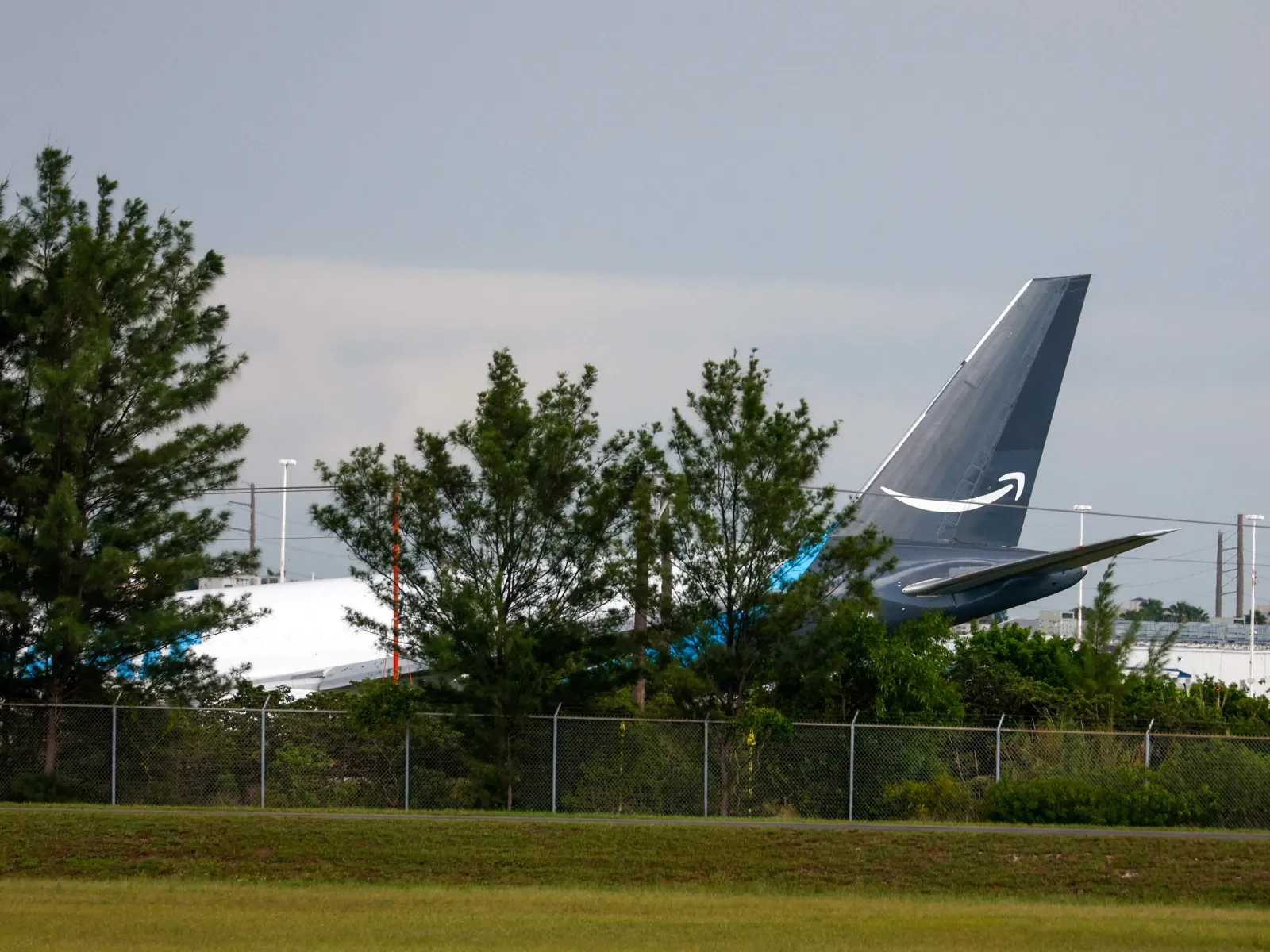
Amazon Prime Air 767 overshoots Miami runway, killing at least 5
The Boeing 767 freighter from San Juan struck vehicles and erupted in flames, prompting a ground stop and a fresh NTSB investigation into Amazon's air cargo network.
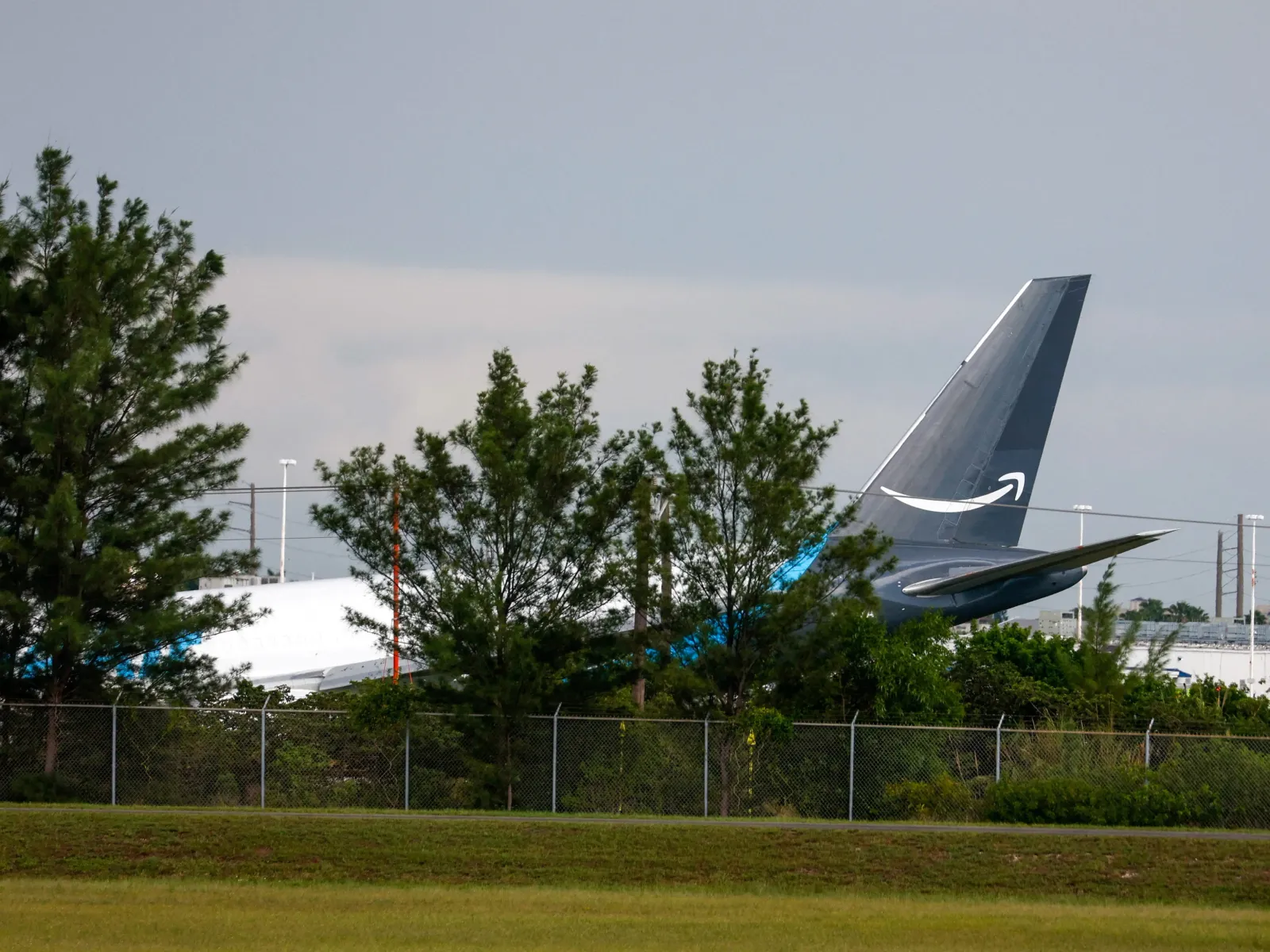
Amazon Prime Air 767 overshoots Miami runway, strikes vehicles, catches fire
The Boeing 767, operated by 21 Air, was arriving from San Juan when it overshot the runway, triggering a ground stop and multiple injuries.