
Apollo 15 televised the first-ever lunar liftoff on Aug. 2, 1971, live from the moon
RCA TV cameras, a rover, and a missed chance to re-aim in real time made moon liftoff history watchable.
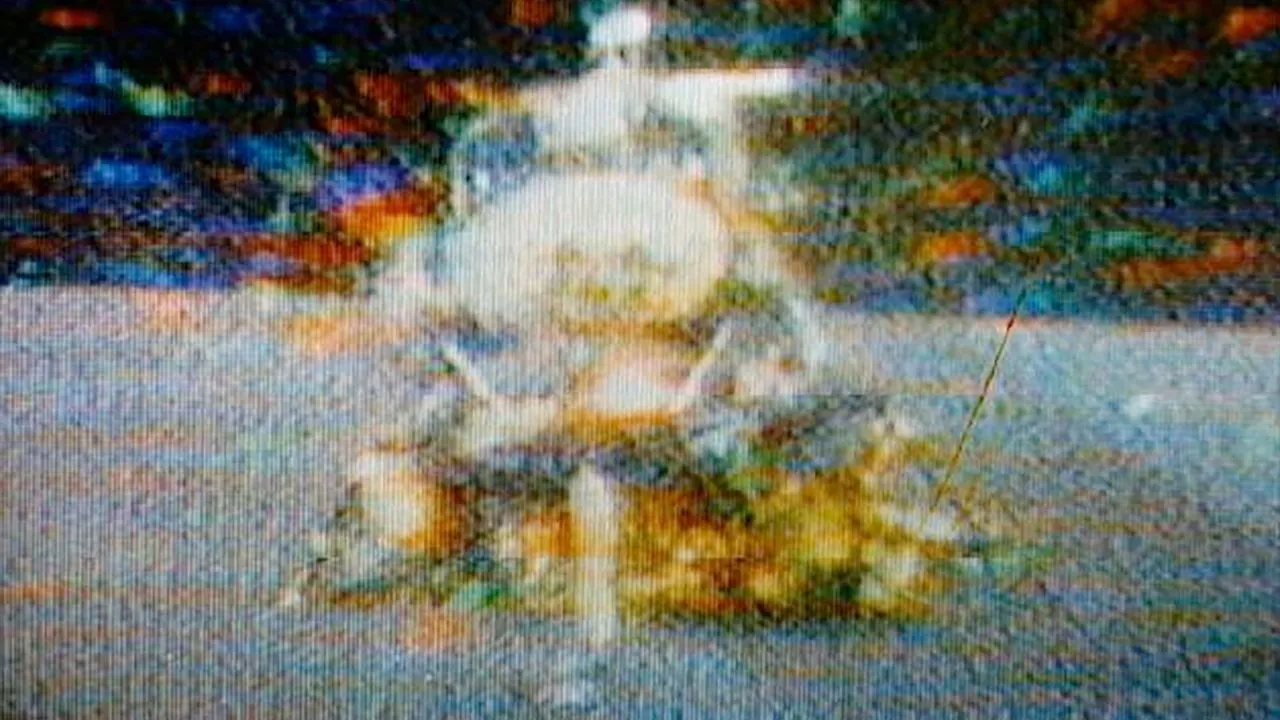
On Aug. 2, 1971, NASA's Apollo 15 mission televised the first-ever lunar liftoff from the moon, using an RCA TV camera mounted on the lunar rover. For decision-makers, the event shows how “real-time” mission visibility changed technical oversight, media expectations, and operational transparency for every space program that followed.
On Aug. 2, 1971, Apollo 15 made history with the first-ever televised liftoff from the moon. David Scott and James Irwin had already spent three days exploring the lunar surface, then departed in the lunar module named “Falcon.” What they did next was a technological flex aimed straight at Earth: they carried a live video setup into liftoff, so the world could watch the moment the landing phase ended and the return journey began.
Scott and Irwin’s “Falcon” liftoff was broadcast using an RCA TV camera mounted onto their lunar rover. Scott parked the rover about 300 feet away from “Falcon” with the camera pointed at the lunar module, and Mission Control Houston had the option to move the camera. But due to “some technical difficulties,” flight controllers opted to leave the camera pointed in the same direction during liftoff. The result was immediate and visible: after a quick pop and a bunch of sparks, Falcon quickly disappeared from sight, then later joined the command module “Endeavour,” and Apollo 15 began its journey back to Earth.
This is one of those space milestones that sounds like it belongs in a museum label, but it mattered operationally. Before Apollo 15, Apollo 11’s first lunar steps were famously broadcast live. Yet Armstrong and Aldrin’s liftoff from the moon was not broadcast in the same real-time way. Apollo 15 looked like the next logical step for NASA’s lunar exploration narrative, but it was also a signal to engineers and controllers that the mission could be run with an additional “instrument” that wasn’t just telemetry. It was video, watched by both people in Mission Control and the broader public. That changes behavior. Even if you never admit it in a briefing, visible missions create pressure to keep the system stable, because there is now an audience for any glitch, latency, or mechanical limitation.
The mission itself provides the baseline: Apollo 15 launched to the moon on July 26, 1971, commanded by David Scott with James Irwin as the lunar module pilot. Astronaut Al Worden served as command module pilot and remained aboard Endeavour while Scott and Irwin explored. The Falcon lunar lander touched down on July 30. Scott and Irwin performed three moonwalks and test drove NASA’s new lunar rover before lifting off on Aug. 2, and they stayed in lunar orbit until Aug. 4, when they departed for Earth. The mission ended with a splashdown landing in the Pacific Ocean on Aug. 7.
Now connect the dots: the RCA camera and the rover were not just a media accessory. They were a way to remotely observe how equipment behaved during liftoff in the moon’s one-sixth gravity. During liftoff, you need to think about dynamics that are hard to infer from Earth alone. In lower gravity, forces and motion look different, and what you see on screen can help validate expectations about the lunar module’s behavior. Even if the camera could not stay optimally framed because controllers could not move it, the attempt itself established a workflow: mount the camera on rover hardware, keep it aimed, and treat video as part of the mission feedback loop. The source calls out that this pioneering process is commonplace today on the International Space Station.
For executives and boards, there is a broader governance lesson here. “Transparency” in space is expensive. Cameras add hardware, pointing challenges, power and bandwidth considerations, and the chance of technical difficulties in the exact moment you most want control. In Apollo 15’s case, Mission Control in Houston had the ability to move the camera but did not, because of the technical difficulties. That is a classic real-world tradeoff: you have a capability, you try to use it, you hit a limitation, and you decide whether to risk switching to a more controllable setup or to keep the system steady. The team chose stability, even though it meant the module would likely go out of frame during liftoff. It also reinforces that mission visibility is never fully “consumer perfect.” It is operationally constrained.
The story does not stop in 1971, because the source links this legacy to Artemis II in April 2026. NASA’s Artemis II Orion spacecraft was covered in cameras, both inside and out, and NASA planned to livestream the entire voyage to the moon and back, nonstop. The comparison matters for decision-makers because it shows how a once-novel capability evolves into standard expectation. What started as a remote-controlled camera mounted on a lunar rover becomes a full spacecraft media layer, with continuous streaming. In other words, Apollo 15 did not just broadcast a moment. It helped create the cultural and technical pathway where “show it live” becomes part of program design.
If you lead product, operations, or capital allocation, treat this as a small case study in how technological delivery becomes organizational delivery. Apollo 15’s first-ever televised lunar liftoff worked, but it also demonstrated how quickly a tiny system limitation can shape what the audience sees. That is the kind of second-order reality that matters when you are building mission-critical systems and managing reputational risk. The stakes are not just whether the mission succeeds. The stakes are whether the world can witness the success in a way that aligns with the promise the program made when it decided livestreaming was worth the effort.
This story's Key Insights and Take-aways are locked.
Create a free account to unlock Executive Actions for one credit.
Register to UnlockAlways free for Executives Club members. Join the Club
More in Science

Alaska's 1,580-foot tsunami had warning signs. Scientists just found them.
Rapid glacier retreat, heavy rainfall, and thousands of tiny tremors preceded Alaska's 1,580-foot tsunami, a warning for every coastal community in a warming world.

The rare mutation that lets high-risk brains dodge Alzheimer's
Scientists found a natural defense against protein buildup, opening a new path to preventive treatments.

3,000 steps a day may halve Alzheimer's decline, study finds
New research links a modest daily walk to less tau buildup and nearly half the cognitive and functional decline, even for those with early signs.