

Apollo CEO David Boone turns Party City and Joann bankruptcies into Michaels growth play
Party supplies and fabric became the fastest path to growth for a stagnating chain, starting with 1,400 stores.

David Boone, CEO of Michaels Stores and an Apollo Global Management portfolio company, moved quickly after Party City and Joann Fabrics liquidated. Michaels built out party supply spaces across 1,400 stores and expanded fabric sales at 1,000 locations, aiming to grow beyond a maturing arts-and-crafts market.
When Party City and Joann Fabrics liquidated last year, Michaels Stores did not just watch from the sidelines. It jumped in fast, turning two collapsing competitors into a new store strategy. Within months, Michaels built out party supply spaces at its 1,400 stores, sourced helium, installed balloon-filling equipment, and trained employees to use it. It also expanded fabric sales at 1,000 locations after buying Joann’s intellectual property and store brands at bankruptcy auction.
The speed matters because Michaels was not coming from a growth runway. After a decade of stagnation with annual revenue stuck at around $5 billion, the retailer needed something sharper than incremental tweaks. Boone, who took the reins in February 2025 and oversaw inventory expansions, is now pointing this party and fabric push at a bigger goal: moving Michaels from a maturing arts-and-crafts chain toward a “celebrations” retailer. Michaels can make those kinds of moves quickly because it is privately owned by Apollo Global Management and “unhindered” by the need to sell Wall Street on every step.
This private-equity setup changes the decision tempo in a way public companies often cannot match. Boone, 57, previously ran Staples Canada and held senior jobs at Loblaws and TD Bank, and his core point is blunt: when you are answerable primarily to a board, not quarterly earnings expectations, execution can accelerate. “If you want to do things, your board is just a phone call away,” he said. In his framing, private ownership does not eliminate accountability, but it can reduce the time spent translating strategy into market-safe language.
Before the party and fabric pivot, Michaels had been fighting the same battle for years: defending share in a category where competition is stubborn and customer habits are hard to rewire. Michaels spent a decade trying to narrow the gap with arch-rival Hobby Lobby, which was about $1 billion bigger by revenue. Hobby Lobby is also privately held, so its financials are not publicly disclosed. As for Michaels, it is also private, so it does not have to publish financial results. Still, media reports suggest the ramp is working. Bloomberg reported last week that Michaels saw first quarter sales and adjusted earnings grow by a double-digit percentage, citing people familiar with the matter.
What makes this pivot worth watching is that it is not purely opportunism. The play is designed to create a growth engine beyond a “maturing arts-and-crafts market,” where Michaels has already spent years pushing against stagnation and the Hobby Lobby gap. Boone described the store strategy as capital shifting toward “stores and the store experience,” after earlier efforts focused on digital infrastructure. In the first phase after Apollo’s deal, Michaels leaned into e-commerce, streamlined assortment, and made stores easier to shop. Boone now argues the remaining “where” for investment is physical: product, layout, and experience that can pull customers in.
The store-level upgrades are where the strategy becomes tangible. Michaels is adding “party shops” that include balloons, flowers, and greeting cards, aiming to lure shoppers who want a turnkey celebration rather than just craft supplies. The logic is also a bit of a contrast drill. Party City’s stores were “notoriously poorly maintained,” and Boone sees a window to win those customers with a more inviting in-person experience. Michaels has also installed in-store kiosks so shoppers can experiment with art and jewelry-making supplies, and it is deferring to regional managers to tailor local selections. The result is hyper-local merchandising: bachelorette decorations in Nashville, horse-themed decor in Calgary, Alberta, home to the Stampede rodeo.
Layer this over the deal timeline and you get why the stakes are immediate for executives and boards. Apollo acquired Michaels in 2021 for a $5 billion deal with the goal of becoming a nimbler chain with more appealing stores. Since then, Michaels has been in private equity hands for five years, just shy of the industry’s typical seven-year cycle for seeking an exit. That timing naturally brings pressure and speculation around whether Michaels will go public again. When asked about a potential IPO, Boone said Apollo likely will want to realize the investment at some point, but he focused the company on fundamentals instead. He also added a line that doubles as corporate philosophy: the customer “has no clue who owns the company and doesn’t care.” In his view, ownership structure is secondary to whether the customer experience improves.
For other retailers and operators watching, the second-order implication is not just that Michaels is filling store space left behind by bankruptcies. It is that a capital structure designed for faster decisions can compress the time between “opportunity” and “operational reality.” Michaels built balloon equipment, retrained staff, purchased IP and store brands at bankruptcy auction, and then turned those inputs into floor traffic logic at massive scale. If that double-digit momentum holds, boards facing slow categories will see a cleaner path: identify adjacent demand pockets, buy the assets competition sheds, and then redesign the store experience around the new demand. The question for peers is whether they can match Michaels’ execution speed when the chance arrives, because in this story, the winner is not the one with the best press release. It is the one that moves before the shelf is empty.
This story's Key Insights and Take-aways are locked.
Create a free account to unlock Executive Actions for one credit.
Register to UnlockAlways free for Executives Club members. Join the Club
More in Business

Uber buys Delivery Hero for nearly $15B, vaulting to top food delivery outside China
The deal doubles Uber's dual-services footprint and pushes a ride-and-eats bundling play into 50 more markets.

Epic and Google drop settlement bid, forcing rival Android app stores by July 22
Google told the court it is ready to carry third-party app stores starting Wednesday, July 22.
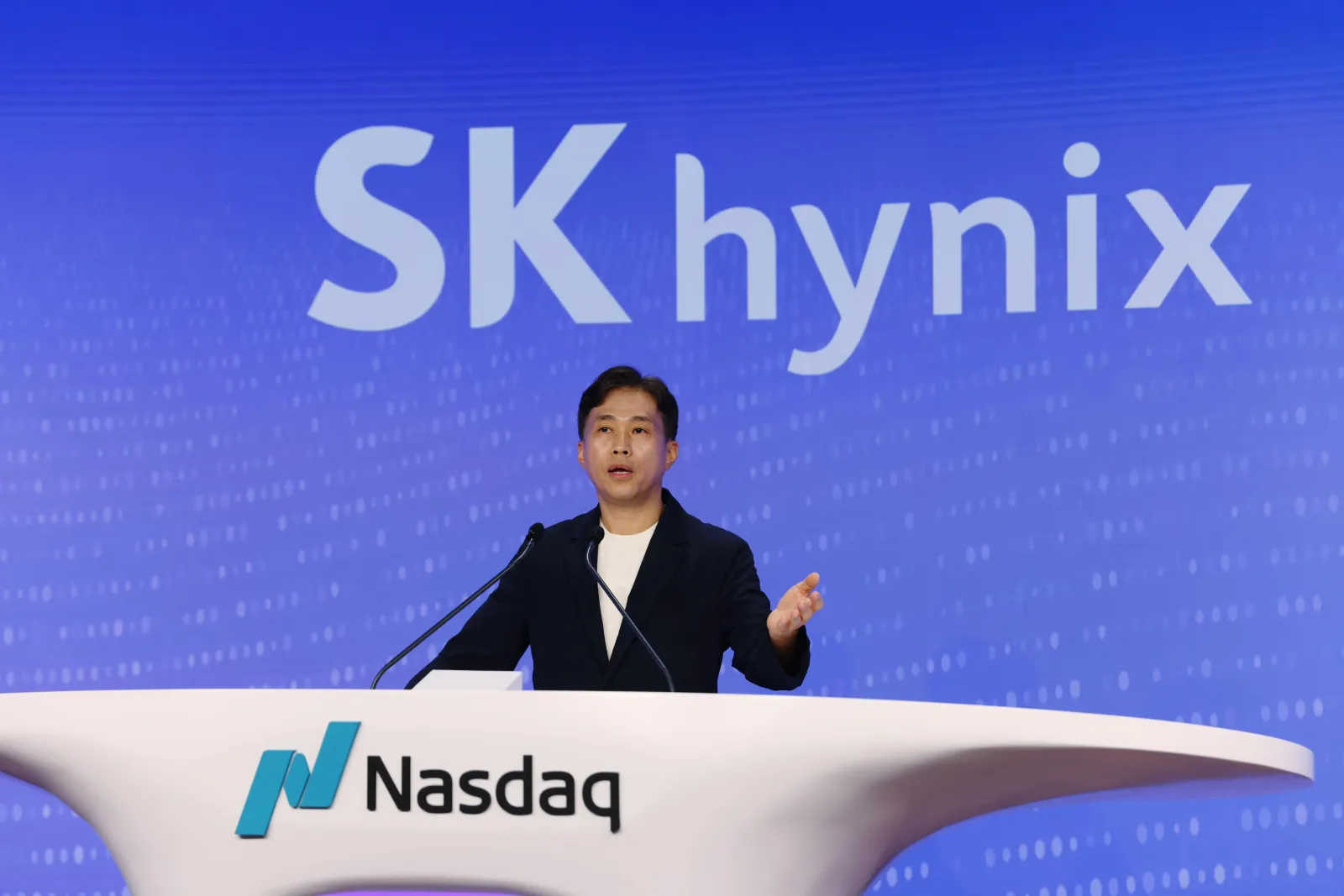
SK Hynix opens at $170, raises $26.5B, and tops foreign IPO records
In Friday's Wall Street debut, SK Hynix turns AI RAM demand into a $26.5B fundraising moment that rewrites comps.