

Apophis 2029: New maps say up to 7.6 billion could spot the naked-eye asteroid
A “once-in-a-millennium” flyby on April 13, 2029 turns planetary defense into a global public science event, not a niche one.
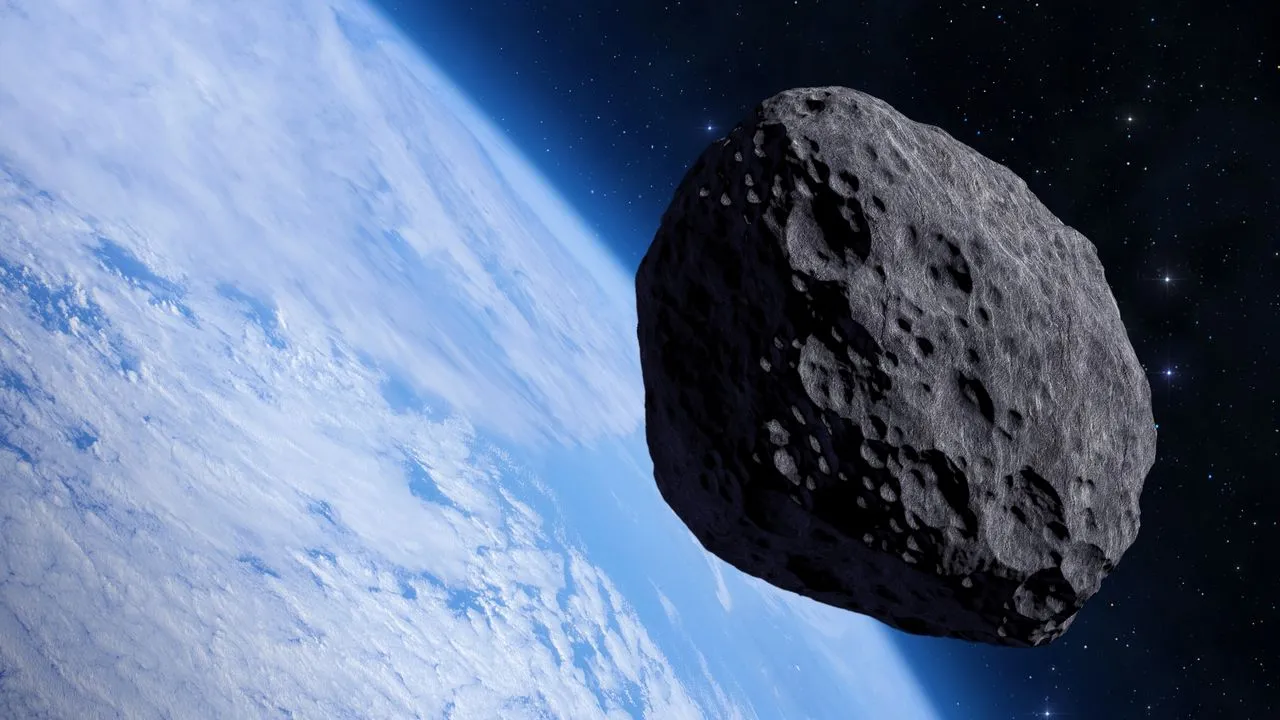
At the Apophis T-3 Years workshop held June 18-19 at the University of Padua, scientists unveiled new visibility maps predicting up to 7.6 billion people could see asteroid 99942 Apophis on April 13, 2029. The consequence for decision-makers: a major regulatory and mission pipeline moment (including NASA's OSIRIS-APEX and UN-backed awareness) will demand coordination, messaging, and observation-grade execution.
Up to 7.6 billion people may be able to see asteroid 99942 Apophis during its April 13, 2029 flyby, and the new visibility maps finally quantify how that “shared cosmic experience” gets distributed across the planet. This is not a hypothetical future outreach stunt. Scientists are mapping an ultraclose pass that will bring Apophis to a minimum distance of around 19,000 miles (30,600 kilometers) from Earth, closer than the International Space Station and the thousands of spacecraft in low Earth orbit, while still being safely far enough that it does not threaten high-altitude satellites in geosynchronous orbit.
The bigger point: for the first time, humans have ever been able to predict a flyby of an asteroid that will be visible to the naked eye. At the Apophis T-3 Years workshop, held June 18-19 at the University of Padua in Italy, organizers and planetary scientists laid out who will likely get the view, where the best observing windows will fall during the roughly seven-hour encounter, and what the scientific community wants to measure when Apophis moves across the night sky.
So how “close” is close? Apophis is skyscraper-size, spans about 1,500 feet (450 meters) at its widest point, and is peanut-shaped. The workshop materials and subsequent reporting frame it with a name that signals cultural gravity: “God of Chaos.” The name comes from Apep, the Egyptian serpent god of darkness and disorder, and Apophis has also earned the nickname “God of Chaos.” While a rock this size could wipe out a city if it ever hit Earth, the immediate risk window is not the story here. There is currently zero chance that Apophis will impact our planet during the flyby or within the next 100 years.
That said, the reason this matters to operators, policymakers, and science budgets is the management problem that comes with uncertainty in planetary trajectories. Even when the impact probability is effectively nil for the near term, experts have raised concerns that the asteroid's trajectory could change before it reaches us. Others worry the upcoming flyby could permanently alter the space rock or nudge it off course, potentially increasing the chances of an impact in the future. This is why the scientific posture is to monitor in great detail and coordinate observations from telescopes around the world. It is also why spacecraft are in the mix, not just Earth-based observers.
Several missions, including NASA's OSIRIS-APEX, are attempting to fly past Apophis to study its structure and trajectory. The practical implication is that the flyby is a real-time calibration event for how we measure, model, and verify near-Earth objects. It is a chance to tighten the numbers that matter for long-horizon risk assessments, even if the short-horizon headline is reassurance. And because Apophis will be visibly trackable by the public, the event doubles as a mass-participation moment for planetary defense awareness.
The governance and messaging angle is explicit. The event is so significant that the United Nations has declared 2029 the International Year of Asteroid Awareness and Planetary Defence. That declaration matters because it turns a technical monitoring effort into a global coordination challenge across agencies, education initiatives, and observational networks. Scientists also want to inspire the next generation of space scientists, and Richard Binzel, a planetary scientist and asteroid expert at MIT who helped organize the workshop and create new maps of the flyby, described the view as “a way of feeling a shared cosmic experience,” emphasizing the smallness of Earth against the vastness of space.
Now to the part that will drive the public response and the practical observing plan: who can actually see it, and when. Apophis will be visible only to people positioned within its path at twilight or night amid clear skies and limited light pollution. It will slowly move across the night sky through well-known constellations, but exact position depends on where you are. At the start of the flyby, when Apophis is farthest from Earth, it could be visible to around 4.5 billion people across Australia and most of Asia. By the end, when it reaches its closest point, it might be visible to around 1.9 billion people in eastern South America, northern Africa, and parts of Europe.
Peak visibility hits around halfway through the flyby. At that point, Apophis might be seen by as many as 5.7 billion people across eastern Africa, Southern Europe, Australia, and all of Asia and the Middle East. Observatories on Spain's Canary Islands are expected to snap the best photos. North America is the only continent that will not get a clear view. For anyone lucky enough to see it, Binzel compares the experience to “a modest star passing slowly across the sky, much like a slow-moving satellite,” shining as brightly as the stars in the Big Dipper.
For executives and board-level readers, the second-order implication is straightforward: this is planetary defense, but with public visibility baked in. Coordination across ground telescopes, mission timelines like OSIRIS-APEX, and international awareness programming will need to be as disciplined as the science. In 2029, Apophis will be both a measurement opportunity and a reputation test for organizations tasked with preparing the world for how near-Earth risks are assessed, communicated, and continuously updated.
This story's Key Insights and Take-aways are locked.
Create a free account to unlock Executive Actions for one credit.
Register to UnlockAlways free for Executives Club members. Join the Club
More in Science

Alaska's 1,580-foot tsunami had warning signs. Scientists just found them.
Rapid glacier retreat, heavy rainfall, and thousands of tiny tremors preceded Alaska's 1,580-foot tsunami, a warning for every coastal community in a warming world.

The rare mutation that lets high-risk brains dodge Alzheimer's
Scientists found a natural defense against protein buildup, opening a new path to preventive treatments.

3,000 steps a day may halve Alzheimer's decline, study finds
New research links a modest daily walk to less tau buildup and nearly half the cognitive and functional decline, even for those with early signs.