

Apple jacks Mac and iPad prices hundreds higher after “never seen” RAM surge
MacBook Air, Pro, iPad Air, and Pro all jump, while Apple says the memory component shock hit “this quickly.”
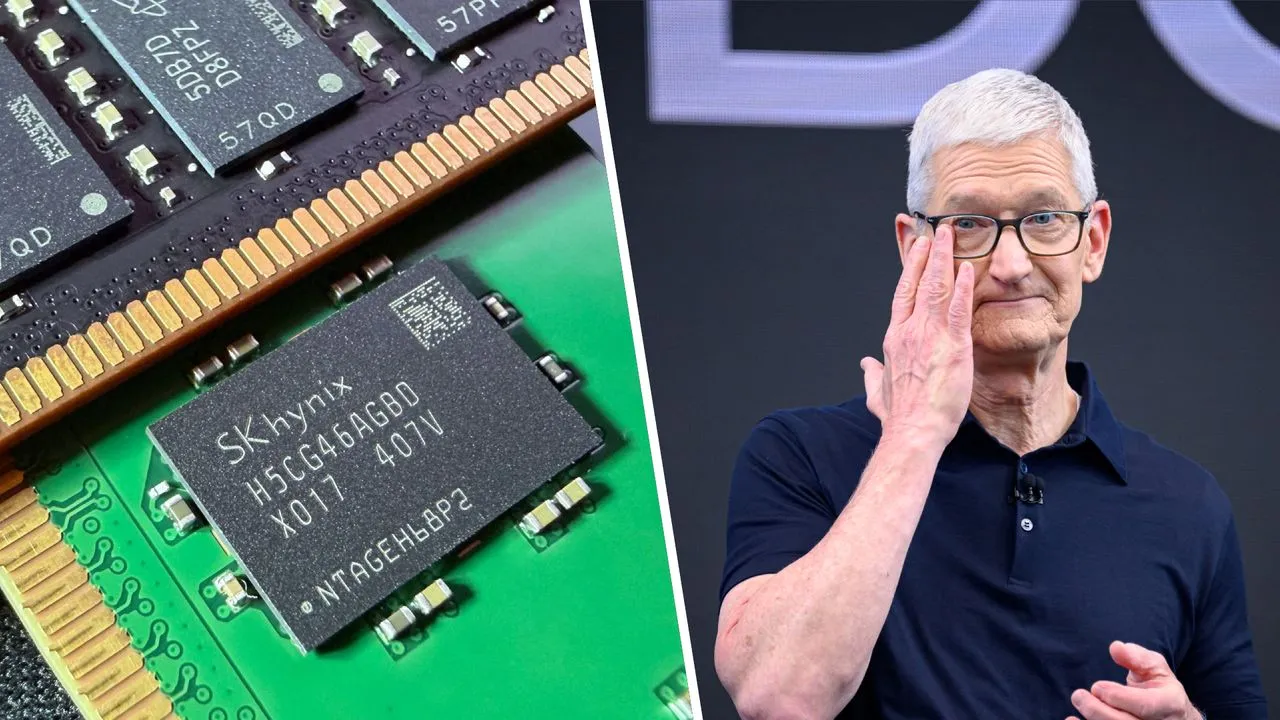
Apple says Mac and iPad prices are rising after component price increases, stating, “We have never seen a component price increase this much, this quickly.” The move matters for decision-makers because it signals how quickly memory supply stress is flowing into consumer hardware pricing.
Apple has stopped pretending the RAM crisis is someone else’s problem. In a statement picked up by the Wall Street Journal, the company said, “We have never seen a component price increase this much, this quickly,” and warned that “we need to begin raising prices.” The result is immediate and measurable: Macs and iPads are now up by hundreds of dollars at entry and mid tiers, not months from now, not “subject to change,” but already built into the new starting price tags.
Here’s what shoppers are seeing. The MacBook Air now starts at $1,299, up from $1,099. The MacBook Pro now starts at $1,999, up from $1,699. The MacBook Neo goes to a minimum of $699, up from $599. On the iPad side, the iPad Air now starts at $749, up from $599, and the iPad Pro now starts at $1,199, up from $999. If you want the most painful example in one line, the M4 Max Mac Studio is up to $2,499 from $1,999. That’s not a rounding error. That’s a “new normal” pricing regime rolling through Apple’s catalog while competitors are already dealing with higher memory costs.
Why is this such a big deal, even beyond the sticker shock? Until now, the source notes that Apple had managed to be an exception to the memory crisis. For context, the industry has spent a long time treating semiconductors and memory as the kind of input cost that can swing hard, then linger in effects. Typically, when memory prices rise, the pain shows up somewhere: procurement budgets, device mix, or the final selling price. Apple, by virtue of its scale and supplier relationships, had generally kept its pricing firm, which is exactly what makes this pivot news. Apple is now acknowledging the shock is too large and too fast to absorb.
Apple’s statement is the core evidence. “We have now reached a point where we need to begin raising prices,” Apple said. “We have never seen a component price increase this much, this quickly.” That language matters because it implies timing is the enemy. When inputs get more expensive quickly, you do not have the runway to renegotiate everything smoothly across the manufacturing chain and retail pipeline. Even if Apple is profitable, a pricing move is still a planning tool: it helps prevent the company from selling into a margin squeeze.
There is also a second clue about how leadership is thinking about demand and customer protection. The article says Apple is not, at least for now, increasing the price of the iPhone, its number-one moneymaker. But it also points out that Apple has not promised it won’t do that. The reason is already on the record. Outgoing Apple CEO Tim Cook told the Wall Street Journal just last week that, “Unfortunately, price increases are unavoidable… we’ve been trying to shield our customers from the increases, but the situation has become unsustainable.” He also said, “We definitely need memory pricing and supply to return to reasonable levels for consumer products. That’s the bottom line.”
For boards and finance teams, this frames the situation as more than a one-off vendor issue. It is a supply and pricing reset in memory markets that is forcing a consumer electronics translation. And unlike a slow-moving cost trend, the company itself is describing something that changed fast enough to make prior strategies insufficient. When a CEO says price increases are unavoidable and that shielding customers has become unsustainable, it is basically an admission that absorption capacity has a limit, even for a company known for engineering leverage.
The strategic implications extend to peers in consumer hardware and adjacent software businesses that depend on predictable upgrade cycles. If Mac and iPad buyers are hit with hundreds of dollars in new costs, it can change timing, device mix, and replacement behavior. Even if Apple holds iPhone pricing for now, the memory cost pressure does not magically end at one product line. The article explicitly notes Apple has not said it will not later increase iPhone pricing. That creates a real planning problem for anyone forecasting revenue by device category.
It also raises a broader question for enterprise and education buyers, who often lock in budgets early. A jump like this can ripple into procurement decisions, deployment schedules, and ROI calculations. If you are a school district or a business standardizing on MacBooks or iPads, the “component crisis” becomes a budget crisis. And for executives at other hardware makers, Apple’s move is a signal that supplier relationships do not fully insulate a company once memory price swings reach a certain speed and magnitude.
Bottom line: Apple is acknowledging an input shock that it says it has “never seen” in both scale and speed, and it is translating that shock into real, public price increases across Mac and iPad. The next board-level question for competitors and partners is not whether memory costs will rise, it is how long it takes for pricing power to normalize and what happens to demand in the meantime.
This story's Key Insights and Take-aways are locked.
Create a free account to unlock Executive Actions for one credit.
Register to UnlockAlways free for Executives Club members. Join the Club
More in Entertainment

Russell Brand's accuser 'bewildered and confused' as he denies 7 sex charges
The criminal case against the comedian is a live test of how media companies manage talent risk when serious allegations go public.

'It's a Magic Trick': Ballet Experts Say Rosalía's SNL Pose Is Impossible
Three ballet experts tell Rolling Stone Rosalía's gravity-defying SNL stillness shouldn't be possible - and why the debate is now part of the show.

Activision CMO: GTA 6 Will Boost Call of Duty, Not Bury It
Activision's top marketer says Rockstar's blockbuster will drive players back to consoles and into Modern Warfare 4, even as the company admits its recent strategy failed.