

Apple's iPhone Duo hits China's foldable market, faces price test
Cheaper Xiaomi and Huawei foldables are forcing value comparisons that could define the iPhone Duo's reception in China.

Apple launched the iPhone Duo into China's crowded foldable market, where netizens are fixated on its price against cheaper rivals. The value comparison with Xiaomi and Huawei foldables could shape the device's reception and Apple's competitive position.
Apple's iPhone Duo has officially landed in China's foldable smartphone arena, and the reception is already being framed by a single word: price. Chinese netizens have zeroed in on the cost of Apple's first foldable, comparing it directly against cheaper offerings from Xiaomi and Huawei. The conversation on social platforms is less about the device's engineering and more about whether the Apple logo justifies a premium that rivals undercut by a wide margin. For a market that has embraced foldables faster than any other, the iPhone Duo is walking into a fight where the value equation is already stacked against it. The question is not whether Apple can sell the device, but whether it can sell enough to matter in a segment where it is the latecomer, not the trendsetter.
The price test is the core of the story. Xiaomi and Huawei have spent years normalizing foldables as accessible, high-performance devices, not luxury curiosities. Their pricing has set a benchmark that Apple now has to answer to, and the early chatter suggests the iPhone Duo's premium is being measured against that benchmark, not against Apple's usual brand cachet. For context, China is the world's largest smartphone market, and foldables have become the battleground for premium share, with domestic players using aggressive pricing to pull consumers away from Apple's traditional stronghold. The iPhone Duo enters that environment with a price that, on paper, looks out of step with the value-conscious mood of the market. The netizen focus on price is not a niche complaint; it is a signal of how the broader consumer base is likely to evaluate the device.
The stakes go beyond the iPhone Duo itself. Apple has long relied on China for a significant chunk of its revenue, and the foldable segment is where the next upgrade cycle is being fought. Huawei, in particular, has used foldables to reclaim premium mindshare after years of US sanctions that crippled its access to advanced chips. Its devices now compete on both hardware and price, and Xiaomi has matched that with aggressive value positioning. Apple's entry, by contrast, is arriving with a price that invites the kind of comparison that domestic rivals are happy to encourage. The early social media reaction suggests that Apple's brand loyalty is being tested in a way it has not been in years, as consumers weigh the iPhone Duo against foldables that offer similar or better specs for less money.
For executives watching this unfold, the iPhone Duo's reception is a case study in the limits of brand premium. Apple's ecosystem, camera quality, and software integration have historically justified higher prices, but foldables are a new category where consumers are still learning what they value. If the price gap is too wide, even loyal Apple users may hesitate, and that hesitation could ripple into the broader iPhone lineup. The company has navigated price criticism before, but the foldable market's rapid growth and the aggressive pricing of rivals make this a different kind of challenge. The iPhone Duo is not just a product launch; it is a test of whether Apple can command a premium in a category where the competition has already defined the value baseline.
The regulatory and supply chain context adds another layer. China's smartphone market is heavily influenced by domestic policy, and local brands benefit from government support and supply chain integration that Apple cannot easily replicate. Huawei's resurgence, in particular, has been framed as a national champion story, and its foldables are part of that narrative. Apple, as a foreign player, faces headwinds that go beyond price, from trade tensions to consumer sentiment that increasingly favors domestic brands. The iPhone Duo's price, then, is not just a commercial decision; it is a strategic signal about how Apple intends to compete in a market where the rules are shifting.
The second-order implications for peers are clear. If the iPhone Duo struggles to gain traction due to price, it will validate the strategy of domestic players who have bet on value as the winning formula. It could also push Apple to reconsider its pricing architecture for future devices, not just in China but globally. For other premium brands, the lesson is that foldables are not a category where brand alone can carry the day; the price-performance ratio is the new battleground. The iPhone Duo's reception will be watched closely by every executive in the smartphone industry, because it will show whether the foldable market rewards innovation or affordability, and whether Apple's premium model can survive the transition to a new form factor.
Ultimately, the iPhone Duo's fate in China will be decided by the value conversation that is already underway. The netizens who are comparing prices are not just casual observers; they are the early adopters who shape the broader market's perception. If the price gap remains a sticking point, Apple may need to respond with promotions, trade-in deals, or carrier subsidies to close the gap. If it does not, the iPhone Duo could become a cautionary tale about entering a crowded market without a clear price advantage. For now, the spotlight is on Apple's next move, and the market is watching to see if the company can turn a price test into a value win.
This story's Key Insights and Take-aways are locked.
Create a free account to unlock Executive Actions for one credit.
Register to UnlockAlways free for Executives Club members. Join the Club
More in Business

Paramount's Ellison: Merger Clearance Done, WBD Deal by Oct 1
David Ellison says the Paramount-WBD merger has full clearance after settling with state AGs, clearing the path for an October 1 close.

Paramount settles with 12 states, $110B Warner merger clears final hurdle
David Ellison's studio avoids a March trial and a $7M-a-day ticking fee by settling with state AGs over local job losses.
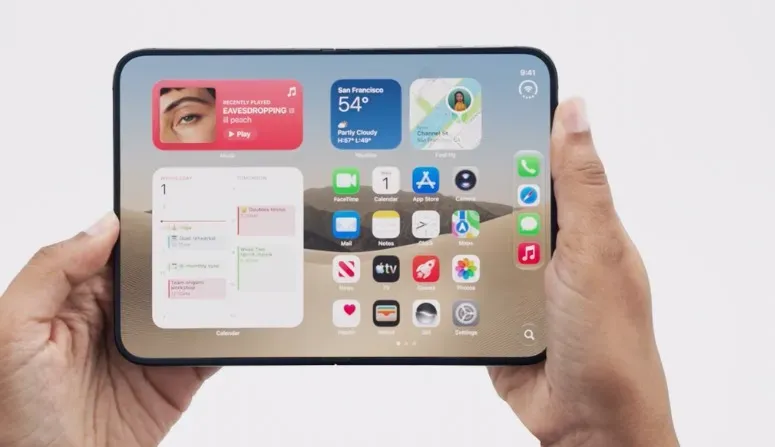
Apple unveils first foldable iPhone Duo with 7.6-inch display under new CEO Ternus
Apple's first foldable, the iPhone Duo, marks a major product bet for new CEO John Ternus, with a 7.6-inch unfolded screen.