

Paramount settles with 12 states, $110B Warner merger clears final hurdle
David Ellison's studio avoids a March trial and a $7M-a-day ticking fee by settling with state AGs over local job losses.
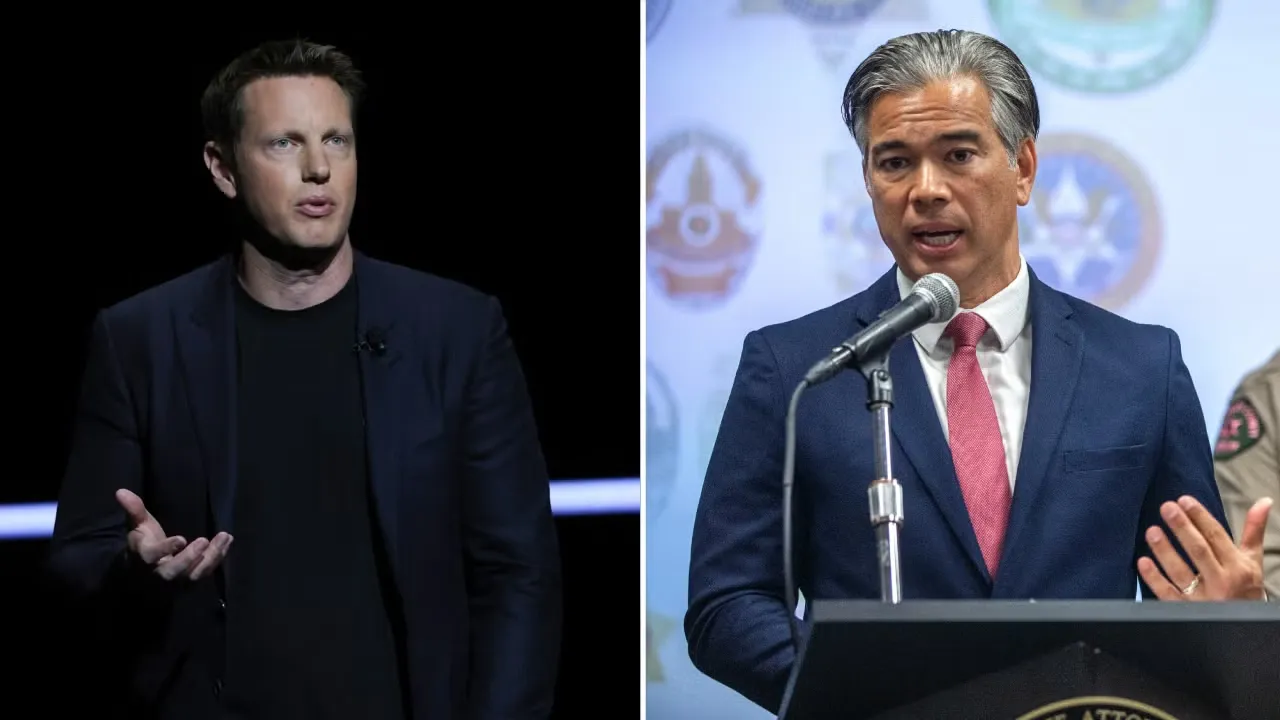
Paramount and 12 state attorneys general reached a settlement, clearing the final regulatory hurdle for the $110 billion Warner Bros. Discovery merger. The deal removes a ticking $7 million-per-day penalty and a potential March trial, paving the way for closure.
Paramount and 12 state attorneys general have agreed to a settlement, clearing the final hurdle for the $110 billion merger with Warner Bros. Discovery, according to Bloomberg and The Wall Street Journal. The settlement addresses long-running concerns that combining the two historic studios would devastate both the local economy and the entertainment industry as a whole. Paramount, led by David Ellison, has insisted the deal would create more opportunities and give it a better fighting chance against tech giants. The final terms of the settlement could not immediately be learned, and representatives for Paramount and California Attorney General Rob Bonta did not immediately return TheWrap's request for comment.
The settlement kills two looming threats: a March trial against the state AGs and the Writers' Guild of America, and a ticking fee that started accruing Oct. 1 at 25 cents per share, translating to $650 million per quarter or $7 million per day until closing. That fee gave Paramount extra motivation to settle quickly. While both sides had expressed willingness to reach an out-of-court deal, Ellison also threatened to move the Hollywood studio's operations out of California if no settlement was reached by the Oct. 1 deadline. The Los Angeles Economic Development Corporation estimated that a Paramount exit could have cost the state up to $21.2 billion in annual economic output, 57,980 full-time jobs, and $1.17 billion in state and local tax revenues.
On the flip side, an analysis ordered by the LA County Board of Supervisors warns that the merger itself could put 4,500 local TV and film jobs and over 5,800 indirect or induced jobs from related small businesses at risk over the next three years. The economic impact of losing those jobs would be $1.26 billion in wages, $2.78 billion in economic value, $4.06 billion in total business output, and $547 million in tax revenue, including $78.6 million in local taxes, 63% of which comes from property taxes. This tension between keeping jobs in California and the competitive pressure from tech giants is exactly why the settlement matters for any executive watching regulatory dynamics in media.
Public pressure for a settlement came from California Gov. Gavin Newsom, Los Angeles Mayor Karen Bass, and Democratic gubernatorial nominee Xavier Becerra, as well as the Directors' Guild of America and IATSE. On the other side, Cinemark and the CEOs of AMC Theaters and Regal supported the merger, as did Lionsgate CEO Jon Feltheimer. Over 5,000 actors, including Jane Fonda, Mark Ruffalo, and hundreds of other A-listers, penned a letter opposing it, with SAG-AFTRA and Hollywood's Teamsters union also speaking out. Beyond the state AGs and the WGA, a Paramount shareholder and a group of consumers filed separate lawsuits to block the merger, though the latter was dismissed.
The resolution comes after Paramount already received clearance from Warner Bros. shareholders and from regulators and governments representing 68 jurisdictions, including the U.S. Department of Justice, the Federal Communications Commission, the European Commission, and the United Kingdom's Competition and Markets Authority. In the U.S., concessions were added. Internationally, Paramount agreed to terminate its stake in United International Pictures, a joint venture with Universal, within 13 months. For 10 years, it will not enter any agreement with Universal to jointly co-distribute films in the European Economic Area, and it won't shift distribution of Warner's films to Paramount's distributor where that distributor also handles Universal's or Disney's films. Similar restrictions apply in reverse.
In the UK, Paramount reached a "deed of covenant" with Secretary of Culture, Media and Sport Lisa Nandy. That deed commits Paramount not to combine linear channels with its streaming services, to maintain editorial independence of its news services and children's networks, and to provide more funding to Channel 5 for high-quality news, original children's programming, and drama. These commitments take effect upon completion and last five years, except for Channel 5 commitments, which run until Dec. 31, 2034, when Channel 5's current public service broadcasting license ends.
The settlement removes the last major obstacle to a transaction that will reshape Hollywood's competitive landscape. For executives in media and adjacent industries, the takeaway is clear: regulatory scrutiny of mega-mergers now extends beyond antitrust to local economic impact and labor markets. The ticking fee structure, the threat of relocation, and the coalition of unions and politicians all signal that merger approval is no longer just a legal exercise, it's a political and operational chess game. Peers should study how Paramount navigated these pressures, because the playbook of combining regulatory concessions with public stakeholder management just got a high-profile precedent.
This story's Key Insights and Take-aways are locked.
Create a free account to unlock Executive Actions for one credit.
Register to UnlockAlways free for Executives Club members. Join the Club
More in Business

Paramount's Ellison: Merger Clearance Done, WBD Deal by Oct 1
David Ellison says the Paramount-WBD merger has full clearance after settling with state AGs, clearing the path for an October 1 close.

Apple unveils first foldable iPhone Duo with 7.6-inch display under new CEO Ternus
Apple's first foldable, the iPhone Duo, marks a major product bet for new CEO John Ternus, with a 7.6-inch unfolded screen.

LIV Golf files for Chapter 11 bankruptcy
The Saudi-backed league's financial collapse raises urgent questions for sponsors, players, and the broader golf economy.