
Apple’s new Siri wrecks Spotlight: getting web results now takes multiple extra taps
In iOS and macOS 27 developer betas, Apple’s AI-first Siri interface buries Spotlight web searches under “Apple Intelligence” prompts.

Apple rolled out a new AI-juiced Siri at WWDC that, in developer beta testing, adds conversation support and easier on-device finding while degrading core search paths. For executives, the risk is product trust: an AI front-end that feels like “force-feeding” can quietly shift user behavior, drive churn, and complicate platform governance decisions.
At WWDC, Apple introduced a new AI-juiced Siri that was supposed to modernize on-device intelligence. In a week-long test drive on iOS and macOS 27 developer betas (available starting June 8), one of the most convenient Apple OS features appears to have taken a direct hit: Spotlight.
On an iPhone, Spotlight is no longer the quick tap-to-results engine it’s been. Swiping down from the center of the screen, typing a query, then tapping an item that points to the query as a Google search in Safari used to be the simple flow. With the new Siri-first interface, that path now presumes you want Siri to “surface” Apple Intelligence links instead. Getting to a web search from a Spotlight query now reportedly requires multiple taps: type the query, tap “Show Results,” avoid hitting enter (because it triggers Siri to craft a response and you lose visibility into actual Spotlight content), tap “Show More” next to the Siri-surfaced web results, scroll until you see “Search Google” (or your default engine), then tap that.
This is not a small UX complaint. Spotlight is the launcher and search shortcut for the moments when users do not want to think. The source frames Spotlight as a feature it relies on almost exclusively for digging up apps it does not keep a shortcut for, and as the main method for starting web searches on iPhone. When an AI assistant inserts itself between intent and results, the user has to re-learn the “fast path.” That is exactly the kind of friction that users blame on “the update,” not on the AI. And once behavior changes, it can be hard to reverse.
To be fair, the new Siri does add real capability. The report highlights that Siri now carries on actual conversations. That matters because the old Siri interaction style often felt like a one-shot request, response, and done. The new model reportedly creates room for clarifying questions or follow-ups. It can also find things on-device more easily, at least on the author’s M1 MacBook.
But even these positives come with trade-offs. The iPhone 15 Pro used for testing was still “re-indexing” the device after the update for more than a week, though the author notes they could still use Siri for web searches and find some things on the phone, and suggests it’s possible the re-indexing message itself was an error. There is also a dedicated Siri app that keeps a record of every conversation with the new Apple Intelligence front end. The caveat: even brief questions, like an overnight weather forecast, are stored “in perpetuity” unless the user manually deletes them. The only alternative mentioned is setting an expiration window for past chats, which means losing records of more useful conversations.
Now zoom out to why this might be happening. The report argues the similarity to Google AI Overviews is not just aesthetic. It says Apple’s approach resembles the way Google’s much-maligned AI Overviews can push actual search results down the page in favor of information force-fed from Google Gemini. There’s a “logical reason” for that similarity in the source: Apple replaced its former AI chief John Giannandrea at the end of 2025. Giannandrea was previously Google’s SVP of search and AI. Replacing him was Amar Subramanya, described here as a Google alum who spent 16 years there, including a turn as the head of Gemini engineering. Subramanya is now Apple’s VP of AI, and the source says he reports directly to Apple SVP of software engineering Craig Federighi, who now owns Apple’s machine learning initiatives including the construction of Apple foundation models.
The WWDC context mentioned in the source matters for second-order implications. It says Apple leaned heavily on a partnership with Google to build its foundation models, and that Subramanya brought some of that Google AI ethos with him. If an AI research culture prioritizes assistant-like relevance over classic query results, then the product surface becomes a battleground: does Apple keep Spotlight as a neutral search/launcher tool, or does it evolve into an AI-first recommender that “helpfully” mediates every request?
For executives, the practical question is what this does to user trust and platform strategy before the public release. The report frames iOS 27 developer beta behavior as a possible temporary state, noting it is “entirely possible” Apple will adjust before release this fall and that Apple was asked whether the change was intentional but did not respond. Even if Apple fixes the UX, the episode highlights a real governance tension: when AI becomes the default interface, small changes in the first 1-2 taps can reorder how people search, how people discover apps, and where they actually get web answers.
There is also an “escape hatch” strategy in the report: turn Siri off entirely in Settings, or use other AI features. Specifically, it says that Apple now allows users to create shortcuts by making a natural language request to Siri, and that the author created a shortcut to run a Google search with whatever text is input. That workaround is a reminder that in the AI-first era, power users will route around product decisions. But most users will not. They will adapt to whatever the default flow becomes.
For peers making platform and product bets, this is the stake: AI can improve conversations and on-device retrieval while simultaneously undermining the simplest utility. If Spotlight is “the fast lane,” Siri is now effectively a toll booth. Whether Apple reverses this before release or doubles down, the strategic lesson is clear from the test drive described here. An AI front-end can win attention and still lose the core workflow that keeps a platform sticky.
This story's Key Insights and Take-aways are locked.
Create a free account to unlock Executive Actions for one credit.
Register to UnlockAlways free for Executives Club members. Join the Club
More in Technology

Nvidia's $89B data center quarter: the 9 companies cashing in
The AI buildout is minting fortunes beyond GPUs, and memory, cloud, and cooling suppliers are riding the same wave.
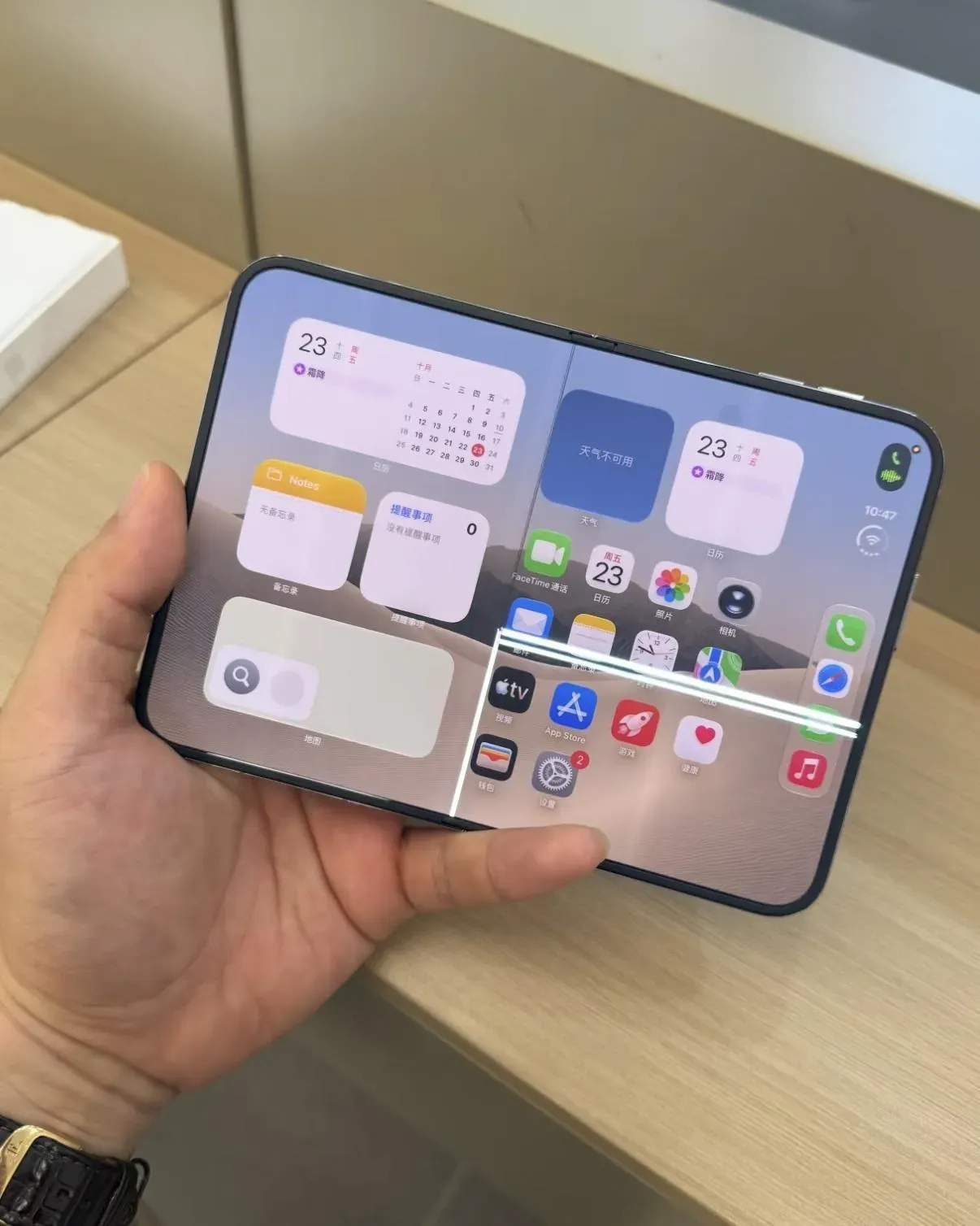
A YouTuber dissected the iPhone Duo and thinks he found crackgate's cause
CuriousHagi's teardown of Apple's foldable reveals a gear-like hinge that may explain why screens crack in the same spot within hours.

Google quietly links your phone number to every Android account on your SIM
Adding a SIM now ties your phone number to all Google accounts - and future accounts inherit it. Here's the security and privacy stakes.