

Apptronik opens a 90,000-square-foot Robot Park to train Apollo humanoids
A data factory in Austin aims to solve the real bottleneck for humanoid AI, turning practice sessions into customer-ready learning.
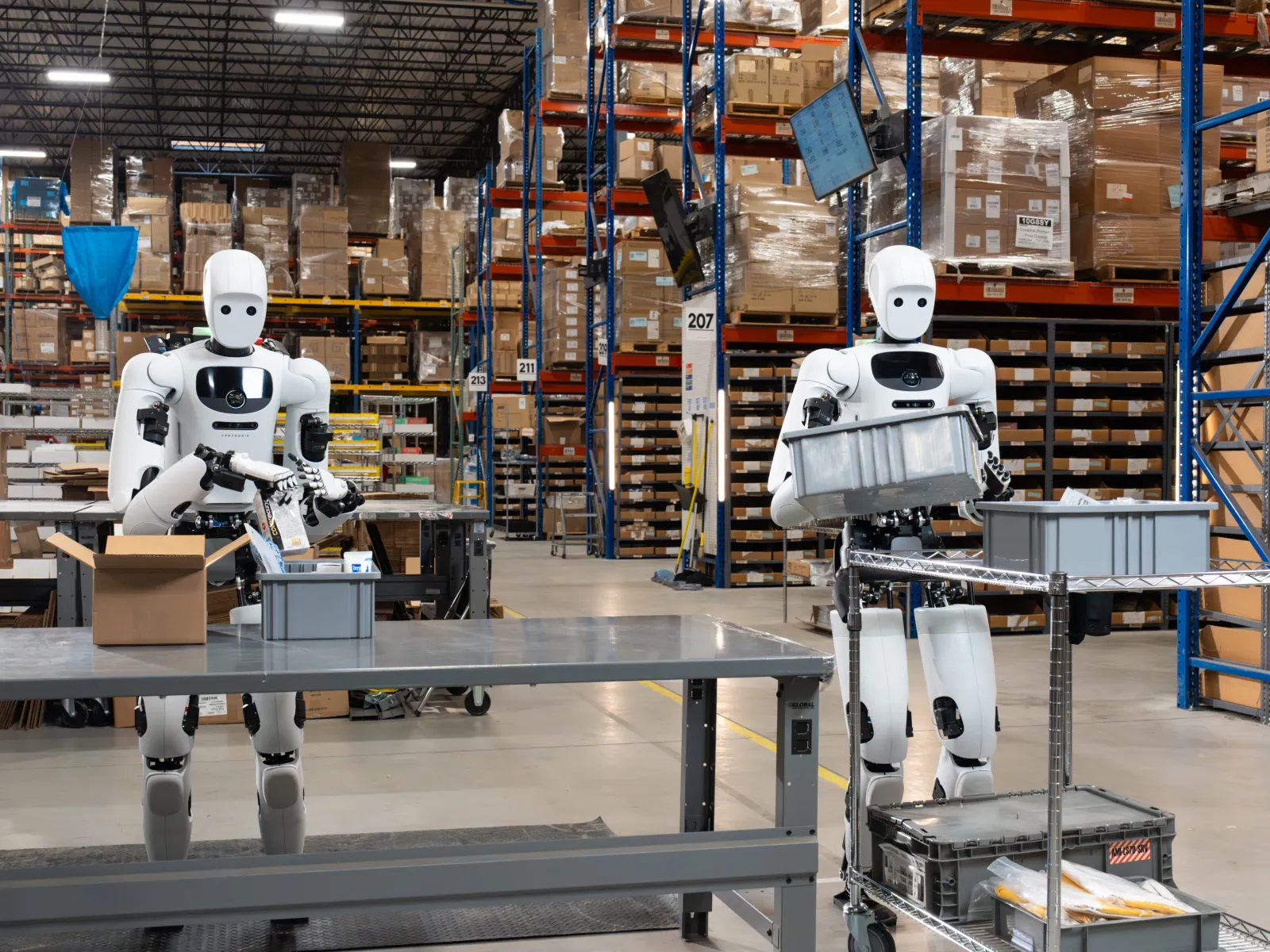
Apptronik, the Texas humanoid startup backed by investors including Google and Mercedes, opened a 90,000-square-foot Robot Park in Austin where Apollo robots practice tasks under remote human guidance. For decision-makers, the move signals how the industry is trying to turn scarce real-world robotics data into a repeatable advantage before autonomy is fully there.
Apptronik just opened a 90,000-square-foot warehouse in Austin, and it is not there for vibes. The company is building a “Robot Park” where its Apollo humanoid robots practice real-world jobs like loading boxes onto conveyor belts and sorting toys into bins, mostly under remote operator control. The whole point is data. The company uses what happens during those sessions to improve the AI models that act as the robots’ “brains,” with the goal of making humanoids useful in factories, service jobs, and homes.
If you have been wondering why humanoid robots still look like they are permanently “almost” autonomous, this is the answer the industry is racing toward: there is a shortage of real-world training data. Apptronik is explicitly trying to manufacture it. AI chatbots could learn from massive internet text and images, but robots need comparable troves of experience from the physical world, with the right variety, mistakes, and edge cases. In Robot Park, operators stand beside the robots, guide and monitor their movements, and collect the training material that later helps the models do more on their own.
Apptronik calls the setup a “data factory,” and the analogy matters for how investors and executives should think about this category. You are not just buying hardware or admiring demos. You are building an engine that can generate the dataset required to make robots competent enough to pass from pilots to deployments. Jeff Cardenas, Apptronik’s cofounder and CEO, described it as “Just like you have a factory to build robots, we have a data factory to generate the kind of data we need,” adding that it is “a robot learning playground.” Even if you ignore the branding, the logic is straightforward: autonomy is not a switch you flip, it is a learning loop you feed.
This is also a capital story. Apptronik has raised around $1 billion and is valued at more than $5.5 billion. That funding has supported both the physical build and the operational infrastructure for repeated learning. Investors include Google and Mercedes. Mercedes already uses Apollo robots in its factories for simple tasks like gathering components and tools for assembly-line jobs. DeepMind, Google’s AI research division, also uses Apollo robots to improve Gemini Robotics, Google’s AI models for robotics. In other words, the “Robot Park” is not just an internal R&D playground. It is a system that supports partnerships and productization, turning operator-guided practice into assets that can help multiple stakeholders.
Technically, the Apollo lineup is set up for this data-driven progression. Apptronik released the first version of Apollo in 2023. It is now working on Apollo 2, which Cardenas said has an upgraded battery, motors, and sensors. Apollo 2 is designed for data collection and customer pilots, and it can run for four hours, stands about 6 feet tall, and can lift 55 pounds with both hands. Apollo 3, the version Apptronik plans to sell to customers for commercial work, is in development, but Cardenas declined to say when it will be ready.
The operational model is also a clue about what stage the market is really in. Humanoid startups typically face two different problems at once: can the robot walk and move reliably, and can it learn tasks robustly enough to be economically useful. Apptronik is approaching deployment with both legged and wheeled versions of Apollo. The company’s CEO sees a three-phase development path for the humanoid market: first proving the technology works, then proving customers will pay for it, and finally scaling it into a profitable business. In his view, the industry is entering the second stage. His framing is blunt and memorable: “Humanoids are the personal computer of our time, and if you believe that's true, we're in the early '80s.” That means the industry is moving beyond lab demos into early commercial tests, but it is still largely learning on the job.
Other companies underscore the same direction, even if they are not building the exact same “data factory” footprint. San Jose-based Figure AI, most recently valued at $39 billion, is beginning deployments in logistics and distribution centers. 1X, headquartered in Palo Alto, plans to ship more than 10,000 humanoids to homes later this year. Oregon-based Agility Robotics plans to go public soon, and its Digit humanoid is deployed across nine customer facilities, including Amazon, Toyota, and logistics company GXO. Apptronik’s differentiator is not only humanoid movement but deployment strategy: it expects wheeled robots to be deployed sooner because they are safer. Legged robots, meanwhile, have bigger long-term potential because they could eventually do anything a human can physically do, but they face near-term constraints like the heavy batteries required in their torsos, which consume more power and create safety risks if they fall.
Finally, the “Robot Park” expansion plan hints at where the real competitive moat might form: scale of learning environments. Apptronik says it has other Robot Parks at customer sites across the world and expects more are coming. Cardenas also said the dream is to have Robot Parks all over the world and make them open to the public, so people can see how the future is being built. Beyond the public-facing ambition, there is a strategic stake for every peer board and executive team watching this category: whoever can turn real-world practice into faster model improvement, and faster customer adoption, gets to compress time. In humanoids, speed is money, and data factories are how you try to win it.
This story's Key Insights and Take-aways are locked.
Create a free account to unlock Executive Actions for one credit.
Register to UnlockAlways free for Executives Club members. Join the Club
More in Business

Comcast shares jump 25% as it plans to split NBCUniversal and Sky
The tax-free spin-off could reshape focus, funding, and competition across media and tech for years.

Bungie cuts most Destiny 2 staff as Sony says Marathon still matters
Herman Hulst confirms layoffs affecting most Destiny and some Marathon teams after Bungie admits Destiny fell short.

SK Hynix jumps 11% after seeking up to $29.4B in Nasdaq listing
The chip giant filed for a Nasdaq listing plan that could raise $29.4 billion, instantly reshaping investor expectations.