

Archaeologists find a 2,400-year-old sanctuary to Odysseus, proving devotion beyond Homer
A Greek worship site from antiquity reframes how we understand Odysseus: not just literature, but belief.
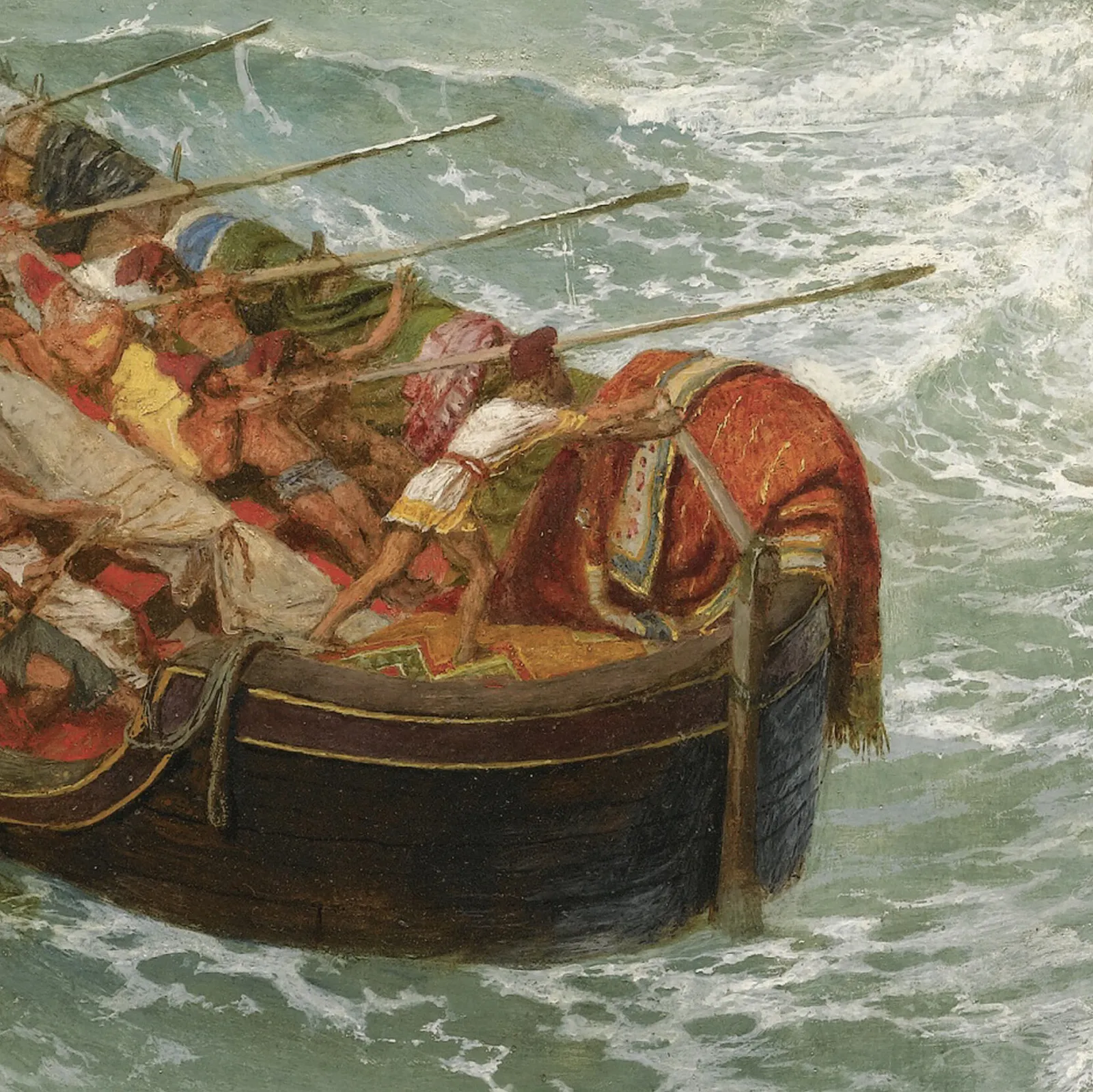
Archaeologists unearthed the ruins of a 2,400-year-old complex tied to the worship of Odysseus. For decision-makers, it is a rare reminder that cultural “narratives” can be real institutions with real money, rituals, and governance.
Archaeologists have unearthed the ruins of a 2,400-year-old complex that points to one big, previously underappreciated idea about ancient Greece: Odysseus was not just a character in Homer’s stories. In the new research framing described in The New York Times, the site suggests that Homer’s protagonist was treated as a figure of genuine devotion by Greeks of antiquity.
That is the hook, and it is not a subtle one. The ruins themselves, which date back about 2,400 years, are being interpreted as a sanctuary-like complex connected to worship. Translation: this was not merely people appreciating a poem the way a modern audience might admire a literary hero. It looks closer to a religious practice, with a built environment and a durable cultural footprint.
Why should an executive briefing care about an excavation thousands of years old? Because the underlying pattern is eerily modern. When a story becomes “real” to people, it stops being only entertainment. It becomes infrastructure. Traditions get rituals. Rituals need spaces. Spaces require maintenance, organization, and continuity across generations. In other words, a belief system is not just ideas in heads. It is governance, labor, and resource allocation made visible.
In ancient contexts, Homer was not simply read. He was part of the cultural operating system. The Times’ description emphasizes the key shift: Odysseus was not only a literary protagonist, but also an object of devotion. That changes how we think about the relationship between text and authority. In many societies, the boundary between mythology and lived practice can be thin. A poem can become an anchor. An anchor can become a center. A center can become a sanctuary.
This is also a useful lens for how boards and leaders think about narratives inside their own organizations. Companies obsess over mission statements and brand stories, but the real question is whether they turn into behavior. Do people show up for them? Do they fund them? Do they create processes around them? If the answer is yes, then you do not just have marketing. You have an institution. The archaeological evidence described here is a reminder that “devotion” is often measurable, not just rhetorical.
Zoom out further, and there is a second-order implication: cultural evidence like this shapes public understanding, and public understanding drives funding and regulation. Archaeology sits at the intersection of research priorities, heritage protection, and policy. Even when an excavation is purely academic, governments and regulators tend to care about what gets preserved, what gets excavated, and what gets interpreted for public audiences. The presence of a sanctuary-like complex tied to Odysseus has potential downstream effects on how museums curate exhibits, how heritage agencies prioritize sites, and how scholars debate interpretations of other ancient remains.
And then there is the capital angle, the part executives will instinctively clock. Heritage and culture are not “just” sentiment. They are assets, and assets often come with constraints. When a site is treated as significant, it can trigger preservation requirements and influence budgets. It can also affect where attention flows next, drawing academic talent and research grants. Even if today’s decision-makers are not funding an excavation, they are funding the ecosystems that decide what kinds of history survive to be studied and enjoyed.
For leaders in adjacent fields, the strategic stake is simple: narratives that win do not stay on paper. They build environments, they recruit communities, and they become harder to uproot over time. This 2,400-year-old sanctuary tied to worship of Odysseus is a vivid case study, even if the industry is archaeology instead of enterprise SaaS. It also raises the uncomfortable but empowering question every executive should ask: is your organization’s story still just a story, or has it quietly become something people would build for, protect, and pass on?
This story's Key Insights and Take-aways are locked.
Create a free account to unlock Executive Actions for one credit.
Register to UnlockAlways free for Executives Club members. Join the Club
More in Science

Alaska's 1,580-foot tsunami had warning signs. Scientists just found them.
Rapid glacier retreat, heavy rainfall, and thousands of tiny tremors preceded Alaska's 1,580-foot tsunami, a warning for every coastal community in a warming world.

The rare mutation that lets high-risk brains dodge Alzheimer's
Scientists found a natural defense against protein buildup, opening a new path to preventive treatments.

3,000 steps a day may halve Alzheimer's decline, study finds
New research links a modest daily walk to less tau buildup and nearly half the cognitive and functional decline, even for those with early signs.