
Arctic sea ice shrank 12.2% per decade; Cambridge Bay tried seawater thickening anyway
A first real-world experiment in Nunavut points to hope, then immediately flags the caveats decision-makers need.
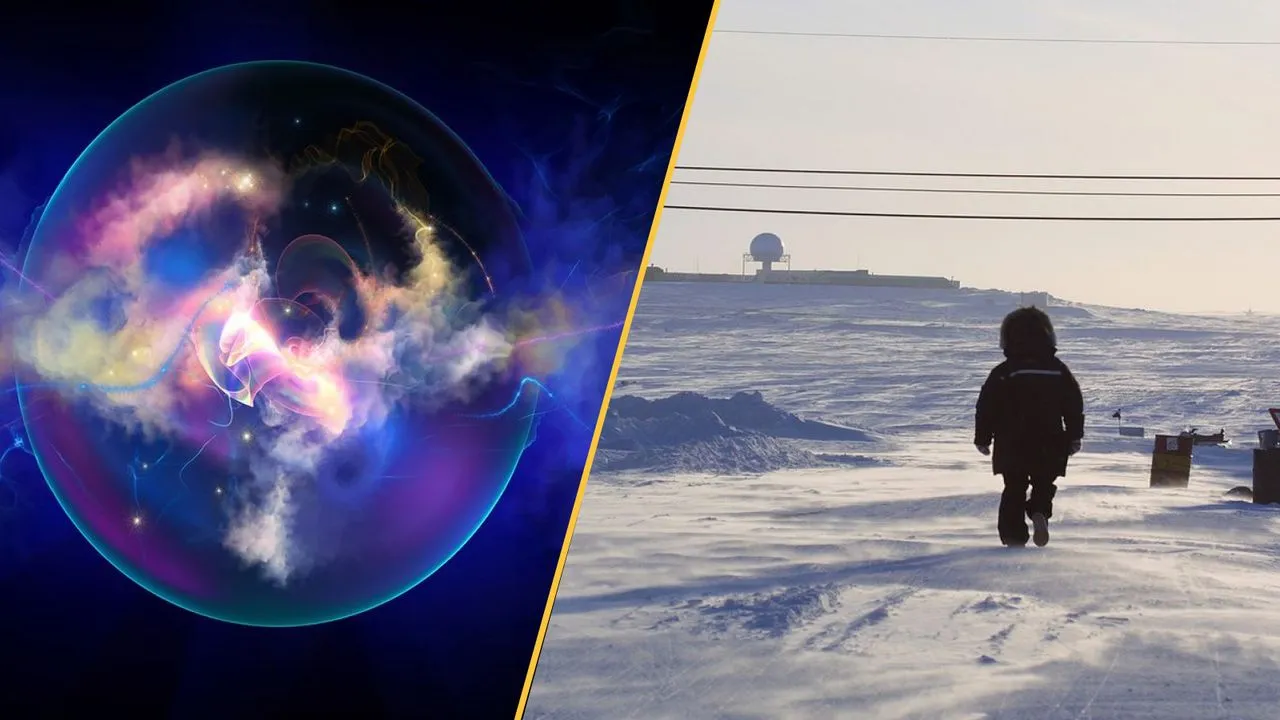
Researchers conducted the first real-life sea ice thickening experiments in Cambridge Bay, Nunavut, by flooding ice sheets with seawater. With the Arctic warming fastest and sea ice disappearing at 12.2% per decade, the results offer promise but come with major caveats for anyone watching climate, shipping, and coastal risk.
Arctic sea ice is vanishing fast. Live Science reports it is disappearing at a rate of 12.2% per decade in the world’s fastest-warming region. Because sea ice helps keep sea levels and marine nutrient flows stable, and because it reflects solar radiation back to space, its decline is not just “bad for the planet.” It feeds back into a system that affects coastal communities, fisheries, and energy costs. So researchers decided to test a blunt, seemingly simple intervention: flood ice sheets with seawater to thicken them.
The work Live Science highlights includes the first real-life sea ice thickening experiments, run in Cambridge Bay, Nunavut. The goal was straightforward. Add seawater to ice so it becomes thicker, with the hope that this buys time by slowing down ice loss. The immediate takeaway is more nuanced: the results “showed a lot of promise,” but the report also stresses “some major caveats.” In other words, the experiment suggests the approach can work in principle, while also signaling that the real world does not care how clean your hypothesis looks on paper.
That “promise plus caveats” pattern is exactly what executives, investors, and policy leaders should watch for when they evaluate climate tech and intervention ideas. If you are funding solutions, operating in regulated environments, or planning infrastructure for a changing climate, you need to know whether an intervention scales safely and consistently. The source’s description frames the stakes clearly: sea ice is rapidly disappearing at 12.2% per decade, and it plays a role in climate stability through solar reflection. When a system is already under stress, even small changes in ice dynamics can ripple outward, affecting everything from weather patterns to shipping routes and habitat health. But when you thicken ice using seawater, you also introduce complexity: salt content, ice quality, ecological impacts, and the practical durability of the modified ice.
Live Science’s roundup makes a broader point about science right now: much of the week’s excitement happened “from the world of the small,” but the decisions those discoveries enable are anything but small. In the same briefing, it describes a physicist creating a mini-universe to watch time emerge inside an isolated quantum system. The experiment uses a Bose-Einstein condensate, where thousands of atoms blend into a single quantum object at near absolute zero (minus 273.15 degrees Celsius, or minus 459.67 degrees Fahrenheit). The system showed time speeding up, slowing down, and even stopping, depending on what the system was doing. Separate from Arctic ice, it signals how quickly institutions are pushing boundaries, including NASA upgrading its mini-fridge-sized laboratory on the International Space Station to probe the quantum world using that bizarre state of matter.
Why does this belong in an Arctic ice story? Because modern climate risk management is increasingly about capability and experimentation. Governments and companies are asked to make decisions under uncertainty, but they are also investing in measurement, modeling, and testbeds to reduce it. The Arctic thickening attempt in Cambridge Bay is essentially a testbed. Like quantum experiments that isolate variables to reveal how reality behaves, this sea ice approach tries to isolate a controllable lever in a messy environment. The “major catch,” as the roundup frames it, matters because it tells you whether the lever is reliable enough to consider beyond a pilot.
The rest of the week’s science news also reinforces that this is a moment of accelerating tradeoffs. Physicists reported that complex numbers aren’t necessary for quantum mechanics to work and used quantum computers to create a rare material critical to nuclear fusion. Scientists created little diving suits to turn cockroaches into search-and-rescue cyborgs. Other items in the roundup include a NASA and ISS angle on quantum measurement, and earth science coverage ranging from heat waves to ocean temperature records tied to El Niño. The through-line for decision-makers is simple: innovation is rarely one clean breakthrough. It is usually a cascade of partial wins, side effects, and constraints you only learn once you run the real experiment.
Then there is the human story in the roundup, which adds another kind of risk lens. Live Science reports “one of the oldest gravestones of a free Black person in America” was discovered in Boston’s Granary Burying Ground during a restoration project, with a headstone bearing only one name: “Boston.” The gravestone belongs to Sebastian, a formerly enslaved man who died free in 1729 and chose the city’s name as his own. A search through historical archives produced details about his reputation as a hardworking handyman throughout the city and his emancipation after the death of the man who held him in slavery. Michelle Wu, the mayor of Boston, said in a July 4 speech, “It’s been there all along. We just had to go look and share the story.”
That may sound unrelated to Arctic sea ice, but it connects at the level of governance and accountability. Climate adaptation requires public trust. So does research funding. When experiments have caveats, and when governments plan around long time horizons, stakeholders need transparency about what is known, what is uncertain, and what evidence supports action. If an Arctic thickening approach is promising but limited, leaders will have to decide how much to invest, how to regulate deployment, and how to communicate outcomes to the communities most affected.
For executives and board members watching climate, energy, and resilience, this week’s Arctic experiment offers a practical signal: a real-world lever exists, and it has early evidence. But it also reminds you not to confuse “promising” with “proven.” Meanwhile, other science advances in the roundup show the pace of experimentation across physics, space tech, materials, and health. The strategic stake is whether your organization can spot which experiments are moving from the lab imagination into dependable, scalable capability, even when the first results come with major caveats.
This story's Key Insights and Take-aways are locked.
Create a free account to unlock Executive Actions for one credit.
Register to UnlockAlways free for Executives Club members. Join the Club
More in Science

Alaska's 1,580-foot tsunami had warning signs. Scientists just found them.
Rapid glacier retreat, heavy rainfall, and thousands of tiny tremors preceded Alaska's 1,580-foot tsunami, a warning for every coastal community in a warming world.

The rare mutation that lets high-risk brains dodge Alzheimer's
Scientists found a natural defense against protein buildup, opening a new path to preventive treatments.

3,000 steps a day may halve Alzheimer's decline, study finds
New research links a modest daily walk to less tau buildup and nearly half the cognitive and functional decline, even for those with early signs.