

ArenaNet breaks its own pattern: Guild Wars gets its first CCG, Mistbound
The MMO franchise’s first collectible card game aims to pull players into a new genre loop, for better or worse.
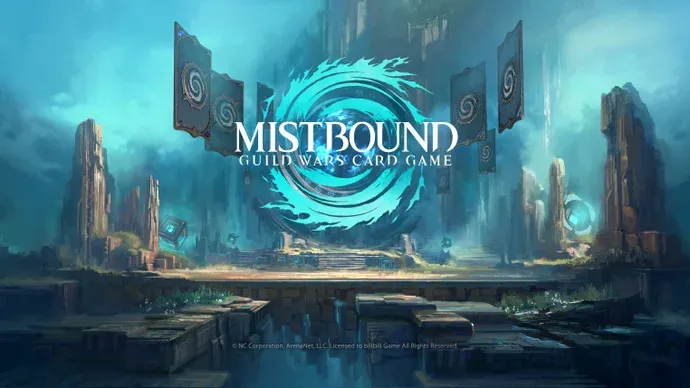
ArenaNet has revealed Mistbound: Guild Wars Card Game, the franchise’s first-ever entry into the collectible card game category. For decision-makers, it signals how long-running MMO IP is being diversified into monetization-friendly competitive ecosystems.
If you associate Guild Wars only with MMO life, you just got whiplash. ArenaNet, the studio behind the long-running Guild Wars series, has officially revealed Mistbound: Guild Wars Card Game. It is the franchise’s first-ever push into the collectible card game (CCG) genre, a category Guild Wars has somehow never touched until now.
The immediate business point is simple: ArenaNet is taking a beloved MMO brand and translating it into a ruleset where matches, decks, and collection loops drive engagement. Mistbound: Guild Wars Card Game is not a small experiment in theme or aesthetics. It is a genre switch with a very specific gameplay promise: cards replace zones, and deckbuilding replaces grinding. For players, that is a new way to live inside the universe. For operators and investors, it is an attempt to capture the durable attention patterns that CCGs historically generate.
To understand why this matters, zoom out to how the game industry treats long-running IP. MMOs have always been built on long arcs: content drops, balance patches, seasonal objectives, and communities that organize themselves over time. But MMOs can be expensive to keep fresh, and the audience can be harder to re-recruit without a steady stream of compelling reasons to return. CCGs, on the other hand, typically center on repeatable competition and progression through collections. That changes what “growth” means. Instead of logging in for a new raid, players log in to build a better deck, respond to meta shifts, and chase improvements that can be earned again and again.
Mistbound also lands at a time when publishers and studios are increasingly willing to diversify franchise extensions across genres, not just sequels. The strategic logic is straightforward: when you already have worldbuilding, characters, and recognizable factions, you reduce some of the marketing and design uncertainty that comes with inventing a new IP from scratch. You can turn established lore into card identities, factions into deck archetypes, and major story beats into collectible mechanics. That can improve speed to market on content, while also creating new monetization surfaces tied to collection and competitive progression.
There is a second-order implication here for governance and risk management. CCGs live in a regulatory gray zone more often than traditional single-player or linear experiences, because collection mechanics can trigger scrutiny around odds, monetization transparency, and consumer protections. That does not mean Mistbound will face a specific ban or restriction just because it is a CCG. But it does mean boards and compliance teams will want to think about how the game’s progression and spending systems are communicated, measured, and governed. Even when the core design is compelling, the operational burden of compliance can be higher in collection-heavy models.
There is also an internal incentive angle for ArenaNet. Guild Wars has existed for years as a long-running MMO series, so the studio already understands how to retain players and evolve live content. But building a CCG requires different talent patterns, different balancing approaches, and different operational rhythms. In an MMO, you can often patch a system and adjust the meta within a contained environment. In a CCG, small balance changes can ripple across deck ecosystems quickly and broadly. That makes player trust and rapid iteration more important, because frustration spreads through competitive communities fast. For a studio making its first CCG, that is not just a design challenge. It is a credibility challenge.
Finally, Mistbound: Guild Wars Card Game matters beyond ArenaNet’s own roadmap. When a major MMO franchise moves into CCG territory, it can pressure peers in similar positions to rethink franchise diversification. If the experiment succeeds, it reinforces the idea that live-service IP does not have to stay inside one gameplay mold. It can expand into competitive and collection-driven loops that may offer different retention dynamics, potentially different revenue timing, and new opportunities for esports-like ecosystems or tournament scenes. If it stumbles, it still provides a clear signal: genre migration is hard, and even strong IP needs careful execution.
So the stake is not just whether Mistbound is “a new game.” It is whether ArenaNet can convert the familiarity of Guild Wars into a collectible card loop that players want to revisit, while navigating the higher operational and regulatory expectations that come with collection-driven monetization. For decision-makers watching live-service strategy right now, that is the real headline beneath the reveal.
This story's Key Insights and Take-aways are locked.
Create a free account to unlock Executive Actions for one credit.
Register to UnlockAlways free for Executives Club members. Join the Club
More in Entertainment

Russell Brand's accuser 'bewildered and confused' as he denies 7 sex charges
The criminal case against the comedian is a live test of how media companies manage talent risk when serious allegations go public.

'It's a Magic Trick': Ballet Experts Say Rosalía's SNL Pose Is Impossible
Three ballet experts tell Rolling Stone Rosalía's gravity-defying SNL stillness shouldn't be possible - and why the debate is now part of the show.

Activision CMO: GTA 6 Will Boost Call of Duty, Not Bury It
Activision's top marketer says Rockstar's blockbuster will drive players back to consoles and into Modern Warfare 4, even as the company admits its recent strategy failed.