
Artemis II hits 149.4M launch views, then 3.84M splashdown viewers jump 4.8%
NASA’s Moon return broke livestream benchmarks across platforms, turning reentry risk into peak public demand.
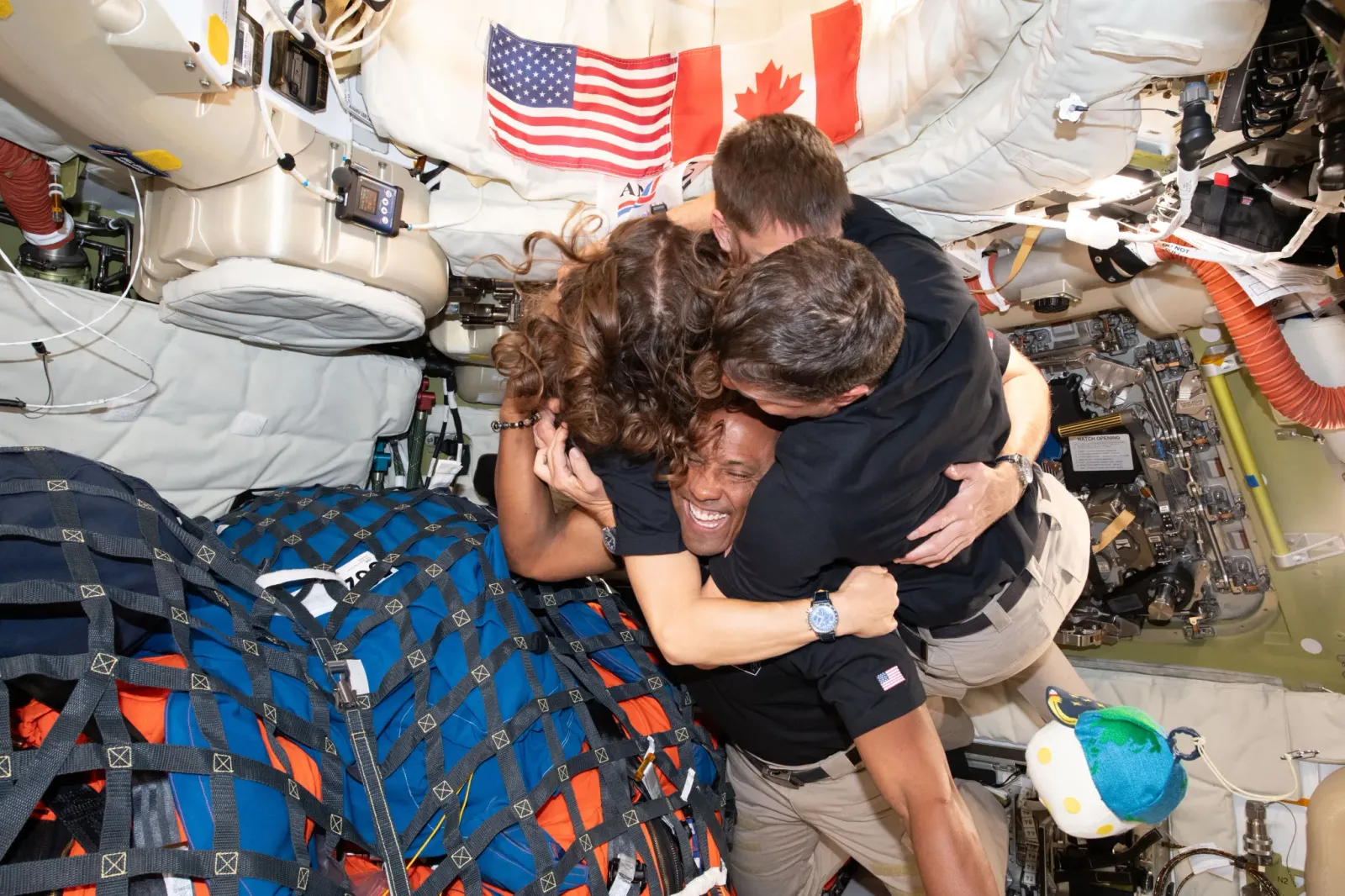
NASA says its live coverage of Artemis II drew more than 149.4 million views for the mission’s launch, lunar flyby, and splashdown across NASA-owned platforms. For decision-makers, the bigger story is how reentry and risk framing fueled sustained, cross-platform engagement that even major streamers amplified.
NASA’s Artemis II coverage didn’t just trend. It set a new streaming ceiling. The agency reports more than 149.4 million views across the mission, driven by live coverage of the launch, the lunar flyby, and the splashdown, including 24/7 streams and Orion spacecraft views on NASA-owned platforms.
And when the stakes got real, audiences leaned in. NASA’s Artemis II Crew Launch drew a combined peak of 3,662,554 viewers, then global curiosity intensified through the splashdown. Splashdown viewership reached 3,838,418, a 4.8% increase from the launch peak, reflecting widespread interest in the crew’s safe return and the critical reentry sequence and heat-shield performance.
This is a rare case where the “mission climax” is not a launch countdown but a return from space. NASA also attributes the sustained attention to pre-splashdown coverage emphasizing “riskiest moments” ahead, particularly Orion’s reentry and heat-shield performance. That framing matters for anyone funding, launching, or licensing attention. It turns a technical sequence into a storyline audiences can follow in real time, which is exactly what broke the record behaviorally, not just statistically.
Looking at the numbers like an operator, NASA’s launch generated 23.9 million total views across NASA platforms, with 16.6 million people watching live. Artemis II’s 24/7 streams and Orion views weren’t the only engines. NASA says the combined peak audience of 3,662,554 included more than 411,130 concurrent viewers on X and Twitch. NASA also says this surpassed previous milestones including the launches of Artemis I (2022) and the James Webb Space Telescope (2021-2022). The implication: Artemis II didn’t inherit interest. It outpaced earlier public “big moments” on the same kind of distribution surfaces.
The flyby portion was its own media event. NASA reports the Artemis II Lunar Flyby broadcast reached 1,471,069 total concurrent viewers, one of the largest peak audiences ever recorded across NASA’s streaming platforms. YouTube carried a major share with 897,789 concurrent viewers, alongside an additional 190,221 viewers on X and Twitch. Then NASA extends the timeline: as of April 13, the flyby broadcast had accumulated 40 million views across NASA+, YouTube, X, and Twitch, signaling strong, sustained engagement rather than a one-day spike.
Splashdown day kept climbing, and NASA ties that to “deep public interest” in the mission’s final and most critical moments. NASA’s “Artemis II Crew Comes Home” generated 29.5 million total views across NASA-owned platforms, with an estimated 24.1 million occurring during the live return sequence. In other words, the viewing wasn’t just broad. It was concentrated around the exact moment audiences needed to care about: the return.
NASA also shows how modern distribution works when you treat streaming like a network effect. Major entertainment platforms including HBO Max, Netflix, Peacock, and Amazon Prime Video placed Artemis II in front of “hundreds of millions of potential viewers worldwide.” NASA cites HBO Max reaching 120-150 million global subscribers; Netflix reaching 325 million paid subscribers and covering 54% of global households; Peacock contributing 36-41 million U.S. subscribers; and Amazon Prime Video reaching up to 275 million global subscribers. Those partners, NASA says, enabled mainstream, international, and non-traditional audiences at a scale unattainable through NASA-owned channels alone. For operators and boards, that is the measurable upside of hybrid distribution: your owned channels build trust and depth, while platform partners widen the funnel.
Beyond streaming, NASA reports a massive traffic and engagement lift across its digital properties and social accounts. NASA.gov recorded 125.1 million pageviews between April 1 and 10, more than double the roughly 50 million logged in all of March. On launch day alone: 17.6 million pageviews from 8.3 million visitors. The Artemis Real-Time Orbit Website (AROW) drew 797,796 pageviews. On April 6 lunar flyby day, 16.5 million pageviews from 6.2 million visitors, with AROW at 1.9 million pageviews and boosted by more than 440,000 Google referrals, while the NASA homepage reached 2.3 million. Splashdown day pushed again: more than 16 million pageviews from 6.1 million visitors, AROW over 1 million pageviews, and more than 11 million cumulative views since launch. Social sentiment stayed largely steady across launch week, with neutral and positive posts dominating: neutral ranged from 47 to 60 percent, positive from 30 to 42 percent. Engagement spiked around milestones, with NASA accounts generating 35 million engagements on splashdown day content alone and 261 million from March 27 to April 13. NASA also reports follower growth, including NASA flagship Instagram adding more than 4.6 million followers and Artemis-dedicated Instagram adding 2 million, a 66% increase over the mission. On YouTube, NASA says there was a 2 million increase in subscribers, plus NASA’s flagship Facebook page climbing by 1.7 million.
Finally, the strategic context. Artemis II launched four astronauts aboard NASA’s Orion spacecraft atop the SLS (Space Launch System) rocket on Wednesday, April 1, 2026, from Launch Complex 39B at NASA’s Kennedy Space Center in Florida. That mix of familiar hardware, real time coverage, and risk-forward storytelling seems to have turned a test flight into a cultural moment. For executives in media, platforms, consumer tech, and space adjacent sectors, the lesson is simple but sharp: when you can clearly communicate the highest-stakes segments and distribute them across owned and partner channels, you can convert curiosity into sustained, platform-spanning attention. Artemis II didn’t just perform. It trained the world to watch the next phase like it matters.
This story's Key Insights and Take-aways are locked.
Create a free account to unlock Executive Actions for one credit.
Register to UnlockAlways free for Executives Club members. Join the Club
More in Business

BioWare shuts down, Mass Effect 5 dead after $55B EA buyout
The legendary RPG studio's closure lands months after a $55 billion investment group buyout of EA, raising tough questions for gaming's biggest acquirers.

Musk barred from the room as Tesla, SpaceX boards weigh $3.5 trillion merger
The CEO of both companies is a 'conflicted party' watching independent directors negotiate a tie-up that would create a $3.5 trillion giant he would own about a third of.

Elon Musk just showcased a flying car - and it wasn't at Tesla
The Tesla CEO's latest reveal came at SpaceX, not Tesla, signaling where vertical mobility is headed.