

Artemis II racked up 149.4M views, then splashdown jumped 4.8% to 3.84M peaks
NASA’s streaming numbers show sustained, milestone-driven global demand, powered by partners and real-time engagement.

NASA says its Artemis II live coverage drew more than 149.4 million views across launch, lunar flyby, and splashdown, including 24/7 streams and Orion views. For decision-makers, the bigger lesson is how fast public attention can intensify at the riskiest moments, and how distribution partners amplify reach.
NASA’s Artemis II live coverage didn’t just go viral. It stacked 149.4 million views across major streaming moments, then pushed even higher when the mission got real. On NASA-owned platforms, the Artemis II Crew Launch broadcast drew a combined peak of 3,662,554 viewers, and when including more than 411,130 concurrent viewers on X and Twitch, it rose to about 3.66 million. NASA also reported 23.9 million total views on its platforms, with 16.6 million watching live.
And the most telling part: splashdown viewership climbed. NASA reports that while pre-splashdown coverage emphasized “riskiest moments” ahead, particularly Orion’s reentry and heat-shield performance, public curiosity then intensified during the return. Splashdown day peaked at 3,838,418 viewers, a 4.8% increase over the launch peak, signaling that global audiences did not just tune in early. They stuck around for the hard part, when confirmation of crew safety and heat-shield performance mattered most.
If you’re wondering what makes these numbers strategically interesting, it is not just the raw scale. It is the pattern: attention surges at each major milestone, and it sustains across channels that typically behave differently. NASA says the Artemis II Lunar Flyby broadcast delivered one of the largest peak audiences ever recorded across its streaming platforms, reaching 1,471,069 total concurrent viewers. That figure was driven largely by 897,789 on YouTube, with an additional 190,221 viewers on X and Twitch. Even the Spanish-language coverage got its own benchmark moment: NASA en español hit a landmark peak of 458,366 concurrent viewers and has since amassed 2.8 million total views.
Zoom out and the “record” framing gets clearer. NASA points to previous milestones, including Artemis I (2022) and the James Webb Space Telescope (2021-2022), and then positions Artemis II as redefining livestreaming benchmarks. As of April 13, the flyby broadcast has accumulated 40 million views across NASA+, YouTube, X, and Twitch. The combined launch and flyby coverage, in other words, is not a single spike that fades after the first launch day dopamine hit. It is sustained engagement across the arc of the mission, including the 24/7 streams covering the mission and the Orion spacecraft views.
The fourth wall that matters to executives is distribution. NASA says major entertainment platforms expanded Artemis II’s footprint by placing it in front of “hundreds of millions of potential viewers worldwide.” The reported subscriber scale is concrete: HBO Max at 120-150 million global subscribers; Netflix at 325 million paid subscribers and covering 54% of global households; Peacock at 36-41 million U.S. subscribers; and Amazon Prime Video reaching up to 275 million global subscribers. The operational implication for anyone running a platform or a board-level communications strategy: NASA-owned channels set the engine, but mainstream partners broaden the road so more people can join the mission while it is happening.
That matters because audience behavior appears to reward high-stakes storytelling. NASA notes that pre-splashdown coverage across major outlets framed the return as the mission climax, specifically tied to Orion’s reentry and heat-shield performance. Then, during the actual return, splashdown viewership reached 3,838,418, and NASA says “Artemis II Crew Comes Home” generated 29.5 million total views across NASA-owned platforms, with an estimated 24.1 million occurring during the live return sequence. In board terms, that is a clear engagement funnel: narrative emphasis leads to tuning-in, and tuning-in concentrates during the critical segment.
There is also a digital infrastructure story under the headlines. NASA reports that Artemis II drove a major surge in traffic across its websites. NASA.gov recorded 125.1 million pageviews between April 1 and 10, more than double the roughly 50 million logged in all of March. On launch day alone, NASA sites saw 17.6 million pageviews from 8.3 million visitors. During the April 6 lunar flyby, pageviews reached 16.5 million from 6.2 million visitors, and the Artemis Real-Time Orbit Website (AROW) drew 1.9 million pageviews, boosted by more than 440,000 Google referrals. Splashdown day pushed another spike, with more than 16 million pageviews from 6.1 million visitors, and AROW drawing over 1 million pageviews and surpassing 11 million cumulative views since launch. For decision-makers, that is what “mission-driven” demand looks like when it hits search, real-time tracking, and core web properties.
Finally, NASA’s metrics extend beyond watching and clicking into the social layer that can sustain cultural attention. NASA says public reaction remained largely steady across launch week, with neutral and positive posts dominating the online conversation. Neutral sentiment led daily discussion, ranging from 47 to 60 percent, while positive reactions accounted for 30 to 42 percent, fueled by excitement over the crew’s historic lunar journey, striking mission imagery, and renewed interest in deep space exploration. Engagement spiked around major milestones: NASA accounts generated 35 million engagements on splashdown day content alone and 261 million from March 27 to April 13. On the growth side, NASA says internal tracking shows its flagship Instagram added more than 4.6 million followers, and the Artemis-dedicated Instagram grew by 2 million, a 66% increase. It also reports increases across X, Facebook, and YouTube, including a 2 million increase in YouTube subscribers and NASA’s flagship Facebook page climbing by 1.7 million.
The strategic stake for peers is simple: Artemis II is a demonstration of how global attention can be engineered, amplified, and sustained, not by a single marketing blast, but by a sequence of real-time moments that audiences actively choose to follow. When the riskiest phases arrive, people do not drift away. They lean in. If you lead a mission-driven brand, a media platform, or a tech ecosystem that depends on public trust and sustained engagement, that is a playbook you can learn from, even if your product is not a spacecraft.
This story's Key Insights and Take-aways are locked.
Create a free account to unlock Executive Actions for one credit.
Register to UnlockAlways free for Executives Club members. Join the Club
More in Business
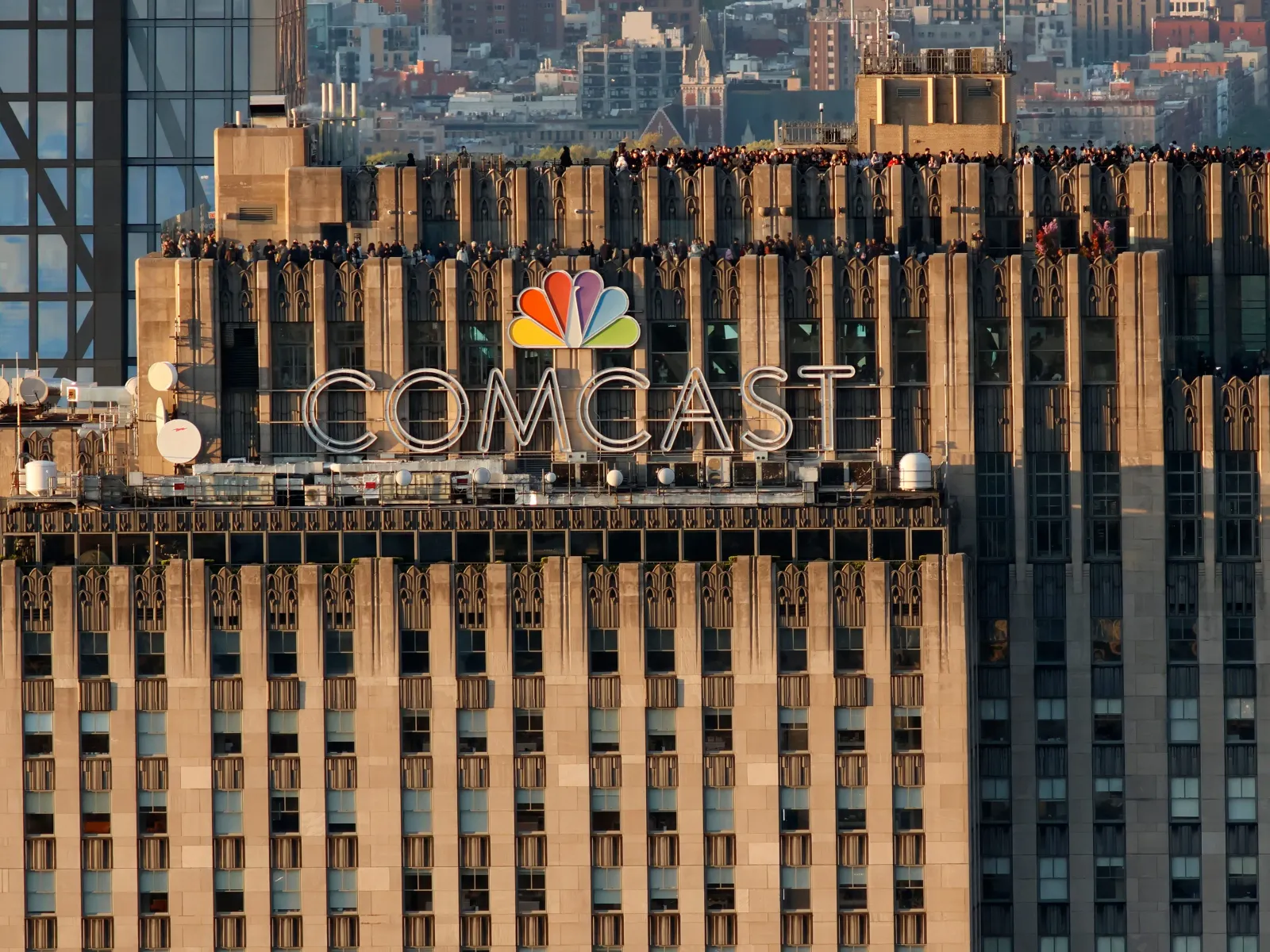
Comcast shares jump 25% as it plans to split NBCUniversal and Sky
The tax-free spin-off could reshape focus, funding, and competition across media and tech for years.

Bungie cuts most Destiny 2 staff as Sony says Marathon still matters
Herman Hulst confirms layoffs affecting most Destiny and some Marathon teams after Bungie admits Destiny fell short.

SK Hynix jumps 11% after seeking up to $29.4B in Nasdaq listing
The chip giant filed for a Nasdaq listing plan that could raise $29.4 billion, instantly reshaping investor expectations.