
Arthur Fery beats Grigor Dimitrov in five sets, first British wildcard to reach a Slam QF
A Wimbledon five-set thriller puts Arthur Fery one step from the business end, redefining what a wildcard run can do.
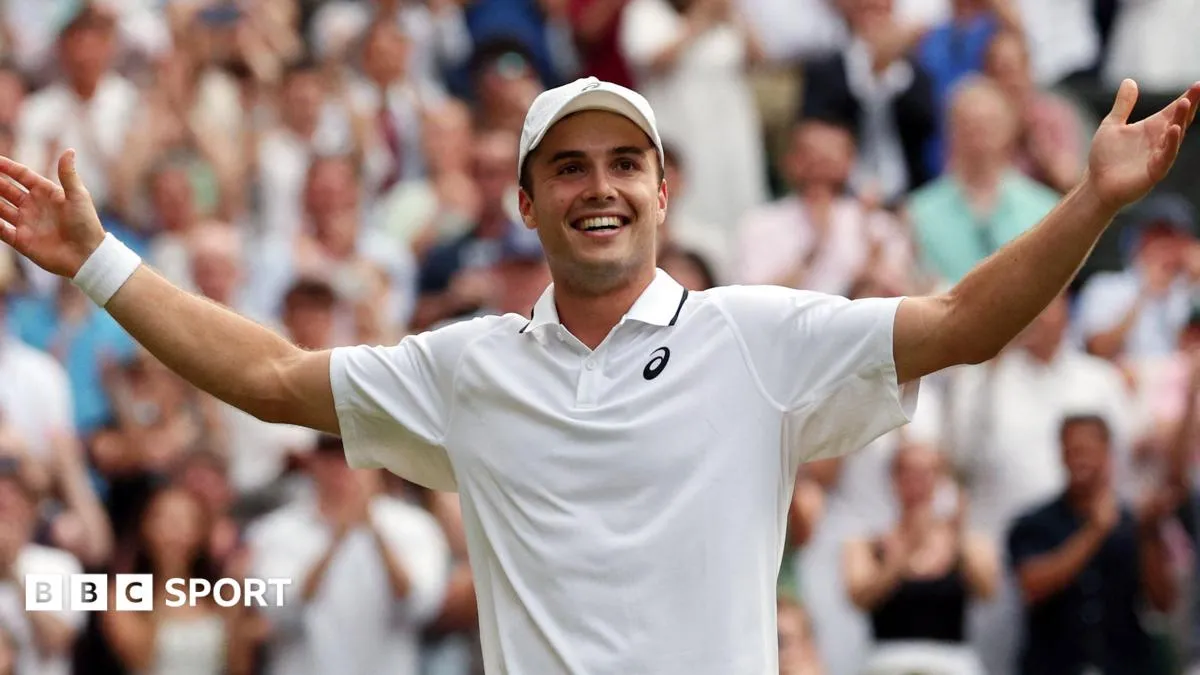
Arthur Fery extended his historic Wimbledon run by beating Grigor Dimitrov in five sets. The result makes Fery the first British wildcard to reach a Grand Slam quarter-final, a milestone with ripple effects beyond the scoreboard.
Arthur Fery’s Wimbledon run keeps snowballing, and this time it has a five-set thriller attached: he beat Grigor Dimitrov to reach the quarter-finals. The headline is the “how,” but the “what” is bigger. Fery became the first British wildcard to reach a Grand Slam quarter-final, and the achievement matters because it rewrites the ceiling for players entering a major through the back door.
This was not a tidy victory. The match went five sets, turning into the kind of long, momentum-swinging contest that forces focus, stamina, and decision-making under pressure. Fery’s win over Dimitrov is the proof point behind the milestone: it wasn’t just a draw that worked out, or a one-off hot streak. He sustained the run long enough to clear the Dimitrov hurdle, then used it to reach the deepest phase of a Grand Slam.
For decision-makers watching sports as a machine of probability and payout, wildcards are supposed to be the “gap filler.” They are invitations, not guarantees. They typically reflect a mix of tournament needs, player potential, and calendar reality. In that context, the phrase “first British wildcard to reach a Grand Slam quarter-final” is more than a trivia line. It signals that the competitive distribution is not as rigid as it can look from the outside. If a wildcard can break through at Wimbledon, the incentive for federations and tournament strategists to take measured risks becomes easier to justify. It also puts a spotlight on how opportunity structures create outcomes.
There is also a softer, second-order implication for the business side of tennis: narratives travel farther than results, and milestones make audiences show up. A historic run does not just boost interest during one match. It extends across future scheduling, sponsorship visibility, and broadcaster attention. That matters for brands and rights holders because Wimbledon’s value comes from sustained viewer engagement, not one highlight reel. The longer Fery stays in the tournament, the more his matches become part of the event’s “daily content loop.”
Now zoom out to governance and process. While Wimbledon is a tennis competition, Grand Slams are also systems with selection mechanisms, eligibility rules, and wildcards that are granted under policy. The milestone that Fery reached a quarter-final as a British wildcard is a reminder that these systems can produce outlier performance. For boards and executives in sports organizations, the lesson is not “wildcards always win,” because the record does not say that. The lesson is that when the rules allow flexibility, exceptional execution can surface competitive talent earlier than rigid pipelines might.
Dimitrov’s involvement matters for another reason. He is a well-known name in the sport, meaning the win is not just a ceremonial milestone against a lesser opponent. The match went five sets, which implies tactical adjustments and nerves under sustained pressure. That kind of performance tends to re-rank how stakeholders view a player: coaches reassess matchups, sponsors reassess messaging, and other players reassess the “who can beat whom” map.
And if you are an operator in adjacent industries, the parallels are obvious. Markets, like brackets, are full of assumptions. People assume the wildcard is there to lose earlier. People assume the favorite has the margin for error. Then a five-set thriller snaps those assumptions in half. The strategic stakes are simple: if you manage a team, an academy, or a platform where entrants matter, you cannot only optimize for the known outcomes. You have to design for upside, because occasionally the system produces a run that changes the historical record.
So here is the immediate scoreboard impact: Fery has extended his Wimbledon run and is now headed to the quarter-finals. Here is the broader meaning: he is the first British wildcard to reach a Grand Slam quarter-final. In sports, as in business, milestones like that become templates. They do not just reward the player. They influence how others decide what is possible, and how organizations justify taking the chance that others dismiss as unlikely.
This story's Key Insights and Take-aways are locked.
Create a free account to unlock Executive Actions for one credit.
Register to UnlockAlways free for Executives Club members. Join the Club
More in Entertainment

Russell Brand's accuser 'bewildered and confused' as he denies 7 sex charges
The criminal case against the comedian is a live test of how media companies manage talent risk when serious allegations go public.

'It's a Magic Trick': Ballet Experts Say Rosalía's SNL Pose Is Impossible
Three ballet experts tell Rolling Stone Rosalía's gravity-defying SNL stillness shouldn't be possible - and why the debate is now part of the show.

Activision CMO: GTA 6 Will Boost Call of Duty, Not Bury It
Activision's top marketer says Rockstar's blockbuster will drive players back to consoles and into Modern Warfare 4, even as the company admits its recent strategy failed.