
Arundhati Roy fires back at Beatles song use and asks what AI will do to films
At BFI Southbank on July 15, Roy challenged unauthorized Beatles use, dissected AI’s rise, and defended indie filmmaking’s handmade look.
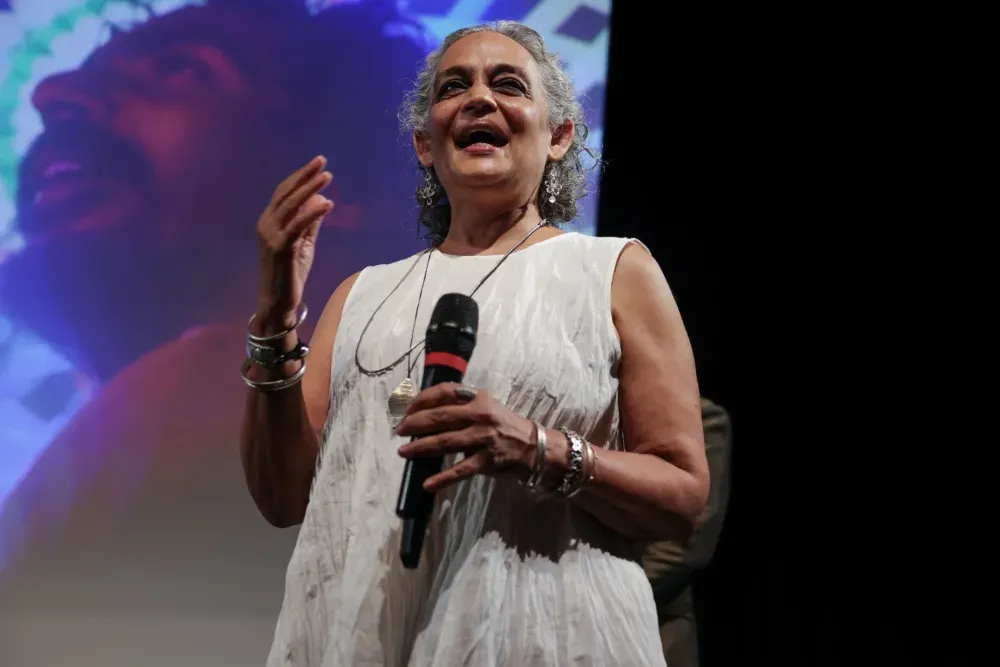
Arundhati Roy, the Booker Prize-winning author, discussed her film In Which Annie Gives It Those Ones at a Q&A at BFI Southbank on July 15 after the U.K. premiere of its 4K restoration. She addressed unauthorized Beatles songs, growing AI presence in cinema, and why independent filmmaking still looks handmade.
Arundhati Roy took the mic at BFI Southbank on July 15 and zeroed in on something that sounds small until it turns into a business problem: the unauthorized use of Beatles songs in In Which Annie Gives It Those Ones. In a Q&A after the U.K. premiere of the film’s 4K restoration, the Booker Prize-winning author didn’t treat that issue like trivia. She treated it like a design choice with legal and creative consequences, right alongside her other big themes: AI’s growing presence in cinema and the stubborn, handmade aesthetic of independent filmmaking.
That pairing matters for anyone running a media company, funding projects, or sitting on a board that has to weigh risk against ambition. Roy’s message, as reported, lands on a collision point that executives already feel: the creative pipeline now reaches for copyrighted sounds, algorithm-assisted production, and distinctive low-budget textures, and the law and the market are not always synchronized with the art. The first-order question is licensing. The second-order question is what happens to budgets, timelines, and rights strategy when the industry also starts leaning harder on AI.
According to Variety, Roy’s comments were delivered during the Q&A tied to the film’s U.K. premiere and the release of a 4K restoration. That framing is not just technical. A restoration changes how audiences encounter the work. It can extend the revenue life of a title, reposition it for festivals or new markets, and bring it back into sharper focus in front of rights holders. When a film is restored and publicly reintroduced, attention naturally re-accelerates, and so do scrutiny and enforcement. For executives, the lesson is simple: the moment a classic is remastered or re-released, any unresolved rights issues do not quietly go away. They get re-tested.
Then comes the legal and cultural knot Roy highlighted: unauthorized Beatles songs. The Beatles catalog is a heavyweight category in music rights, the kind that attracts intense rights management and enforcement. Even without the details of who authorized what in the specific case Roy discussed, the executive takeaway remains consistent across the industry: relying on famous tracks, even when they add instant emotional credibility, can create tail risk. That tail risk shows up later, not earlier, when a title is marketed more broadly, restored in higher fidelity, or aggregated across platforms.
Roy also addressed the growing presence of artificial intelligence in cinema. While the report does not specify particular tools or practices, the broader industry implication is clear enough: AI can affect how films are developed, edited, and marketed, and it can blur what is “authored” versus “generated.” For decision-makers, that means rights, disclosure, and contract language become more complicated. Traditional talent agreements and music or image licensing frameworks were built for human-made inputs. AI introduces new friction points around ownership, training data, and whether audiences or platforms will demand provenance. Even for teams that are excited by productivity gains, AI increases the number of questions legal and compliance departments will ask.
And Roy’s third theme, the handmade aesthetic of independent filmmaking, is the strategic counterweight. Independent films often distinguish themselves through texture: visible craft, imperfections, deliberate choices that signal a human hand. That aesthetic can be harder to maintain when production speed and automation rise, especially if teams are pressured to deliver more content, more quickly. So Roy’s defense, as described in the Q&A, functions like a reminder to executives that distinctiveness is a competitive advantage. If AI flattens style or replaces the cues that audiences read as “real,” indie differentiation can erode.
Put those three themes together and you get a governance problem that is showing up across the industry. On one side, high-profile music cues can create legal exposure, and restorations can re-surface attention. On another, AI pushes production speed but complicates authorship and rights. On the third, indie filmmaking’s handmade approach depends on maintaining intentional craft, not just output volume. Executives and boards who only optimize for near-term deliverables may discover that the long tail is where costs land: rework, licensing settlements, delayed releases, or reputational friction around how a film was made and what it borrowed.
Roy’s Q&A is therefore more than a celebrity literary stop. It is an inline status report from the cultural side of the business, one that touches the exact stress points operators are managing right now: copyrighted assets that do not stay copyrighted “until later,” AI workflows that make contracts harder, and the visual identity of indie work that audiences can sense even before they can name it. If you run a studio, commission content, invest in filmmaking, or advise boards, this is the kind of moment that should sharpen your playbook: rights and provenance must be designed upfront, not patched at distribution time, and creative distinctiveness must be protected even as tools get faster.
This story's Key Insights and Take-aways are locked.
Create a free account to unlock Executive Actions for one credit.
Register to UnlockAlways free for Executives Club members. Join the Club
More in Entertainment

12TB Steam 'teraleak' goes beyond Valve: GTA 3, Mafia 2 prototypes exposed
A 12-terabyte dump of Steam data reveals prototypes and builds of third-party classics like GTA 3 and Mafia 2, plus unreleased Valve content, rewriting game history.

LinkedIn's romance problem: 1 in 4 workers say dating on it is fair game
A new survey shows a quarter of U.S. employees treat the professional network as fair game for romance, even as LinkedIn bans it and removes hundreds of thousands of offending posts.

Enhypen's first No. 1 album breaks K-pop's Billboard 200 streak
The K-pop group's 98,000-unit debut tops the chart while Dolly Parton's catalog reentry shows how death reshapes streaming.