

Raindance and IMGN launch a £10,000 ($13,394) fund plus AI development hub for indies
The 34th Raindance Film Festival in London tees up an IMGN/Raindance pipeline tied to the Script Competition.
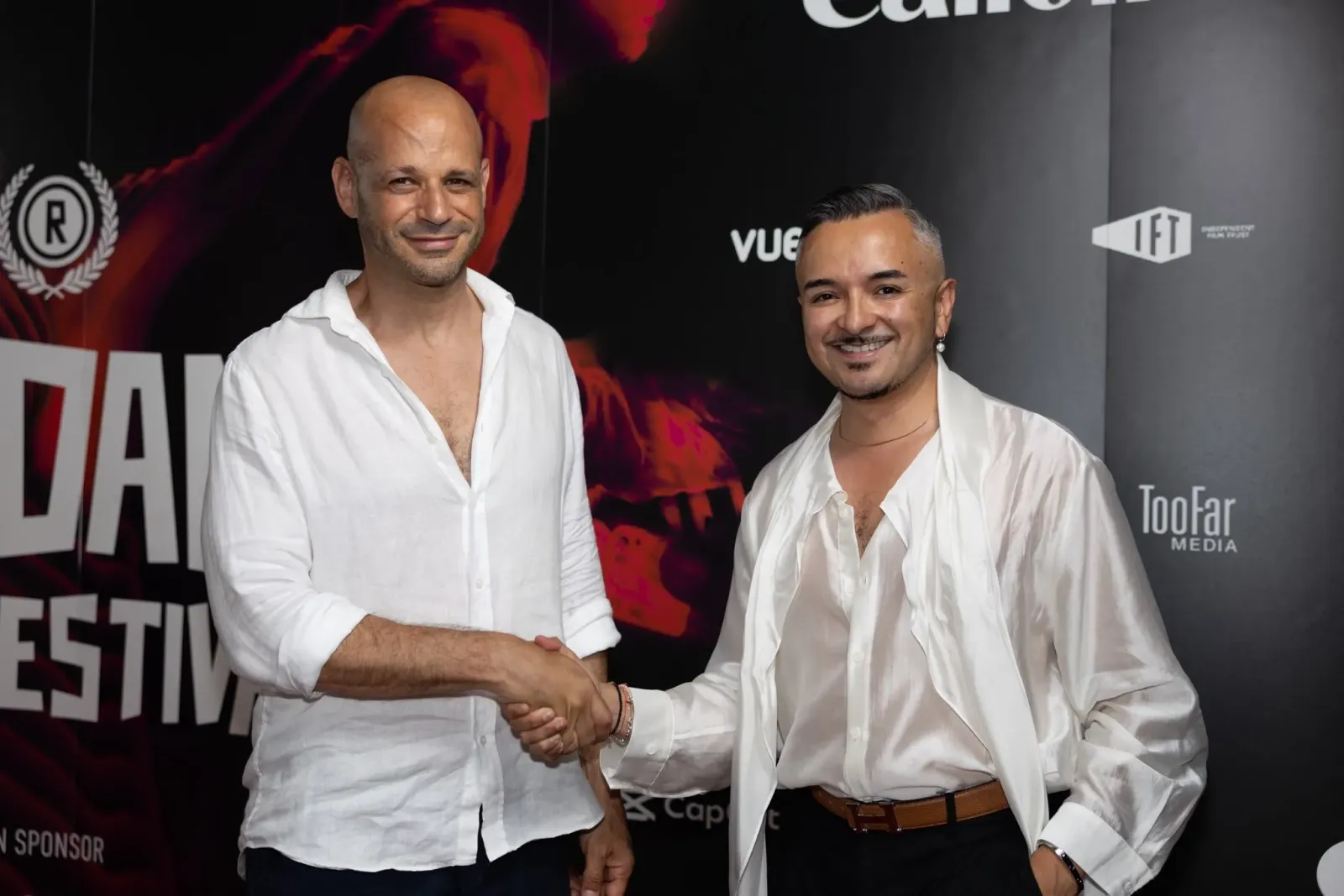
Raindance Film Festival partnered with Israeli AI creative development platform IMGN at the 34th Raindance Film Festival in London to launch an initial £10,000 ($13,394) film fund and a dedicated development hub tied to the Raindance Script Competition. For decision-makers, it is a new test case for how AI-backed development workflows can be bundled into mainstream indie financing support.
Raindance Film Festival just pulled a very specific lever for indie filmmaking: an IMGN partnership that combines a new initial £10,000 ($13,394) film fund with a dedicated development hub connected to the Raindance Script Competition. The announcement was made at the 34th Raindance Film Festival in London, where the festival framed this as support for independent filmmakers, targeted at emerging voices.
The key detail is not just the money. It is how Raindance is pairing that funding with an ongoing development structure, using IMGN, an Israeli AI creative development platform, as the backbone for the “development hub” element. In other words, the fund is the entry point, and the hub is the workflow. That matters because indie financing rarely fails at the “pitch day” moment. It usually breaks earlier, in development: scripts that take too long to get shaped, projects that cannot find clarity, or teams that burn time and resources before they reach the point where investors, commissioners, or production partners can take them seriously.
To understand why this pairing is interesting, it helps to look at how film competition pipelines typically work. The Raindance Script Competition is designed to surface and evaluate scripts. Adding an AI-assisted development hub suggests an attempt to bridge the gap between what competitions reward (a script that reads well, with potential) and what later funding stages demand (a clearer development path, tighter materials, and more consistent project packaging). That is the practical question behind this launch: can AI-powered creative development reduce friction between “emerging” and “ready”? Raindance’s plan effectively treats development as part of the value proposition, not a precondition.
There is also a capital discipline angle hiding in plain sight. An initial £10,000 ($13,394) film fund is not large compared to traditional production budgets, but it is meaningful as a signaling mechanism. It says this partnership is starting with a pilot scale that can be measured. For executives and boards, that is a familiar strategy: launch the smallest version that can still test the model, observe results, then decide whether to expand. Even without any disclosed follow-on numbers in the source, the structure itself is a tell. Raindance did not announce a vague “we will support filmmakers.” It announced a defined fund amount alongside a dedicated development hub.
Now zoom out to the broader industry context around AI in creative work. The source positions IMGN as an “AI creative development platform.” In practical terms, that implies the platform is meant to help with development activities that traditionally rely on time-consuming iteration. When festivals partner with AI platforms, the business pitch is usually about speed, consistency, and potentially cost efficiency. But the governance question is just as real: how does an AI tool fit into a creative process without undermining authorship, editorial judgment, or the professional standards of filmmaking? The source does not provide regulatory claims or technical specifics, so it is not possible to say what IMGN will do inside the hub. Still, the mere fact that this is “tied to” Raindance’s Script Competition indicates that the AI element is being anchored inside an established evaluation framework, where scripts already go through a selection lens.
Regulatory and policy risk is another second-order consideration for decision-makers, especially in the EU and UK context where film, media, and data policies intersect. The UK and Europe have active discussions on AI governance, transparency, and data handling. Even when a partnership is creative-facing rather than directly consumer-facing, boards still care about how data about scripts, writers, and production plans is processed, stored, and protected. Again, the source does not detail IMGN’s data practices, so the safest interpretation is this: Raindance and IMGN are treating AI development as mainstream enough to integrate into a public festival program in London. That integration increases visibility, which raises the bar for compliance readiness, even if compliance specifics are not mentioned.
For investors, producers, and operators watching the funding ecosystem, the strategic stakes are straightforward. If this model works, it can shift where value is captured in indie film: from purely financing at later stages to earlier development support that makes scripts more production-ready. For festivals and mission-driven arts organizations, it can also strengthen the competitive differentiation of their programs by offering not only screening and recognition, but a structured development pathway. For the indie filmmakers themselves, a fund plus a hub tied to a known competition is attractive because it reduces uncertainty about what happens after submission and evaluation.
At the same time, the launch scale means this is a beta, not a full replacement for traditional development financing. The £10,000 ($13,394) figure is an initial step, not a promise of full production budgets. That is why the development hub matters as much as the fund. The real test will be whether the hub produces tangible improvements that translate into later opportunities for emerging filmmakers, and whether the partnership can earn trust among writers, producers, and stakeholders who may be skeptical of AI involvement in creative authorship.
Bottom line: Raindance is combining an initial £10,000 ($13,394) indie film fund with an IMGN-led AI development hub tied directly to its Script Competition, announced at the 34th Raindance Film Festival in London. If you are advising a board or building a comparable pipeline, this is the shape of the bet being placed right now: AI-assisted development as an extension of festival curation, packaged with seed-scale capital, to pull emerging projects through the early bottleneck where careers are made or stalled.
This story's Key Insights and Take-aways are locked.
Create a free account to unlock Executive Actions for one credit.
Register to UnlockAlways free for Executives Club members. Join the Club
More in Entertainment

12TB Steam 'teraleak' goes beyond Valve: GTA 3, Mafia 2 prototypes exposed
A 12-terabyte dump of Steam data reveals prototypes and builds of third-party classics like GTA 3 and Mafia 2, plus unreleased Valve content, rewriting game history.

LinkedIn's romance problem: 1 in 4 workers say dating on it is fair game
A new survey shows a quarter of U.S. employees treat the professional network as fair game for romance, even as LinkedIn bans it and removes hundreds of thousands of offending posts.

Enhypen's first No. 1 album breaks K-pop's Billboard 200 streak
The K-pop group's 98,000-unit debut tops the chart while Dolly Parton's catalog reentry shows how death reshapes streaming.