
Aryna Sabalenka's French Open title hopes vanish in quarter-final collapse against Diana Shnaider
The world number one's crushing defeat signals a shifting hierarchy in women's tennis as rising talent disrupts established dominance.
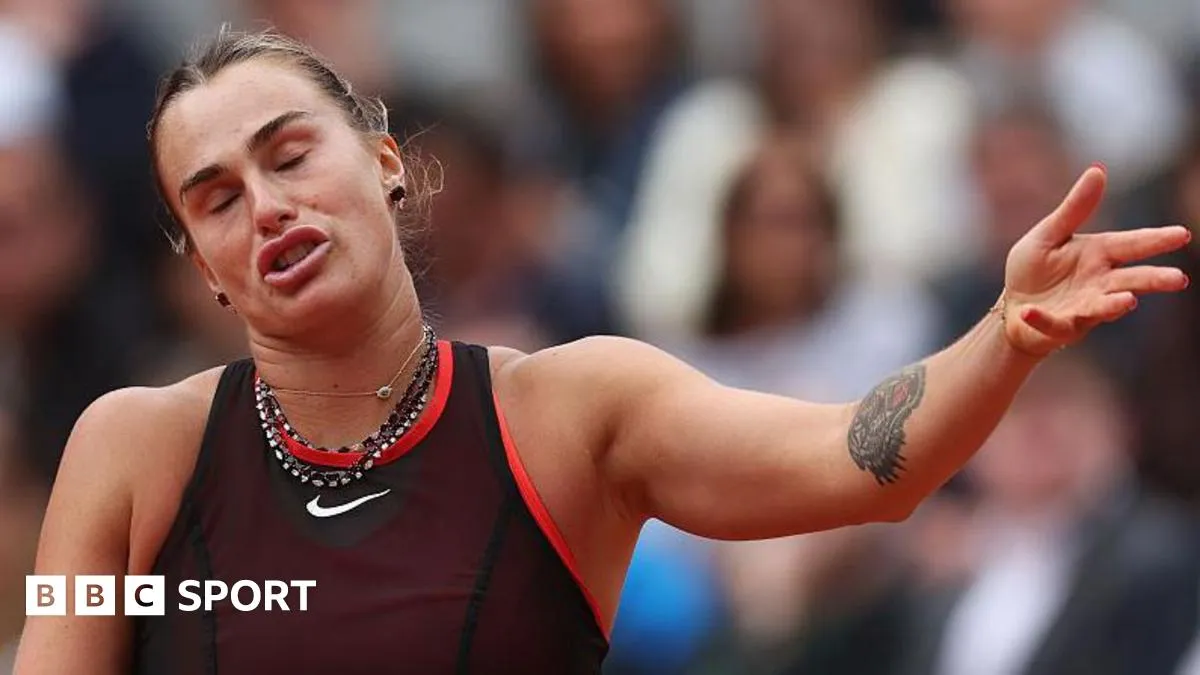
World number one Aryna Sabalenka suffered a decisive quarter-final exit at the French Open following a loss to Diana Shnaider. This upset fundamentally alters the tournament's competitive landscape and challenges the stability of the current women's tennis rankings.
World number one Aryna Sabalenka saw her pursuit of a French Open title come to an abrupt and crushing end in the quarter-finals. In a result that has sent shockwaves through the professional tennis circuit, Sabalenka unraveled under pressure, falling to Diana Shnaider in a match that underscored the increasing volatility at the top of the women's game. The defeat was not merely a loss on the scoreboard but a significant disruption to the expected hierarchy of the tournament, as the highest-ranked player on the draw was unable to maintain the consistency required to navigate the high-stakes environment of a Grand Slam quarter-final.
Diana Shnaider's victory serves as a definitive moment of disruption, proving that the gap between the established elite and the rising contenders is narrowing rapidly. For Sabalenka, the collapse represents a missed opportunity to solidify her dominance on the clay courts of Paris, a surface that demands extreme physical and mental resilience. The match highlighted a critical vulnerability in the world number one's game: the ability to sustain high-level performance when faced with an opponent capable of exploiting tactical inconsistencies. As the tournament moves into its final stages, the absence of the top seed reshapes the strategic outlook for every remaining competitor in the draw.
To understand the weight of this loss, one must look at the broader context of the women's professional tennis landscape. The sport is currently undergoing a period of intense competitive realignment. For years, the narrative has been dominated by a small cohort of veteran players, but the emergence of athletes like Shnaider suggests a democratization of talent. This shift creates a high-variance environment for sponsors, broadcasters, and tournament organizers who rely on the predictability of top-tier stars to drive viewership and commercial value. When a world number one exits prematurely, it creates a vacuum of star power that must be immediately filled by emerging narratives to maintain market interest.
From a performance standpoint, Sabalenka's struggle illustrates the razor-thin margins that define elite competition. In professional tennis, the difference between a Grand Slam champion and a quarter-finalist often comes down to mental fortitude and the ability to manage high-pressure inflection points. Sabalenka, known for her aggressive power, found herself unable to weaponize that strength against Shnaider's defensive and tactical execution. This breakdown in execution is a common risk for high-performing individuals in any high-stakes industry; when the primary mechanism of success-in this case, raw power-is neutralized, the lack of a secondary contingency plan can lead to a total systemic failure.
For the broader tennis ecosystem, this result serves as a warning to those occupying the top tier of the rankings. The era of guaranteed dominance is being challenged by a new generation of players who are more tactically diverse and mentally prepared for the rigors of Grand Slam play. This creates a continuous cycle of disruption where yesterday's standard-setter becomes today's cautionary tale. The competitive pressure is no longer just about outplaying the field, but about surviving the relentless upward mobility of the chasing pack. The strategic implication for players in Sabalenka's position is clear: technical skill must be matched by an evolving psychological toolkit to withstand the volatility of the modern tour.
Ultimately, Shnaider's ascent and Sabalenka's descent provide a masterclass in the importance of adaptability. In a landscape where the margin for error is non-existent, the ability to pivot when a primary strategy fails is the ultimate competitive advantage. As the French Open continues without its top seed, the focus shifts from a predictable coronation to an unpredictable battle for supremacy. The takeaway for observers of high-performance systems is profound: dominance is never a permanent state, and the most dangerous threat to a leader is often the quiet, disciplined rise of a challenger who refuses to be intimidated by the name on the ranking sheet.
This story's Key Insights and Take-aways are locked.
Create a free account to unlock Executive Actions for one credit.
Register to UnlockAlways free for Executives Club members. Join the Club
More in Entertainment

Christopher Nolan’s “The Odyssey” posts his biggest Tuesday haul, surpassing “The Dark Knight’s” record
The film’s Tuesday breakout reframes Nolan’s box-office ceiling and forces competitors to rethink timing, budgets, and release strategy.

Kacey Musgraves cancels Aug. 20, 29, Sept. 2 Middle of Nowhere shows
Ticketmaster emails are telling fans refunds are coming, while the tour still starts Aug. 21 in Chicago.

Billie Joe Armstrong launches Epiphone Les Paul Junior and Marshall 1959BJA signature gear
Two limited releases turn decades of Green Day’s tone into branded hardware, including Marshall’s first artist amp in 14 years.