

Astronomers directly detect helium in LHS 1140 b’s atmosphere within the habitable zone
A first for rocky exoplanets: direct atmospheric helium evidence, plus the added pressure of habitability questions.
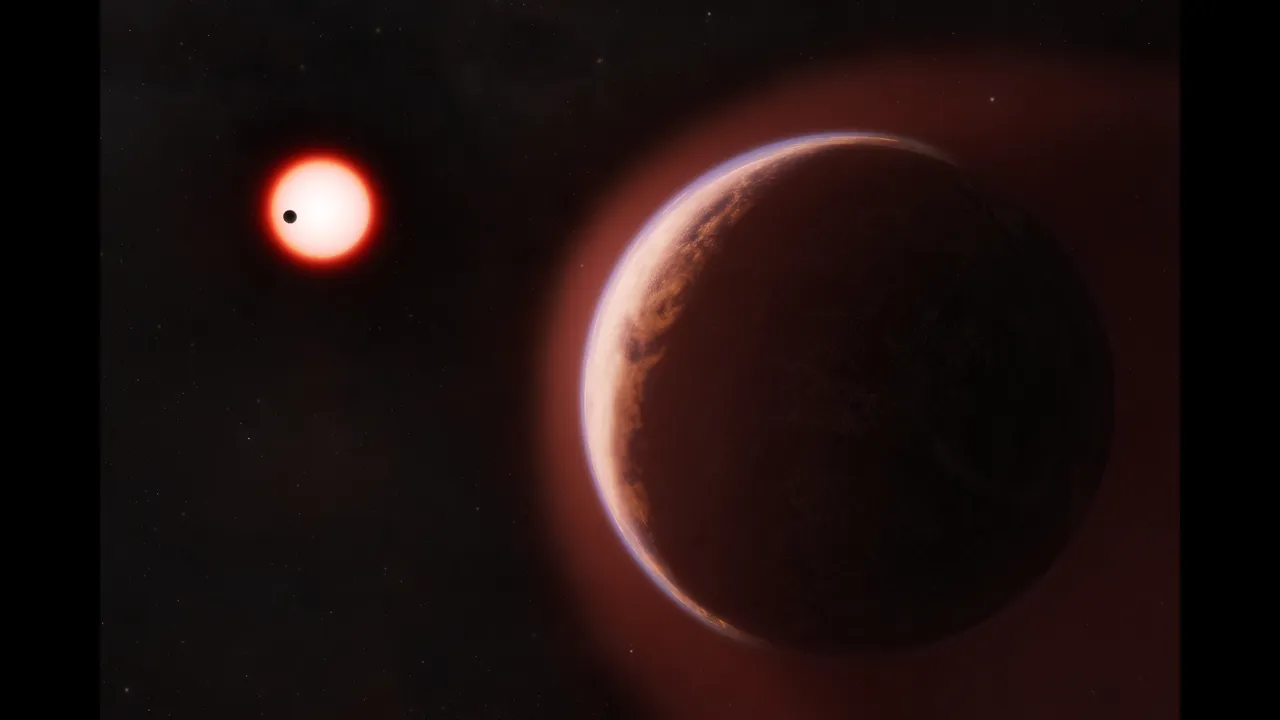
Astronomers detected helium directly in the atmosphere of LHS 1140 b, a rocky exoplanet in the habitable zone, using the WINERED Spectrograph on the Magellan Observatory. For decision-makers in research and tech ecosystems, it reshapes the near-term roadmap for where to aim next-generation observation time.
Astronomers have done something that turns the “maybe someday” habitability conversation into a real checklist: they directly detected helium in the atmosphere of LHS 1140 b, a rocky, Earth-like candidate planet orbiting in its star’s habitable zone. The planet is 48 light-years from Earth, and the key point is not just that an atmosphere exists, but that the helium signature was identified directly from spectrographic data as the planet transited its star. Lead author Collin Cherubim, who recently earned his Ph.D. from Harvard University, called it “the first direct detection for any rocky exoplanet,” and it also lands a second major win: this is the first rocky exoplanet found with an atmosphere and located in the habitable zone, the region where liquid water could potentially exist on the surface.
Why this matters immediately is simple. For years, astronomers could find rocky planets in the right temperature range, but confirming that these planets actually have atmospheres is where the confidence gap lived. Here, that gap collapses. Cherubim described it as surreal, but the science is crisp: they “actually detected directly the helium present in the atmosphere itself,” and that direct detection plus the habitable-zone location makes LHS 1140 b one of the most promising targets ever for astrobiology and habitability work. It does not prove life. But it does prove something harder: that a rocky planet can retain enough of an atmosphere to be observable.
Let’s zoom out to why this is such a big deal for the broader space-and-instrumentation ecosystem. Since the first exoplanet confirmation more than 30 years ago, scientists have found over 6,000 exoplanets. Many have been gas giants; many more have been small worlds. Yet until now, confirming an atmosphere for a rocky planet specifically in the habitable zone was not straightforward. The “why” is tied to star behavior. LHS 1140 b orbits a red dwarf, about one-third the size of our sun, and red dwarfs can stay active longer, with bursts of extreme radiation like solar flares and coronal mass ejections. In many cases, that kind of radiation is expected to strip away planetary atmospheres, which is exactly why the community has wondered whether rocky planets around these stars can keep atmospheres at all.
This discovery is interesting because it pushes back against that worry with evidence. Cherubim framed it as showing that at least this rocky planet retained an atmosphere over billions of years, calling it “a bona fide, robust way of saying yes, atmospheres can survive on rocky exoplanets.” The story includes an additional timing detail that matters for scientists thinking about survivability: the red giant star involved is roughly 6 billion years old, a few billion years older than the period when its extreme radiation activity begins calming down. The team expects some helium could still be slowly escaping over time, but enough remains that the atmosphere can be detected. The researchers also point out that other gases beyond helium may be present, and some atmosphere may have been previously stripped, so this is a first, not a final inventory.
Now for the “how did they do it” part, because it has real second-order implications for where future observing time and instrument development may go. The detection was not a casual afterthought. It started with a theoretical prediction Cherubim made during graduate school. He developed a specific prediction from first principles using a planetary evolution model, and later went looking for measurement using an observational technique that is typically reserved for observing giant planets. Dittmann, now a co-author, later summarized the arc in plain terms: this planet was first discovered in 2017, and only now were researchers able to say, “okay, that’s an atmosphere.”
The team then tested the model using the Warm Infrared Echelle (WINERED) Spectrograph on the Magellan Observatory in Chile. Their observational strategy relied on timing: both LHS 1140 b and another planet transited, or passed in front of their star, in the same night. With spectrographic data from those transits, they could identify signatures of molecules in the atmospheres as the planets crossed the stellar disk. One planet yielded no results, but LHS 1140 b showed a direct, undeniable helium signature.
What about the planet itself? We can’t say what the surface looks like yet. But because LHS 1140 b is rocky, the researchers expect it to have a surface made of rocks. They also suggest there is a good chance it could have water. That expectation hinges on its orbit around the red dwarf and its temperature relative to liquid-water conditions, often described as a “Goldilocks zone” for liquid water. Cherubim added that if it has some amount of atmosphere that can provide a greenhouse effect, which they now know it does via the helium detection, it will very likely support habitable conditions on Earth, and conditions that would likely support liquid water.
So are there aliens? The researchers are careful, and you should be too. Cherubim explicitly said he is not claiming this planet has life. The current data is enough for a major step forward in atmospheric characterization, but not enough to confirm habitability or identify any life. With further investigation, scientists could better understand what else is in the atmosphere and confirm whether water is present. Still, as the first rocky planet in the habitable zone with a directly detected atmosphere, LHS 1140 b becomes the kind of target that can reshape priorities for follow-up studies, because it turns a category (rocky habitable-zone worlds) into a concrete, spectroscopically accessible target.
The paper describing the work was published in Science, and it lands at the intersection every executive funding and platform team cares about, even if they do not label it that way: instrumentation, time allocation, and platform leverage. If atmospheres can survive and can be detected directly in cases like this, then “habitable zone” is not just a slogan. It becomes a routing decision. The second-order effect is that future observation strategies may increasingly prioritize the exact combination shown here, rocky planets, red dwarfs, and detectable helium signatures, because the path from detection to deeper characterization looks shorter than it has for most prior candidates. For boards, investors, and operators building the next generation of astronomy tooling and data pipelines, this is a proof point that the pipeline can work, and that the search for “are we alone” may be moving from waiting to iterating.
This story's Key Insights and Take-aways are locked.
Create a free account to unlock Executive Actions for one credit.
Register to UnlockAlways free for Executives Club members. Join the Club
More in Science

Alaska's 1,580-foot tsunami had warning signs. Scientists just found them.
Rapid glacier retreat, heavy rainfall, and thousands of tiny tremors preceded Alaska's 1,580-foot tsunami, a warning for every coastal community in a warming world.

The rare mutation that lets high-risk brains dodge Alzheimer's
Scientists found a natural defense against protein buildup, opening a new path to preventive treatments.

3,000 steps a day may halve Alzheimer's decline, study finds
New research links a modest daily walk to less tau buildup and nearly half the cognitive and functional decline, even for those with early signs.