
Astronomers spot a moonlike exosatellite in CD-35 2722, forcing a planet-moon rewrite
A Nature paper says the object is likely not an exomoon, yet it is a first-of-its-kind exosatellite at 73 light-years.
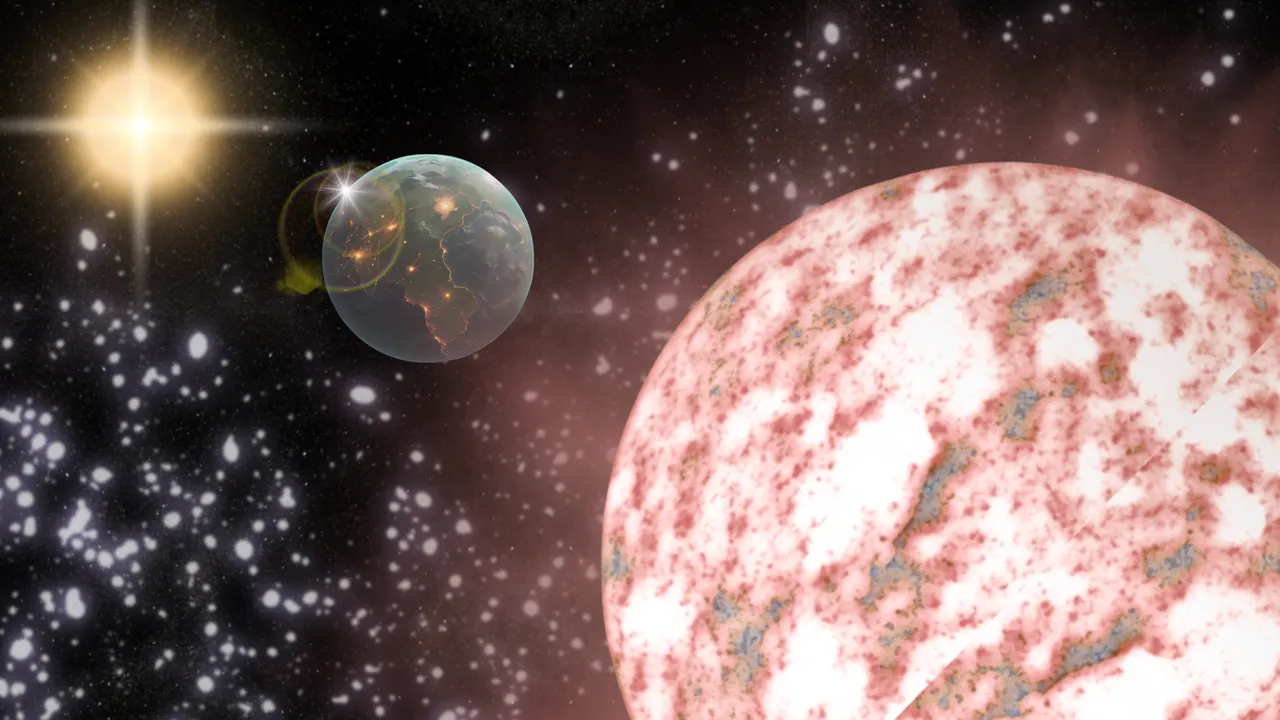
A team led by Kevin Hoy of Universidad Diego Portales and the Millennium Nucleus of Young Exoplanets and their Moons (YEMS) reports a moonlike detection in the CD-35 2722 system. Published Wednesday, July 22, in Nature, the discovery challenges the “planet” and “moon” categories astronomers use for our solar system.
Astronomers have found a moonlike object around CD-35 2722, but it might not be an exomoon in the way anyone wants it to be. The system, about 73 light-years away, contains a “failed star” also called a brown dwarf. Around that brown dwarf is a newly detected body that looks satellite-like, yet it orbits an object that itself orbits a star, creating a classification tangle that researchers say could force a rethink of how “moon” and “planet” are defined.
The announcement lands in the journal Nature on Wednesday, July 22, after the team used the Very Large Telescope (VLT) to study CD-35 2722. As lead team leader Kevin Hoy put it in a statement, the system is “somewhat hard to define using solar-system-based words like 'planet' and 'moon.'” In other words: you can call it moon-adjacent, but the usual rules that let us label solar system bodies cleanly do not apply here.
So what did they actually detect? CD-35 2722’s star is around half the mass of the sun and is orbited by a brown dwarf. Brown dwarfs earn their nickname because they form like stars, but do not gather enough mass to trigger hydrogen fusion into helium in their cores. In mass terms, brown dwarfs sit above the largest gas giant planets and below the smallest stars, typically around 13 to 80 times the mass of Jupiter, or about 0.013 to 0.08 times the mass of the sun.
The newly discovered object in this system is described as “moon-like” in that it is a gaseous satellite orbiting a massive companion. But the orbit is not the familiar solar-system setup. Solar system moons orbit planets. Here, the satellite orbits the brown dwarf, and that brown dwarf orbits the star. Team leader Hoy’s “third wheel” framing is the point. The object’s physical presence is compelling, but the taxonomy is messy because the system blurs the neat lines astronomers rely on.
This is exactly why the researchers are careful with claims. They currently cannot definitively claim the object is an exomoon, because doing so would require nailing down “a new definition of what a moon is.” As team member Alice Zurlo explained in a statement, in the solar system there is a “clear delineation between the planets and the sun,” which makes defining moons straightforward. In the CD-35 2722 system, where the words “star,” “planet,” and “moon” stop fitting comfortably, “the whole thing becomes more complicated to describe.”
That caution matters, because it is easy to oversell a detection when the public imagination is already primed for “firsts.” The paper’s more solid headline is different: the team says it can confidently claim the object is an exosatellite, meaning a satellite outside our solar system. Zurlo’s quote frames it as a giant gaseous body orbiting a highly massive companion that is “several times the mass of Jupiter.” The key operational takeaway is that even without a finalized moon definition, this is still a first-of-its-kind detection in the category astronomers are trying to grow.
If you zoom out, the broader story is a measurement problem and an instrument problem. Despite NASA’s exoplanet catalog growing to over 6,000 confirmed entries, astronomers have failed to confirm a single exomoon discovery. The source calls that drought “controversial” and “weird,” because basic reasoning suggests moons should exist around other planetary systems the way they do around planets here. But nature is stubborn and the signals are faint, which is why observational breakthroughs are hard and classification disputes can linger.
That is where the Extremely Large Telescope (ELT), currently under construction in Chile, enters the picture. The source says the ELT could be integral in hunting for exomoons and now other exosatellites. For decision-makers watching astronomy and space science, this is the pattern: new capabilities do not just add data, they change what questions become answerable. When you move from discovering exoplanets to hunting satellite systems, the defining constraints shift from “can we detect something at all?” to “can we separate orbital relationships and classify them confidently?”
And the second-order implication is broader than semantics. When a system forces scientists to question “what counts as a moon” and “what counts as a planet,” it signals something about how diverse planetary systems can be. The source ends with that point: planetary systems come in “a variety of diverse, weird and wonderful forms,” and CD-35 2722 looks like a case where the universe is not only different, it is inconvenient for our existing labels.
For executives, boards, and investors adjacent to deep tech, the strategic stake is simple. If the ELT and next-gen instruments start turning “maybe” into “measured,” then the whole mapping effort gets more expensive, more complex, and more valuable at the same time. And it also means data governance and scientific standards become part of the product. In a world where definitions can determine what gets counted as discovery, the ability to observe, classify, and defend conclusions becomes a competitive advantage, not just a scientific nicety.
This story's Key Insights and Take-aways are locked.
Create a free account to unlock Executive Actions for one credit.
Register to UnlockAlways free for Executives Club members. Join the Club
More in Science

Alaska's 1,580-foot tsunami had warning signs. Scientists just found them.
Rapid glacier retreat, heavy rainfall, and thousands of tiny tremors preceded Alaska's 1,580-foot tsunami, a warning for every coastal community in a warming world.

The rare mutation that lets high-risk brains dodge Alzheimer's
Scientists found a natural defense against protein buildup, opening a new path to preventive treatments.

3,000 steps a day may halve Alzheimer's decline, study finds
New research links a modest daily walk to less tau buildup and nearly half the cognitive and functional decline, even for those with early signs.