

Aug. 12, 2026 lines up a daytime eclipse, peak Perseids, Venus dichotomy, and a moonless sky
Here is the exact one-day observing stack, with key locations, timing, and why the Moon-free Perseids matter.
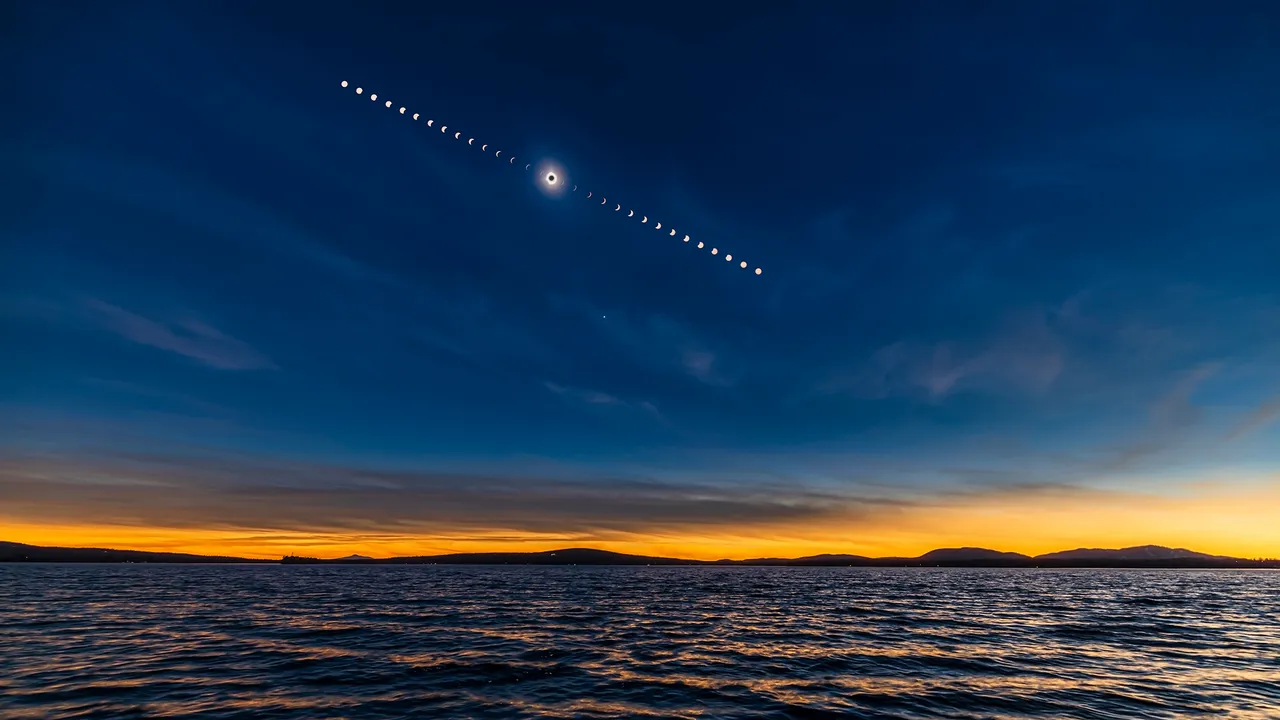
Skywatchers across North America and Europe get an unusually dense celestial schedule on Wednesday, Aug. 12, 2026, including a solar eclipse, the peak of the Perseid meteor shower, Venus at dichotomy, and the Milky Way in its annual best. For decision-makers funding public events, tourism, and content, it is a rare “single-day audience grab” worth planning around with safety and timing baked in.
Mark Wednesday, Aug. 12 on the calendar. This is one of those rare 24-hour windows where multiple headline sky events collide, and the second you step outside at the right times, the day delivers. The schedule starts with a solar eclipse during daylight across parts of Alaska, eastern Canada, and the northeastern U.S. It continues after sunset with Venus at dichotomy, the annual peak of the Perseid meteor shower during the overnight hours of Aug. 12 to 13, and finally a dark-sky Milky Way arc overhead when the Moon is out of the picture.
Let’s get specific, because the eclipse numbers are part of what makes this day feel like a once-in-years event. According to Time and Date, about 779 million people across North America, Europe, and North Africa will see at least a 10% partial eclipse. Northern Canada gets North America’s deepest partial eclipse, with parts of Nunavut in the Canadian Arctic seeing up to 93% of the sun covered. And even if you are not in the narrow totality zone, big cities still catch serious coverage: Toronto, Ottawa, and Quebec see between 8% and 24% coverage. In the U.S., the best views come from Alaska and the Northeast, including Fairbanks at 37% coverage and Boston at 16%. In Europe, London sees a 91% eclipse and Paris gets 92%. A NASA map (shown by the source) illustrates the totality path and the partial regions, with a total solar eclipse visible along a narrow path stretching across eastern Greenland, western Iceland, and northern Spain, which is where eclipse chasers will be.
If you are thinking like an operator or a planner, the key is that the eclipse portion is not casual. The source is explicit that skywatchers should use ISO 12312-2 certified solar eclipse glasses throughout the entire partial eclipse, and that binoculars, telescopes, and cameras need solar filters before anyone points them at the sun. In other words, this is a high-attention event with real safety requirements, and that matters if you are running public viewings, managing event logistics, or coordinating content production. Bad optics policy turns a magical sky day into a liability, and the source gives the baseline guardrails.
Now flip to the “night-shift” attractions, which is where Aug. 12 earns the “greatest single day and night” framing. Brilliant Venus becomes an easy target after sunset as it reaches dichotomy, the point where the planet appears half illuminated. With a small telescope or large stargazing binoculars, observers should see Venus resembling a tiny half-moon as it moves closer to Earth. It is not the kind of event that requires expert astronomy, which makes it especially useful for mass audiences, school programs, and first-time watchers looking for something tangible before the meteor rush.
Then comes the Perseid meteor shower peak, and this is the part boards and marketers should pay attention to, because it is a timing and visibility story as much as a sky story. The Perseids peak during the overnight hours of Aug. 12 to 13, and the source calls out one crucial advantage: a new moon. With no moonlight washing out faint meteors, observers under truly dark skies could see between 50 and 75 meteors per hour, while even suburban locations should still enjoy frequent “shooting stars,” according to The Planetary Society. The best viewing window is from midnight to 2 a.m. local time, when the sky is darkest and the constellation Perseus is highest in the sky. That detail is not trivia. If you are organizing anything that depends on “peak experience,” midnight to 2 a.m. is the difference between people staring at clouds and people actually seeing meteors streak overhead.
Finally, for the “satisfying finish” that turns a good evening into a memory, there is the Milky Way. The source says that under dark, rural skies, watchers will see the Milky Way arch overhead, providing one of the finest views of our home galaxy all year. Put it together and the day becomes a full-stack sky experience: daylight eclipse, sunset planet drama, overnight meteor peak under Moon-free conditions, and a galactic backdrop to cap it off.
Zoom out and this matters beyond astronomy as a hobby. Events like these are calendar gravity. They can pull tourism, public programming, and media attention toward a specific date and time block, which is valuable when you want concentrated demand rather than a slow trickle. They also raise operational stakes, because the source emphasizes proper solar viewing protection and filter use. If the skies are clear, Aug. 12 could be the single greatest day and night for skywatching in years, and that is exactly the kind of “rare enough to plan, big enough to matter” moment that organizations tend to build around.
This story's Key Insights and Take-aways are locked.
Create a free account to unlock Executive Actions for one credit.
Register to UnlockAlways free for Executives Club members. Join the Club
More in Science

Alaska's 1,580-foot tsunami had warning signs. Scientists just found them.
Rapid glacier retreat, heavy rainfall, and thousands of tiny tremors preceded Alaska's 1,580-foot tsunami, a warning for every coastal community in a warming world.

The rare mutation that lets high-risk brains dodge Alzheimer's
Scientists found a natural defense against protein buildup, opening a new path to preventive treatments.

3,000 steps a day may halve Alzheimer's decline, study finds
New research links a modest daily walk to less tau buildup and nearly half the cognitive and functional decline, even for those with early signs.